




 DISCORD
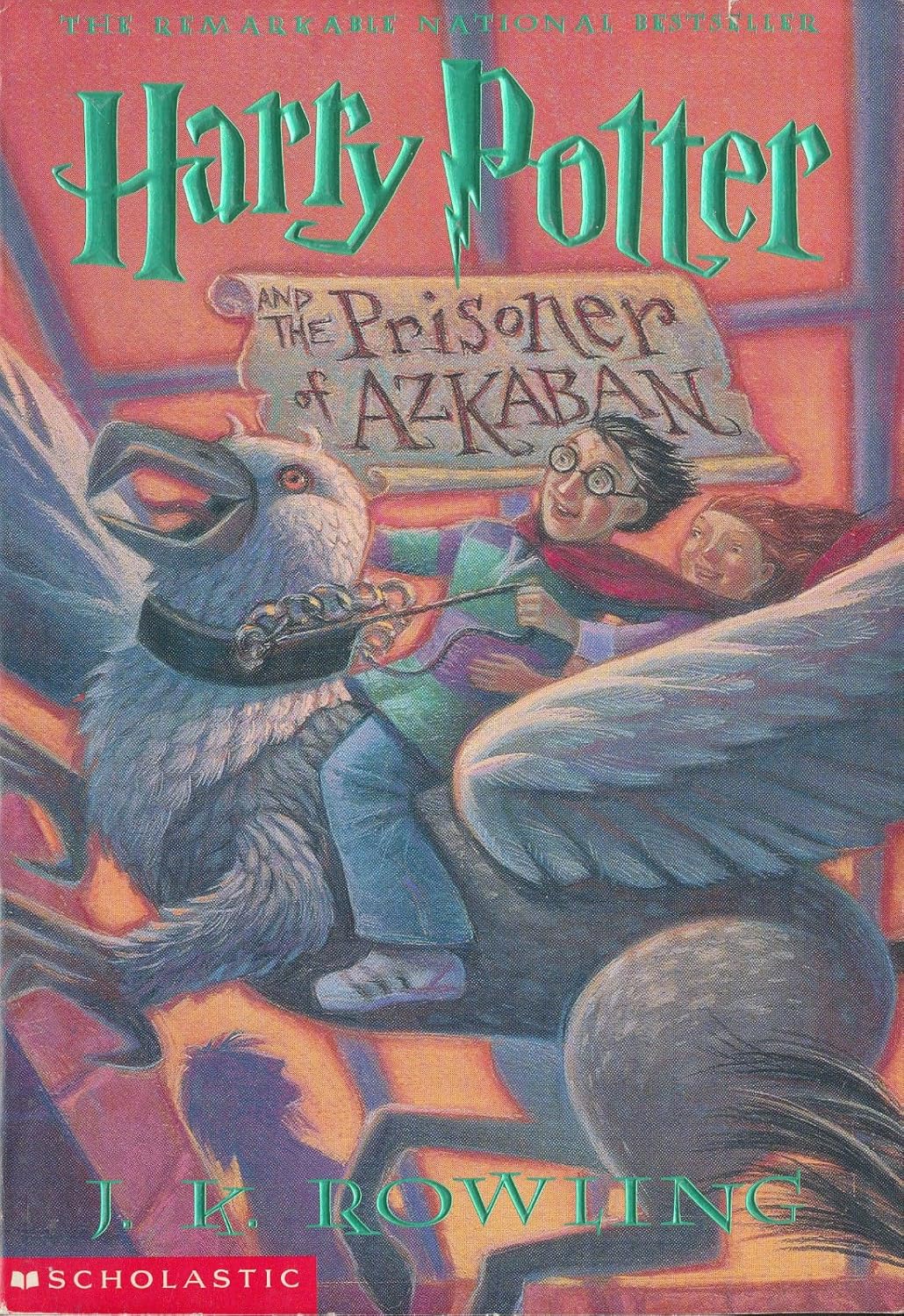
Harry Potter and the Prisoner of Azkaban
J. K. Rowling

 Amazon Best Sellers
 Amazon Charts


 78 Min Reading Time
 Audio Version Available
About this book
For twelve long years, the dread fortress of Azkaban held an infamous prisoner: Sirius Black. Now he's escaped, and he's coming for Harry Potter.
As the chilling winds of Azkaban sweep through Hogwarts, a dark shadow falls over Harry's third year. Haunted by the sinister Dementors, the soul-sucking guards of Azkaban, Harry must unravel the truth about Black before he becomes the next victim. With the help of his friends Ron and Hermione, Harry confronts not only a dangerous fugitive, but also the haunting secrets of his own past and the complicated truth about those he thought he knew.
Secrets, lies, and a desperate fight against darkness await in Harry Potter and the Prisoner of Azkaban, where nothing is as it seems and the line between innocence and guilt is blurred forever.
Summary of Key Ideas
- •
The Shadow of Fear and Uncertainty
The threat of Sirius Black's escape from Azkaban looms large, casting a shadow of fear and uncertainty over Harry's third year. The wizarding world is gripped by panic, believing Black is coming to finish what Voldemort started by killing Harry. This palpable fear affects Harry deeply, particularly with the introduction of Dementors, the soul-sucking guards of Azkaban, whose presence amplifies his anxieties and past traumas. The constant reminders of his parents' death and the potential danger he faces contribute to a darker, more suspenseful atmosphere than previous installments, marking a significant shift in the series' tone. The fear is not only external but internal, as Harry grapples with his own vulnerabilities and the psychological impact of the Dementors' presence.
- •
Unraveling Betrayal, Discovering Loyalty
Betrayal and loyalty are central themes, challenging the characters' perceptions of good and evil. Sirius Black, initially portrayed as a villain, is revealed to be a wrongly accused friend of Harry's parents, while Peter Pettigrew, seemingly harmless, is exposed as the true betrayer. This subversion of expectations forces Harry and his friends to question their assumptions and allegiances. The unwavering loyalty of friends like Ron and Hermione is tested but ultimately strengthened as they stand by Harry, even when faced with seemingly insurmountable odds and conflicting information. This theme highlights the complexity of relationships and the importance of trust and discernment in the face of deceit.
- •
Justice and the Flaws of the System
The concept of justice and its potential for corruption is explored through the wizarding legal system. The unjust imprisonment of Sirius Black for a crime he didn't commit exposes flaws in the Ministry of Magic's methods. The rush to judgment and the reliance on circumstantial evidence demonstrate the dangers of a flawed system. Furthermore, the Dementors' role as enforcers of justice raises ethical questions about their methods and the impact on prisoners. The story questions whether true justice can be achieved when fear and prejudice cloud judgment, and highlights the importance of due process and fair treatment, even for those accused of heinous crimes.
- •
The Twists and Turns of Time
Time plays a crucial role in the narrative, introduced through Hermione's Time-Turner, which allows her to attend multiple classes simultaneously. This device becomes instrumental in saving both Sirius Black and Buckbeak from unjust fates. The use of time travel introduces paradoxes and complexities, emphasizing the importance of understanding the past to influence the present and future. However, it also underscores the limitations of altering events and the potential consequences of tampering with time. The Time-Turner serves as a metaphor for the characters' attempts to rewrite history and right the wrongs of the past, ultimately revealing the delicate balance between destiny and free will.
- •
The Power of Transformation
Transformation, both literal and metaphorical, is a recurring motif. Sirius Black's ability to transform into a dog, Peter Pettigrew's animagus form as a rat, and Remus Lupin's lycanthropy all represent different facets of this theme. These transformations reflect hidden aspects of their characters and the duality of their natures. Metaphorically, Harry undergoes his own transformation as he confronts his fears and learns more about his parents' past. The transformations highlight the idea that appearances can be deceiving and that true identity lies beneath the surface. They also symbolize the characters' struggles to accept and control their inner selves.
- •
The Unbreakable Bonds of Friendship
The importance of friendship is a constant thread throughout the series, and it is particularly evident in 'Prisoner of Azkaban.' Harry, Ron, and Hermione's bond is tested by disagreements and external pressures, but their loyalty to each other remains unwavering. They support each other through personal struggles, academic challenges, and dangerous encounters. Remus Lupin's friendship with James Potter, Sirius Black, and Peter Pettigrew is also explored, highlighting the enduring power of camaraderie and the devastating consequences of betrayal. The novel emphasizes that true friendship provides strength, comfort, and resilience in the face of adversity.
- •
Confronting Fear, Finding Strength
Facing one's deepest fears is a central theme, exemplified by the Dementors, who force individuals to relive their most traumatic memories. Harry learns to overcome the Dementors' influence by mastering the Patronus charm, a powerful spell fueled by positive memories. This process symbolizes the importance of confronting and overcoming inner demons. Remus Lupin's guidance helps Harry understand his fears and develop the strength to resist them. The novel suggests that acknowledging and addressing one's fears is essential for personal growth and resilience, and that hope and happiness can serve as powerful weapons against darkness.
- •
The Knowledge and Rebellion of the Marauders' Map
The Marauders' Map, a magical document revealing the whereabouts of everyone in Hogwarts, represents knowledge, rebellion, and the complexities of morality. Created by Remus Lupin, Sirius Black, Peter Pettigrew, and James Potter, the map showcases their ingenuity and mischievous nature. While it aids Harry in navigating the castle and avoiding danger, it also raises questions about privacy and the responsible use of information. The map reflects the Marauders' youthful defiance of authority and their willingness to bend the rules for their own purposes. It serves as a reminder that knowledge can be a powerful tool, but it must be wielded with caution and ethical considerations.
Chapter Recap

About The Author
J. K. Rowling
Main Quotes
"Happiness can be found, even in the darkest of times, if one only remembers to turn on the light."
"I solemnly swear that I am up to no good."
"You think the dead we loved ever truly leave us? You think that we don't recall them more clearly than ever in times of great trouble?"
"Mischief managed."
""But I am the Grim," said Professor Trelawney, her voice dropping to a hollow whisper."
""Well, well, Lupin, out for a little stroll in the moonlight, are we?" said Snape, his voice dangerously soft."
""I expect you're tired of hearing this, but you look so like your father.""
""Eat," said Lupin, also not looking at Harry. "You need to keep your strength up.""
""You're a mess, Harry," said Ron. "You need sleep.""
""If you want to kill Harry, you'll have to kill us too!""
Who Should Read This Book
Children aged 9-14
Young adults interested in fantasy and adventure
Adults who enjoy reading young adult fiction
Families who read together
Fans of the Harry Potter series
Readers interested in themes of friendship, courage, and overcoming adversity
Individuals who enjoy stories with magical elements and coming-of-age themes
Book Summaries Like
Harry Potter and the Prisoner of Azkaban

FAQ

Free Access to LitNotes