




 DISCORD
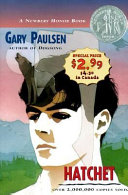
Hatchet
Gary Paulsen

 Barnes & Noble Bestsellers


 25 Min Reading Time
 Audio Version Available
About this book
Thirteen-year-old Brian Robeson is alone. A plane crash leaves him stranded in the vast Canadian wilderness with nothing but his clothes, a tattered windbreaker, and a hatchet his mother gave him. Haunted by his parents' divorce, Brian must confront his despair and learn to survive. Day by day, he forges a new life, mastering the skills to find food and shelter, facing deadly challenges, and discovering a strength he never knew he possessed. This gripping survival story follows Brian's harrowing fifty-four days as he battles the elements, confronts his inner demons, and ultimately finds himself in the unforgiving beauty of the wild.
Summary of Key Ideas
- •
The Will to Survive
Survival Against the Odds: The core of "Hatchet" is Brian's struggle to survive in the Canadian wilderness after a plane crash. With only a hatchet, he must learn to find food, build shelter, and protect himself from the elements and wildlife. This theme highlights the raw power of nature and the resourcefulness required to overcome seemingly insurmountable challenges. Brian's journey underscores the importance of adaptability and mental fortitude in the face of adversity, showcasing the primal instinct to survive that exists within us all.
- •
Becoming Self-Sufficient
Self-Reliance and Resourcefulness: Brian's transformation from a dependent boy to a self-sufficient individual is central to the story. Forced to rely on his own ingenuity, he learns to create fire, hunt, and build tools using only the hatchet and materials found in the wilderness. This emphasizes the human capacity for innovation and problem-solving when stripped of modern conveniences. Brian's journey shows that self-reliance is not just a skill but a mindset, essential for overcoming obstacles and achieving independence.
- •
Learning from Nature's Lessons
The Power of Observation and Learning: Brian's ability to survive hinges on his keen observation skills and willingness to learn from his mistakes. He carefully studies the behavior of animals, the patterns of the weather, and the resources available in his environment. Each success and failure becomes a lesson that helps him adapt and improve his survival techniques. This theme emphasizes the importance of being present, attentive, and open to learning from the natural world, highlighting the value of experiential knowledge.
- •
The Strength of Positive Thinking
Mental Fortitude and Positive Thinking: Throughout his ordeal, Brian faces moments of despair and hopelessness. However, he learns to cultivate a positive mindset and focus on the immediate challenges at hand. He repeats mantras and sets small, achievable goals to maintain his morale and motivation. This theme underscores the crucial role of mental strength in overcoming adversity. Brian's journey demonstrates that a positive attitude, combined with perseverance, can be a powerful tool for survival.
- •
Taming the Wilderness
Man vs. Nature: "Hatchet" vividly portrays the constant struggle between Brian and the unforgiving forces of nature. He battles hunger, thirst, dangerous animals, and harsh weather conditions. This theme highlights the power and indifference of the natural world, emphasizing the vulnerability of humans in the face of its challenges. Brian's survival is a testament to his ability to adapt and respect the environment, finding a way to coexist with nature rather than conquer it.
- •
Forged in the Wild: A Journey of Growth
Personal Growth and Transformation: Brian's experiences in the wilderness lead to significant personal growth and transformation. He emerges from the ordeal as a more confident, resourceful, and mature individual. The challenges he faces force him to confront his fears, overcome his weaknesses, and discover his inner strength. This theme highlights the transformative power of adversity, demonstrating how difficult experiences can lead to profound personal development and a deeper understanding of oneself.
Chapter Recap

About The Author
Gary Paulsen
Gary James Paulsen (May 17, 1939 – October 13, 2021) was an American writer of children's and young adult fiction, best known for coming of age stories about the wilderness. He was the author of more than 200 books and wrote more than 200 magazine articles and short stories, and several plays, all primarily for teenagers. He won the Margaret Edwards Award from the American Library Association in 1997 for his lifetime contribution in writing for teens.[ **Source**: [Gary Paulsen](https://en.wikipedia.org/wiki/Gary_Paulsen) on Wikipedia
Main Quotes
"He was alone."
"Going to die, Brian thought."
"The memory was a knife cutting into him."
"Destroyed."
"All of flying is easy."
"He was new."
"If he was going to live he had to think of food."
"First food, then he could worry about everything else."
"Patience, he thought. So much of this was patience - waiting, and thinking and doing things right."
"I am not the same, he thought."
Who Should Read This Book
Young adults (ages 10-14)
Readers interested in survival stories
Boys interested in adventure
Readers interested in nature
Middle grade readers
Readers who enjoy fast-paced, exciting books
Readers dealing with divorce or family issues
Book Summaries Like
Hatchet


FAQ

Free Access to LitNotes