




 DISCORD
History of the Peloponnesian War
Thucydides


 Apple Books


 160 Min Reading Time
 Audio Version Available
About this book
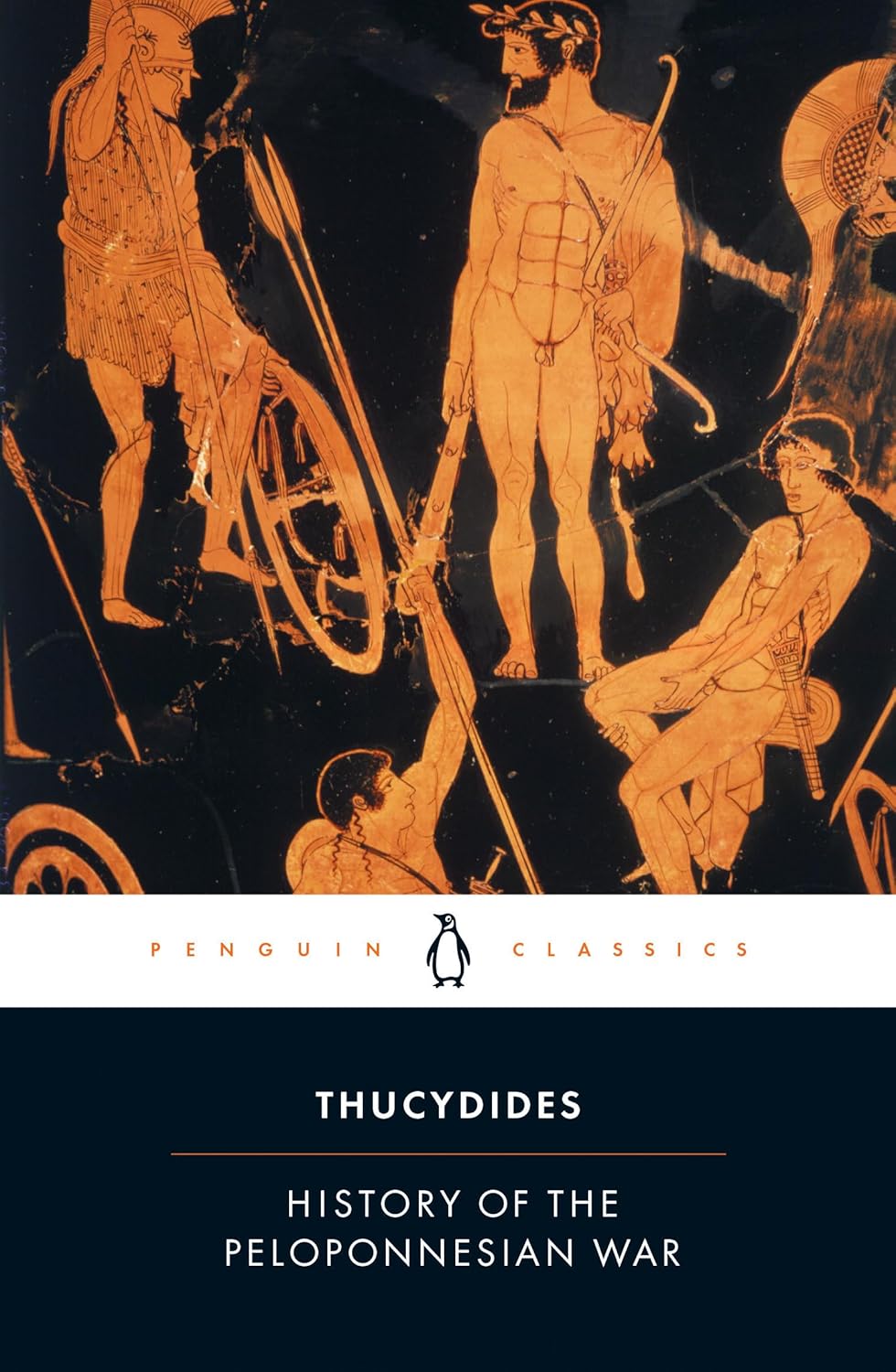
In 431 BC, the clash between Athens and Sparta ignited a war that consumed the Greek world for decades. Thucydides, an Athenian general and historian, chronicled this brutal conflict with unparalleled precision and unflinching objectivity. The History of the Peloponnesian War is a masterclass in historical analysis, dissecting the political machinations, military strategies, and societal upheavals that defined this era.
More than just a record of battles, Thucydides' work delves into the timeless themes of power, ambition, and human nature. Through vivid accounts and insightful speeches, he exposes the complexities of war and its devastating consequences. A must-read for history enthusiasts and anyone seeking to understand the enduring lessons of the past, this seminal work remains a powerful and relevant exploration of conflict and its impact on civilization.
Summary of Key Ideas
- •
The Inevitability of Conflict: The Thucydides Trap
Thucydides' central argument revolves around the idea that the Peloponnesian War was not simply a series of battles and political maneuvers, but a cataclysmic event driven by the growth of Athenian power and the fear it instilled in Sparta. This 'Thucydides Trap,' as it's often called, highlights how rising powers can threaten established ones, leading to conflict even when neither side explicitly desires it. He emphasizes that objective factors, such as shifts in the balance of power, are more influential than individual intentions or moral considerations in determining the course of history. The war, therefore, becomes an inevitable consequence of the existing geopolitical structure.
- •
War's Corrosive Impact on Society and Morality
Thucydides meticulously examines the impact of war on society, revealing its corrosive effects on morality, language, and social bonds. He illustrates how war distorts the meaning of words, as traditionally positive terms are used to justify brutal actions. Furthermore, he shows how societal norms erode under the pressure of conflict, leading to increased lawlessness, suspicion, and cruelty. This degeneration extends to personal relationships, as individuals prioritize self-interest and survival over loyalty and compassion. Through vivid descriptions of atrocities and internal strife, Thucydides paints a grim picture of war's destructive power on the human spirit and the social fabric.
- •
The Role of Reason, Chance, and Contingency in History
A key theme in Thucydides' work is the interplay between reason and chance in shaping historical events. While he acknowledges the importance of rational decision-making and strategic planning, he also emphasizes the role of unforeseen circumstances, accidents, and unpredictable human behavior. Thucydides suggests that even the most carefully laid plans can be disrupted by fortune, and that individuals and states must be prepared to adapt to changing circumstances. This recognition of chance underscores the limits of human control and the inherent uncertainty of political and military affairs. Leaders must possess not only intelligence and foresight but also the ability to react effectively to the unexpected.
- •
The Complexities of Athenian Imperialism
Thucydides provides a nuanced exploration of Athenian imperialism, portraying both its benefits and its drawbacks. He acknowledges Athens' cultural achievements, democratic values (albeit limited), and naval power, but also exposes the arrogance, ruthlessness, and self-interest that characterized its foreign policy. Through speeches and narratives, he reveals how Athenian leaders justified their dominance by appealing to notions of necessity, self-defense, and the natural order of things. However, he also highlights the resentment and resistance that Athenian imperialism provoked among its allies and subject states, ultimately contributing to its downfall. Thucydides neither condemns nor celebrates Athenian imperialism outright, instead offering a complex and critical assessment of its nature and consequences.
- •
Human Nature as a Constant in History
Thucydides emphasizes the importance of understanding human nature as a constant factor in history. He believes that individuals and states are driven by fundamental desires, such as honor, fear, and self-interest, which transcend specific historical contexts. By analyzing the motives and behaviors of the key players in the Peloponnesian War, he seeks to identify recurring patterns of human action and interaction. This understanding of human nature, he argues, is essential for interpreting the past, understanding the present, and anticipating the future. He presents a realistic, often cynical, view of human behavior, suggesting that ambition, greed, and the pursuit of power are enduring forces that shape the course of events.
- •
The Importance of Leadership and its Perils
Thucydides' work is a study in leadership, examining the qualities and flaws of various political and military figures. He contrasts the strategic acumen and decisive leadership of Pericles with the rashness and demagoguery of his successors. He highlights the importance of sound judgment, prudence, and the ability to inspire and persuade others. However, he also shows how even the most capable leaders can be undone by hubris, miscalculation, or the pressures of war. Through his portrayal of different leaders, Thucydides offers insights into the challenges and responsibilities of leadership, emphasizing the need for both competence and moral character.
- •
The Tragedy of Miscalculation and Overconfidence
Throughout his narrative, Thucydides underscores the tragic consequences of miscalculation and overconfidence. He shows how both Athens and Sparta made critical errors in judgment, leading to disastrous outcomes. Athenian leaders, blinded by their own power and ambition, underestimated the resilience of their enemies and the risks of overextension. The Spartans, initially cautious, became increasingly aggressive and inflexible, contributing to the escalation of the conflict. Thucydides illustrates how misperceptions, faulty intelligence, and a failure to anticipate the long-term consequences of actions can lead to strategic blunders and ultimately, to defeat. The war serves as a cautionary tale about the dangers of hubris and the importance of careful planning and realistic assessment.
- •
The Power of Rhetoric and Persuasion
Thucydides meticulously records and analyzes the speeches of key figures, recognizing their power to shape public opinion and influence political decisions. He presents these speeches as dramatic dialogues, allowing readers to weigh the arguments and motivations of different actors. Through these speeches, he explores fundamental questions about justice, power, and the common good. He reveals how rhetoric can be used to persuade, manipulate, and justify actions, highlighting the importance of critical thinking and careful evaluation of evidence. The speeches also provide insights into the values, beliefs, and ideologies that shaped the Peloponnesian War, offering a window into the minds of those who made history.
Chapter Recap

About The Author
Thucydides
Main Quotes
"The strong do what they can and the weak suffer what they must."
"The secret of happiness is freedom and the secret of freedom is courage."
"Wars are not won by weapons, but by men. It is the spirit of men who follow and of the man who leads that gains the victory."
"Of all manifestations of power, restraint impresses men most."
"It is a common mistake in going to war to begin at the wrong end, to act first, and wait for disasters to discuss it."
"I claim that our city as a whole is an education to Greece."
"For the love of honour and yet with decency she combines; and though strong affection is not tolerated, nobility forbids her to be unseemly."
"Later generations will be as astonished by the events of our war as we are by those of the Trojan War."
"They are always doing something which they hope may prevent them ever having to do anything at all."
"The sufferings which revolution entailed upon the cities were many and terrible, such as have occurred and always will occur, as long as human nature remains the same."
Who Should Read This Book
Students of ancient history and classical studies
Political science enthusiasts
Military strategists and historians
Readers interested in Greek history and culture
Scholars of international relations
Individuals seeking insights into conflict, diplomacy, and human nature
Readers of classic literature
Those interested in the history of historiography
People in leadership positions seeking strategic insights
Military academy students
Book Summaries Like
History of the Peloponnesian War




FAQ

Free Access to LitNotes