




 DISCORD
Holes
Louis Sachar


 National Book Awards
 Barnes & Noble Bestsellers


 32 Min Reading Time
 Audio Version Available
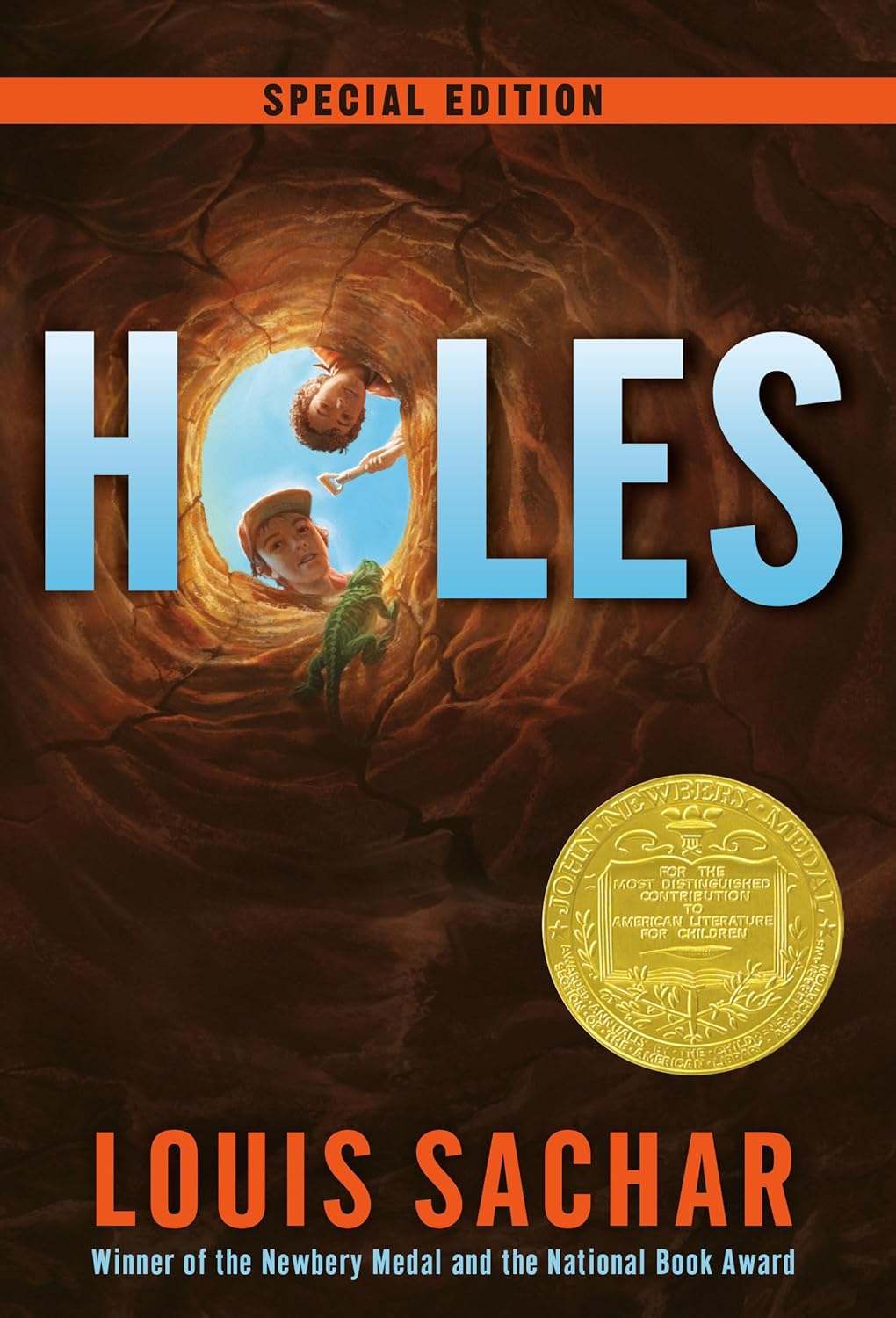
About this book
Stanley Yelnats believes he's cursed. Blame it on his no-good-dirty-rotten-pig-stealing great-great-grandfather! Now, Stanley's paying for that family history at Camp Green Lake, a juvenile detention center in the middle of a Texas desert. But there's no lake, and "building character" means digging one five-foot hole, five-feet wide, every single day.
As Stanley digs, he begins to suspect there's more to Camp Green Lake than meets the eye. What is the warden really searching for in the dried-up lakebed? Can Stanley break his family's curse and unearth the truth before it buries him?
Get ready for an inventive, darkly humorous adventure about crime, punishment, and the redemptive power of friendship.
Summary of Key Ideas
- •
The Weight of the Past: The Yelnats Curse
The Yelnats family curse, stemming from a broken promise made by Stanley's great-great-grandfather, is a central element. This curse brings Stanley to Camp Green Lake, a juvenile detention camp where boys are forced to dig holes in the Texan desert. The curse represents the weight of the past and how it can influence the present. Stanley's journey involves understanding and ultimately breaking this curse, not through magic, but through acts of kindness, bravery, and loyalty. The curse also highlights themes of fate and destiny, questioning whether events are predetermined or if individuals have the power to change their circumstances. Overcoming the curse represents Stanley's triumph over adversity.
- •
Digging for Meaning: The Symbolism of Holes
Camp Green Lake, despite its name, is a dry, desolate place where boys are forced to dig holes all day. These holes are ostensibly for building character, but they are truly a means of searching for a hidden treasure buried by the outlaw Kissin' Kate Barlow. The holes symbolize hardship, punishment, and the monotonous, seemingly pointless nature of the boys' labor. They also represent the digging up of the past, both literally (searching for treasure) and figuratively (unearthing the history of Green Lake and its inhabitants). The act of digging holes becomes a metaphor for the boys' attempts to find meaning and purpose in their lives, despite their bleak circumstances.
- •
The Power of Friendship: A Bond of Survival
Friendship is a powerful force that helps the boys at Camp Green Lake endure their difficult situation. Stanley forms a strong bond with Zero, and their friendship becomes a source of mutual support and strength. They teach each other valuable skills, with Stanley teaching Zero to read and Zero helping Stanley dig. This reciprocal relationship defies the harsh environment of the camp and demonstrates the importance of human connection in overcoming adversity. Friendship is portrayed as a transformative force, enabling Stanley and Zero to escape the camp and confront their pasts.
- •
Echoes of the Past: The Legend of Kissin' Kate Barlow
The story of Katherine Barlow, a schoolteacher who becomes an outlaw after her forbidden love with Sam, an African American onion seller, ends in tragedy, is interwoven with Stanley's present. This historical narrative reveals the roots of the curse and the injustice that plagued Green Lake in the past. Kate's transformation from a kind teacher to a ruthless outlaw highlights the destructive consequences of prejudice and hatred. Her story also connects the past to the present, demonstrating how past injustices can continue to affect future generations. The buried treasure symbolizes the unresolved conflicts and the enduring legacy of injustice.
- •
Seeking Justice: Overcoming a Flawed System
Justice and injustice are recurring themes throughout the novel. Stanley is wrongly accused of stealing a pair of shoes, landing him at Camp Green Lake. The camp itself represents a flawed system of justice, where boys are punished for often minor offenses or simply because they are poor and disadvantaged. The historical narrative also highlights the injustice of racial prejudice and the tragic consequences of discrimination. Ultimately, the novel suggests that true justice involves not only punishing wrongdoing but also addressing the root causes of inequality and providing opportunities for redemption.
- •
Fate vs. Free Will: Shaping Your Own Destiny
Fate and destiny play a significant role in the lives of the characters. Stanley's belief in his family's curse suggests a sense of predetermination, while the interconnectedness of the historical and present-day storylines implies a larger plan at work. However, the characters also demonstrate the ability to make choices that alter their destinies. Stanley's decision to help Zero, Zero's resilience and determination to learn, and their combined efforts to uncover the truth ultimately lead them to break the curse and change their futures. The novel suggests a balance between fate and free will, where individuals can shape their own destinies through their actions.
- •
Cruelty vs. Kindness: A Moral Compass
The stark contrast between cruelty and kindness underscores the moral landscape of the story. Characters like Warden Walker and Mr. Pendanski embody cruelty and exploitation, driven by greed and a lack of empathy. In contrast, characters like Stanley, Zero, and even the reformed Mr. Sir demonstrate acts of kindness, compassion, and loyalty. These acts of kindness not only provide solace in a harsh environment but also ultimately lead to positive change and redemption. The novel suggests that kindness, even in the face of adversity, has the power to break cycles of cruelty and create a more just world.
- •
Coming of Age: Finding Strength in Adversity
The novel showcases a coming-of-age story for Stanley and Zero as they navigate the harsh realities of Camp Green Lake. Both boys undergo significant personal growth as they confront their pasts, overcome challenges, and discover their inner strength. Stanley evolves from a timid and insecure boy to a courageous and confident young man, while Zero learns to trust and form meaningful relationships. Through their experiences, they develop a sense of self-worth and a determination to create better lives for themselves. Their journey highlights the transformative power of adversity and the importance of resilience in the face of hardship.
Chapter Recap

About The Author
Louis Sachar
Main Quotes
"There is no lake at Camp Green Lake."
"If you take a bad boy and make him dig a hole every day in the hot sun, it will turn him into a good boy."
"A lot of people don't believe in curses. A lot of people don't believe in yellow-spotted lizards either, but if one bites you, it doesn't make a difference."
"Nobody runs away from here."
"I see you're looking at my gun. Don't worry. I'm not going to shoot you. This is for yellow-spotted lizards."
"When you spend your whole life living in a hole, the only way you can go is up."
"Stanley was not a bad kid. He was innocent of the crime for which he was convicted. He'd just been in the wrong place at the wrong time."
"Behind them the sky had turned dark, and for the first time in over a hundred years, a drop of rain fell into the empty lake."
"He smiled, and his eyes seemed to shine. "My name is Hector," he said. "But everyone here calls me Zero.""
"It was hot, and Mr. Pendanski didn't want to be outside any longer than necessary."
Who Should Read This Book
Middle grade readers (ages 8-14)
Young adults
Readers interested in adventure stories with elements of mystery and social commentary
Educators looking for books to teach themes of justice, perseverance, and friendship
Readers who enjoy stories with interconnected timelines and multiple perspectives
Fans of Louis Sachar's writing style
Book Summaries Like
Holes

FAQ

Free Access to LitNotes