




 DISCORD
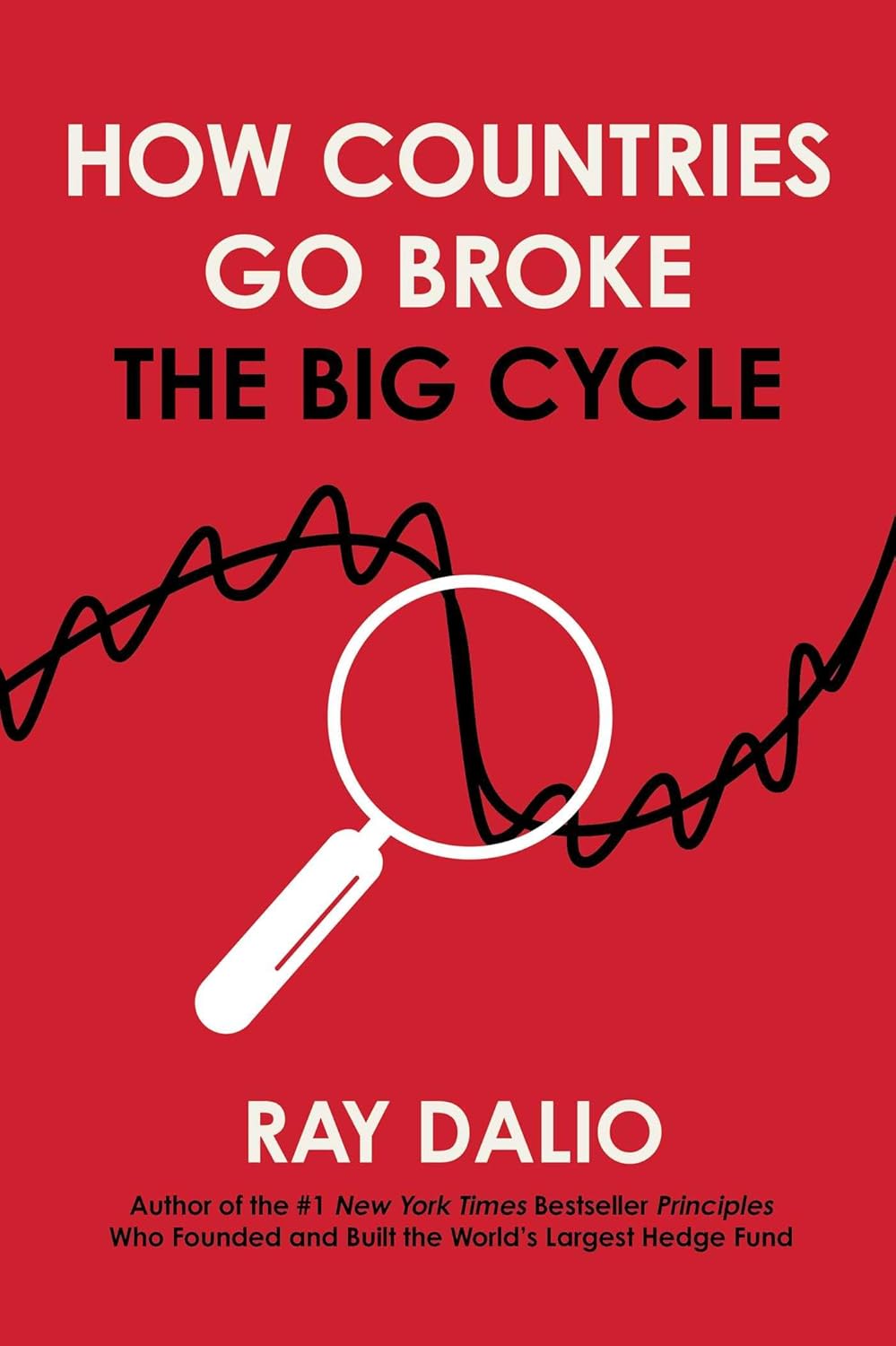
How Countries Go Broke
Ray Dalio


 The New York Times Best Sellers


 92 Min Reading Time
 Audio Version Available
About this book
Could America face financial ruin? Are there limits to how much debt a nation can handle? In How Countries Go Broke, Ray Dalio, the #1 New York Times bestselling author of Principles and renowned investor who foresaw the 2008 crisis, tackles these urgent questions.
Dalio unveils his revolutionary understanding of the "Big Debt Cycle," a critical framework for understanding today's economic challenges and what lies ahead. He connects the dots between debt crises and the larger forces reshaping our world: political tensions, geopolitical conflicts, natural disasters, and technological disruption like the rise of AI.
More than just a warning, How Countries Go Broke provides surprisingly clear solutions for navigating the debt problems confronting the US, Europe, Japan, and China. Arm yourself with the insights you need to understand the forces at play and prepare for the future.
Summary of Key Ideas
- •
The Economic Big Cycle
The book likely explores the concept of a 'Big Cycle' in economics, which involves the rise and fall of countries due to factors like debt accumulation, currency devaluation, and internal conflicts. Understanding this cycle is crucial for investors and policymakers to anticipate and navigate economic downturns. Dalio probably uses historical examples to illustrate these recurring patterns, highlighting how ignoring the lessons of the past can lead to repeating mistakes. The cycle includes stages of prosperity, debt accumulation, crisis, and resolution, each with distinct characteristics and policy responses. Recognizing where a country stands in this cycle is vital for making informed decisions about investments and economic strategies.
- •
The Perils of Excessive Debt
Excessive debt accumulation is a central theme, where countries borrow beyond their means, leading to unsustainable financial burdens. This debt can be both internal and external, impacting a country's creditworthiness and stability. Dalio likely examines how debt levels correlate with economic crises, arguing that unchecked borrowing can trigger devaluation and economic instability. The book likely distinguishes between productive debt, which fuels economic growth, and unproductive debt, which leads to stagnation and crisis. Effective debt management and fiscal responsibility are presented as essential to preventing countries from going broke.
- •
Currency Devaluation Dynamics
The book likely delves into the dynamics of currency devaluation, explaining how it occurs when a country's debt becomes unsustainable. Devaluation impacts the purchasing power of citizens and the value of investments, often leading to inflation and economic hardship. Dalio probably analyzes the triggers for currency devaluation, such as high debt levels, trade imbalances, and loss of investor confidence. The book likely discusses the potential benefits and drawbacks of devaluation as a tool for economic adjustment. Understanding currency risk is essential for investors operating in global markets.
- •
The Impact of Internal Conflicts
Internal conflicts and political polarization are presented as significant factors that can weaken a country's economic foundations. These conflicts can disrupt economic activity, erode investor confidence, and lead to instability. Dalio probably examines how political divisions can hinder effective economic policymaking and exacerbate financial vulnerabilities. The book likely emphasizes the importance of social cohesion and political stability for sustainable economic growth. Countries with strong institutions and a consensus-driven approach are better equipped to weather economic storms.
- •
Effective Policy Responses
Dalio likely offers insights into the policy responses that countries can adopt to avoid or mitigate economic crises. These strategies could involve fiscal austerity, monetary policy adjustments, debt restructuring, and structural reforms. The book likely analyzes the effectiveness of different policy approaches in various historical contexts. Understanding the trade-offs and consequences of each policy option is crucial for policymakers. Dalio probably advocates for proactive and comprehensive strategies that address the root causes of economic imbalances.
- •
The Role of Leading Indicators
The book probably highlights the importance of understanding leading indicators to anticipate economic crises. These indicators might include debt-to-GDP ratios, current account balances, inflation rates, and measures of political stability. By monitoring these indicators, investors and policymakers can identify potential risks and take proactive measures. Dalio likely emphasizes the value of historical analysis in identifying patterns and predicting future trends. The book probably provides a framework for assessing a country's economic health and vulnerability to crisis.
Chapter Recap

About The Author
Ray Dalio
American Investor and founder of Bridgewater
Main Quotes
"Countries that fail to improve productivity will eventually become uncompetitive, regardless of their debt management strategies."
"The most important thing is to understand the mechanics of how countries go broke."
"History shows that excessive debt creation leads to painful outcomes."
"Printing money to pay debts is like a drug: it feels good at first, but eventually, it becomes both ineffective and addictive."
"The biggest risk is that policymakers will misdiagnose the problem and apply the wrong solutions."
"A country's balance sheet is like a report card on its financial health."
"Ignoring the warning signs of a debt crisis is like ignoring a fire alarm."
"Countries that are heavily indebted are vulnerable to external shocks."
"The key to avoiding a debt crisis is to maintain fiscal discipline and promote sustainable growth."
"Currency devaluations are often a last resort for countries facing debt problems."
Who Should Read This Book
Investors
Economists
Financial analysts
Policymakers
Central bankers
Finance professionals
Students of economics and finance
Readers interested in macroeconomics and global economic trends
Individuals seeking to understand the cycles of economic prosperity and decline
Readers of Ray Dalio's previous books
Book Summaries Like
How Countries Go Broke

FAQ

Free Access to LitNotes