




 DISCORD
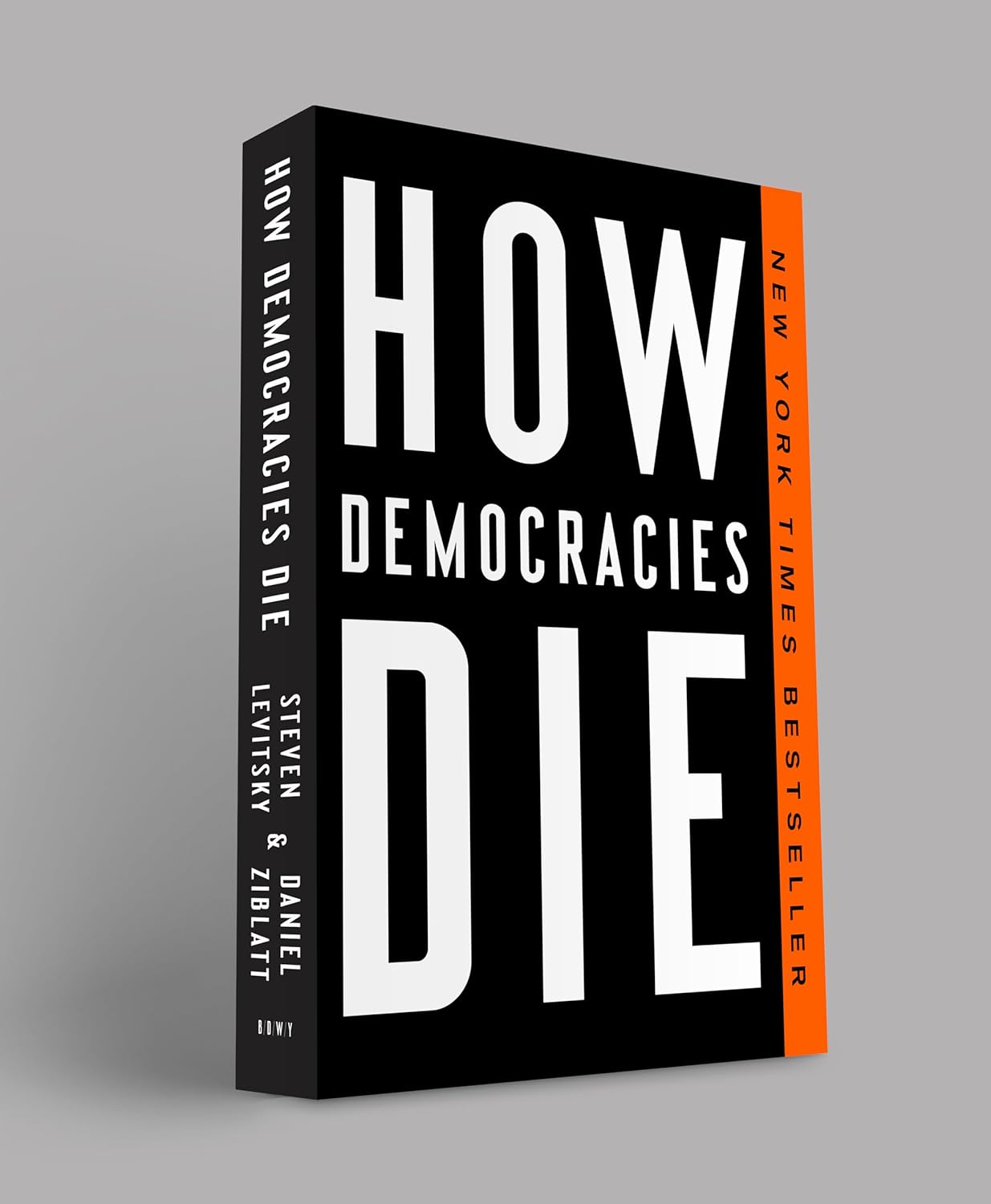
How Democracies Die
Steven Levitsky, Daniel Ziblatt


 Apple Books


 37 Min Reading Time
 Audio Version Available
About this book
Democracies no longer die at the end of a soldier's gun. Harvard professors Steven Levitsky and Daniel Ziblatt reveal a chilling portrait of how elected democracies can be subtly dismantled, from Venezuela and Turkey to the United States. Through meticulous historical analysis and contemporary examples, they expose the common threads of democratic erosion: the gradual weakening of critical institutions, the rise of polarizing strongmen, and the systematic suppression of political rivals.
How Democracies Die is a stark warning about the fragility of democratic norms and an urgent call to protect them. Levitsky and Ziblatt provide a crucial guide for recognizing the warning signs and safeguarding our republics before it's too late. This is a vital book for anyone concerned about the future of democracy in an era of rising authoritarianism.
Summary of Key Ideas
- •
The Subtle Erosion of Democracy
Democracies no longer die primarily through military coups, but through a gradual erosion of democratic norms. This 'slow-motion' death is often insidious, making it difficult to recognize until it's well underway. Leaders weaken democratic institutions subtly, such as by attacking the media, undermining the judiciary, or spreading disinformation, creating a climate of distrust and polarization that enables further authoritarian measures. Citizens and other political actors may not immediately recognize these actions as threats, allowing the erosion to continue unchecked. This makes the defense of democracy a constant and vigilant process, requiring a commitment to democratic principles even when politically inconvenient.
- •
Polarization as a Catalyst for Decay
Political polarization, especially when combined with weak democratic norms, creates fertile ground for democratic backsliding. When societies become deeply divided along partisan lines, the temptation to win at all costs increases. This can lead political actors to justify actions that would have previously been considered unacceptable, such as manipulating electoral rules or suppressing dissent. Moreover, extreme polarization can paralyze government, making it difficult to address pressing issues and further eroding public trust in democratic institutions. Maintaining a healthy democracy requires cross-partisan cooperation and a willingness to compromise, even when deeply divided.
- •
The Importance of Gatekeeping
The gatekeeping function of political parties is crucial in preventing authoritarians from gaining power. Responsible political parties should vet candidates, ensuring they are committed to democratic norms and principles. When parties fail to act as gatekeepers, extremist figures can rise to positions of influence, using their power to undermine democracy from within. The authors emphasize that established parties often underestimate the threat posed by authoritarian outsiders, assuming they can be controlled or co-opted. This failure of gatekeeping represents a critical vulnerability in democratic systems.
- •
The Necessity of Mutual Toleration
Mutual toleration, the understanding that political rivals are legitimate and have a right to exist and compete for power, is a key norm for a healthy democracy. When politicians view their opponents as enemies to be crushed rather than rivals to be debated, the foundations of democracy are weakened. Without mutual toleration, compromise becomes impossible, and political competition devolves into a zero-sum game. This erodes trust and increases the likelihood of democratic breakdown. Democracy requires accepting the legitimacy of opposing viewpoints, even when deeply disagreeing with them.
- •
The Value of Institutional Forbearance
Institutional forbearance, or restraint in the exercise of legal powers, is another vital, yet often unwritten, norm that sustains democracy. Even when actions are technically legal, they can be damaging to the spirit of democracy if they violate long-standing conventions or undermine fundamental principles. For instance, aggressively using legal loopholes to obstruct the opposition or gerrymandering districts to entrench power, while permissible under the law, can erode democratic norms and undermine the fairness of the political system. Democracies rely on an understanding that power should be exercised responsibly and with respect for democratic principles, not simply to the fullest extent possible.
- •
Learning from Historical Precedents
The book uses historical examples, primarily from Europe and Latin America, to illustrate how democracies have died in the past. These case studies demonstrate that democratic erosion follows predictable patterns, often involving the gradual undermining of institutions, the normalization of anti-democratic behavior, and the suppression of dissent. By examining these historical precedents, the authors seek to provide insights into the warning signs of democratic decline and to highlight the strategies that have been used to subvert democratic systems. These historical lessons serve as a crucial guide for recognizing and combating threats to democracy today.
- •
The Call to Defend Democracy
While focusing on the risks to democracy, the book implicitly calls for active engagement in defending democratic values and institutions. Citizens, civil society organizations, and political leaders all have a role to play in resisting authoritarian tendencies and upholding democratic norms. This includes speaking out against anti-democratic behavior, supporting independent media, and participating in political processes. The preservation of democracy is not a passive endeavor but requires constant vigilance and a willingness to defend democratic principles, even when faced with opposition or unpopularity.
Chapter Recap

About The Author
Steven Levitsky
American political scientist
Main Quotes
"Democracies may die at the hands not of generals but of elected leaders."
"Democratic backsliding today begins at the ballot box."
"The problem is not that autocrats disband legislatures, but that elected leaders gradually subordinate and disable them."
"How do democracies die? Because the leaders of those democracies begin to dismantle them."
"The electoral road to authoritarianism is paved by constitutional hardball and strategic harassment."
"The tragedy of democratic erosion is that it is rarely sudden and visible."
"Political polarization can be toxic to democracy."
"Mutual toleration means accepting the legitimacy of one’s opponents."
"Forbearance is closely related to toleration. It requires politicians to exercise restraint in the use of their legal prerogatives."
"When democracies begin to erode, it is a sign that these guardrails are weakening."
Who Should Read This Book
Readers interested in political science and democratic theory
Individuals concerned about contemporary political trends and the erosion of democratic norms
Students and academics studying political science, history, or sociology
Policy makers and political analysts
Anyone seeking to understand the factors that contribute to democratic backsliding
Readers interested in current affairs and global politics
Individuals looking for a non-partisan analysis of threats to democracy
Book Summaries Like
How Democracies Die
FAQ

Free Access to LitNotes