




 DISCORD
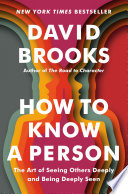
How to Know a Person
David Brooks

 Apple Books


 56 Min Reading Time
 Audio Version Available
About this book
In a world where genuine connection feels increasingly rare, comes a transformative guide to bridging the divides that separate us. From the #1 New York Times bestselling author of The Road to Character and The Second Mountain, How to Know a Person offers a heartfelt exploration of the art of truly seeing and understanding one another.
David Brooks illuminates the profound impact of making others feel valued, heard, and understood, revealing the essential skills that lie at the heart of any healthy relationship, family, or community. Through insightful questions and drawing from psychology, neuroscience, history, and philosophy, Brooks provides a welcoming and integrated approach to fostering deeper connections.
Discover how to cast the right kind of attention, engage in meaningful conversations, and recognize the crucial elements of a person's story. How to Know a Person is a remedy for fragmentation, hostility, and misperception. Learn to see the greatness within others—and, in turn, discover something larger within yourself. This book is for anyone yearning for connection and seeking to be truly understood.
Summary of Key Ideas
- •
Understanding Over Judgment
The core argument of the book revolves around shifting from a culture of judgment to one of understanding. Brooks advocates for moving away from quick assessments and societal categorization, urging readers to approach each individual with genuine curiosity and openness. This involves suspending preconceived notions and actively listening to understand their unique experiences and perspectives. By prioritizing understanding over judgment, individuals can foster more meaningful and authentic connections, enriching their relationships and communities.
- •
The Power of Empathetic Listening
Brooks emphasizes the importance of deep, empathetic listening as a tool for truly knowing someone. This goes beyond simply hearing words; it involves paying close attention to both verbal and nonverbal cues, seeking to understand the emotions, motivations, and experiences behind what is being communicated. Empathetic listening requires putting aside one's own agenda and focusing entirely on the speaker, creating a safe and supportive space for them to share their thoughts and feelings openly. This active engagement allows for a deeper connection and understanding to develop.
- •
The Art of Asking Meaningful Questions
The book highlights the significance of asking the right questions to foster deeper conversations. These are not superficial, surface-level inquiries but rather thoughtful prompts designed to elicit meaningful responses and reveal a person's inner world. Examples include asking about moments when they felt most alive, what they value most, or what challenges they have overcome. By posing such questions, individuals can encourage self-reflection and create opportunities for authentic sharing, leading to a more profound understanding of each other.
- •
Becoming an 'Illuminator'
Brooks introduces the concept of 'Illuminators' – individuals who possess the ability to make others feel seen, valued, and understood. These individuals have a knack for creating a sense of safety and acceptance, allowing others to open up and share their true selves. Illuminators listen intently, ask insightful questions, and offer genuine affirmation, making those around them feel truly recognized and appreciated. Cultivating the qualities of an Illuminator can significantly enhance one's ability to connect with others on a deeper level.
- •
The Courage of Vulnerability
A key idea in the book is the importance of vulnerability in building genuine connections. Brooks argues that being willing to share one's own imperfections, struggles, and vulnerabilities creates a space for others to do the same. This mutual vulnerability fosters trust and allows for a deeper level of intimacy to develop. By letting go of the need to appear perfect or always have the right answers, individuals can create more authentic and meaningful relationships.
- •
Recognizing Inherent Dignity
Brooks underscores the significance of recognizing the inherent dignity and worth of every individual, regardless of their background, beliefs, or circumstances. This involves treating everyone with respect, compassion, and empathy, acknowledging their humanity and inherent value. By valuing each person's unique story and perspective, individuals can create a more inclusive and connected society where everyone feels seen, heard, and respected.
Chapter Recap

About The Author
David Brooks
American journalist, commentator and editor "David Brooks is one of the nation’s leading writers and commentators. He is an op-ed columnist for *The New York Times*, a writer for *The Atlantic*, and appears regularly on *PBS Newshour*. He is the bestselling author of *The Second Mountain, The Road to Character, The Social Animal, Bobos in Paradise*, and *On Paradise Drive*." --Penguin Random House
Main Quotes
"The goal is not merely to tolerate the people not like you, but to actually like them."
"It’s a gaze that says that every person I meet is unique, unrepeatable, and, yes, superior to me in some way. Every person I meet is fascinating on some topic."
"The first step in fixing a broken conversation is to ask yourself, What frame am I in right now?"
"We live in a culture that encourages people to display their talents, not to develop them."
"The best way to be known is to learn how to see others."
"If you want to be treated well, treat other people well."
"The true conversations are never monologues. They are the back-and-forth dances in which people become fully present to one another."
"An Illuminator is a blessing to those around him. When he meets others he has a compassionate awareness of human frailty, because he knows the human heart, including his own, is a fragile thing."
"Deep talk is connecting soul to soul."
"There are two mindsets you can adopt when approaching a person: the spotlight and the flashlight."
Who Should Read This Book
Individuals interested in improving their interpersonal skills and relationships
Readers of self-help books focused on communication and empathy
People seeking to understand and connect with others on a deeper level
Those interested in social commentary and improving societal discourse
Professionals in fields such as counseling, therapy, education, and management
Individuals looking for guidance on building stronger communities
Readers of David Brooks' previous works and fans of his writing style
People concerned about social isolation and disconnection in modern society
Those seeking practical advice on how to be a better listener and conversationalist
Individuals interested in understanding different personality types and communication styles
Book Summaries Like
How to Know a Person




FAQ

Free Access to LitNotes