




 DISCORD
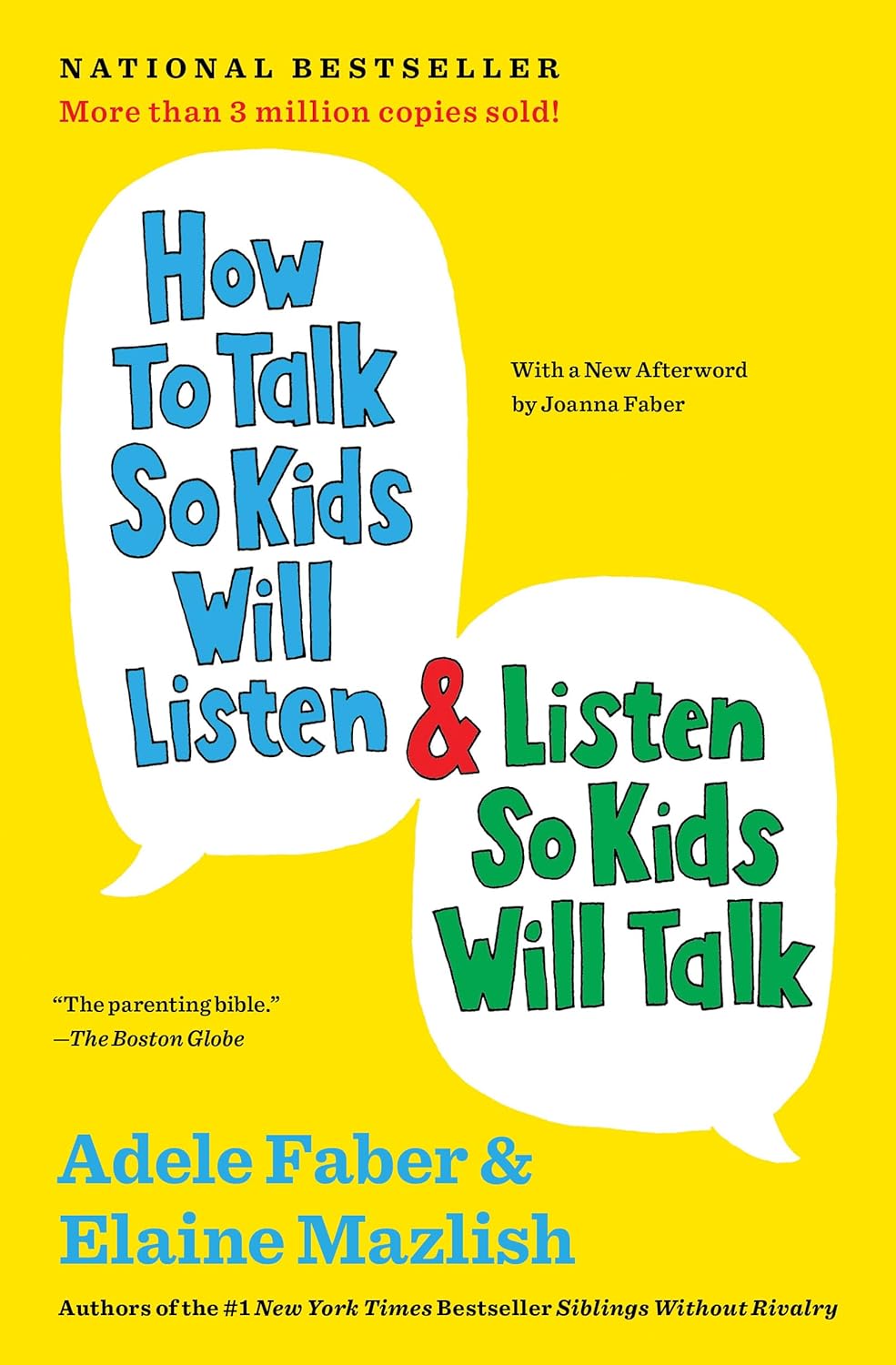
How to Talk So Kids Will Listen & Listen So Kids Will Talk
Adele Faber, Elaine Mazlish


 19 Min Reading Time
 Audio Version Available
About this book
Tired of power struggles and constant conflict with your kids? Discover the groundbreaking communication strategies in How to Talk So Kids Will Listen & Listen So Kids Will Talk, the #1 New York Times bestseller hailed as the "parenting bible."
Internationally acclaimed experts Adele Faber and Elaine Mazlish offer a practical, down-to-earth approach to transforming your relationships with children of all ages. Learn how to:
- Navigate your child's negative emotions with empathy and understanding.
- Express your own feelings without resorting to hurtful words.
- Inspire cooperation and set clear boundaries with love and respect.
- Replace punishment with effective alternatives that foster self-discipline.
- Promote your child's independence and problem-solving skills.
- Resolve family conflicts peacefully and build lasting connections.
Filled with insightful advice, relatable examples, and delightful cartoons, this book provides the tools you need to create a more harmonious and rewarding family life. Stop fighting and start connecting – transform your parenting today!
Summary of Key Ideas
- •
Acknowledge Feelings
Acknowledge Feelings to Foster Connection: This core principle emphasizes validating a child's emotions before attempting to solve their problems. Instead of dismissing or belittling their feelings, parents should actively listen and acknowledge how the child feels. For example, if a child is upset about not being able to play outside, a parent might say, "I understand you're really disappointed that it's raining and you can't go play outside right now." This validation helps the child feel understood and creates a more open and trusting environment for communication.
- •
Describe, Don't Demand
Engage Cooperation by Describing, Not Demanding: Instead of giving direct orders, the book suggests describing the situation or problem. This encourages children to think for themselves and find solutions. For instance, instead of saying, "Clean up this mess right now!" a parent could say, "I see toys all over the floor." This approach invites cooperation and fosters a sense of responsibility in the child, rather than provoking resistance through commands.
- •
Give Choices
Offer Choices to Promote Autonomy: Giving children choices, even small ones, can make them feel more in control and cooperative. These choices should be acceptable to the parent but allow the child to exercise their independence. For example, instead of dictating what a child wears, offer a choice between two outfits. This strategy reduces power struggles and helps children develop decision-making skills.
- •
Collaborative Problem-Solving
Problem-Solve Collaboratively: The book advocates for involving children in finding solutions to problems that affect them. This involves brainstorming ideas together and considering everyone's needs and perspectives. By working together to find solutions, children feel heard and valued, and are more likely to cooperate with the agreed-upon solution. This approach fosters a sense of teamwork and mutual respect within the family.
- •
Encourage Effort
Use Encouragement Instead of Praise: The authors suggest focusing on specific effort and improvement rather than general praise. Instead of saying "You're so smart!", which can create pressure to maintain that label, try saying "I noticed how hard you worked on that puzzle, and you finally figured it out!" This approach highlights the child's effort and perseverance, fostering a growth mindset and intrinsic motivation.
- •
Practice Active Listening
Learn to Listen Actively: Active listening involves paying full attention to what the child is saying, both verbally and nonverbally. This includes making eye contact, nodding, and reflecting back what you hear to ensure understanding. For example, if a child is talking about a problem at school, a parent might say, "So, it sounds like you're feeling frustrated because you didn't understand the assignment?" This demonstrates empathy and encourages the child to continue sharing their thoughts and feelings.
- •
Focus on Behavior
Address Misbehavior Without Insulting Character: When addressing misbehavior, focus on the action, not on labeling the child. Instead of saying "You're a bad boy for hitting your sister," say "Hitting hurts. We don't hit in this house." This separates the child's identity from their behavior, making it clear that the behavior is unacceptable without damaging their self-esteem. This promotes positive change without resorting to shaming or labeling.
- •
Express Anger Respectfully
Express Anger Without Hurting: The book teaches ways to express anger constructively, without resorting to yelling, threats, or insults. This involves identifying your own feelings and expressing them in a calm and respectful manner. For example, instead of shouting, "I'm so angry at you for leaving your toys everywhere!" a parent could say, "I'm feeling frustrated right now because the toys are all over the floor, and it makes it hard to walk through the room." This models healthy emotional expression for the child.
Chapter Recap

About The Author
Adele Faber
Adele Faber and Elaine Mazlish are internationally acclaimed, award-winning experts on adult-child communication. Both lecture nationwide, and their group workshop programs are used by thousands of groups throughout the world to improve communication between children and adults. - http://www.harpercollins.com Adele Faber and Elaine Mazlish were members of a parenting group run by Dr. Ginott, and state in an introduction that Dr. Ginott's classes were the inspiration for the books they wrote. - wikipedia
Main Quotes
"Instead of offering solutions, offer understanding."
"Feelings first, then deal with behavior."
"Describe what you see, describe what you feel, describe what needs to be done."
"Labeling interferes with learning."
"The more you describe, the less you evaluate."
"Cooperation cannot be coerced."
""No" is sometimes a signal for "Tell me more.""
"A child needs encouragement like a plant needs water."
"Our job is to let our children know what's right about them."
"When we treat a child as though he is already what we want him to be, we help him become what he is capable of being."
Who Should Read This Book
Parents of young children
Parents of teenagers
Teachers
Caregivers
Anyone who interacts with children regularly
Individuals interested in improving their communication skills
Individuals interested in positive parenting techniques
Parents seeking alternatives to punishment
Mental health professionals
Counselors
Therapists
Educators seeking classroom management strategies
Parents experiencing communication challenges with their children
Individuals interested in child psychology
Early childhood educators
Parents of children with behavioral issues
Individuals looking for practical parenting advice
Grandparents
Foster parents
Adoptive parents
Parents seeking to build stronger relationships with their children
Parents interested in respectful communication
Those seeking alternatives to yelling or nagging
Parents navigating difficult conversations with children
Individuals interested in fostering cooperation and problem-solving skills in children
Individuals seeking to improve family dynamics
Parents looking for tools to handle children's emotions effectively
Book Summaries Like
How to Talk So Kids Will Listen & Listen So Kids Will Talk



FAQ

Free Access to LitNotes