




 DISCORD
Hyperion
Dan Simmons


 Apple Books


 114 Min Reading Time
 Audio Version Available
About this book
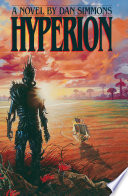
On the eve of galaxy-wide war, seven pilgrims embark on a perilous journey to the enigmatic world of Hyperion, a planet defying galactic law and harboring the monstrous Shrike. Worshipped by some, feared by many, and hunted by others, the Shrike lurks within the Time Tombs—colossal structures moving backward through time. Each pilgrim carries a desperate hope and a dark secret, seeking answers to their life's riddles in the face of Armageddon. But among them may lie the key to humanity's survival or its ultimate destruction. In this stunning epic of transcendent awe and invention, prepare to confront a future where gods and monsters walk, and the fate of humanity hangs in the balance.
Summary of Key Ideas
- •
The Pilgrimage Narrative
The Canterbury Tales in Space: Hyperion employs a narrative structure similar to Chaucer's Canterbury Tales, where a group of pilgrims journey to a sacred site, each recounting their individual story along the way. This framework allows Simmons to explore diverse themes and perspectives, offering a multifaceted view of the Hyperion universe and its impending crisis. The pilgrims' tales gradually reveal the mysteries surrounding the Time Tombs, the Shrike, and the impending war with the Ousters, creating a rich and complex tapestry of interconnected narratives.
- •
The Mystery of the Shrike
The Enigmatic Shrike: The Shrike, a terrifying creature of metal and thorns, serves as a central mystery and a source of fear and fascination throughout the novel. Its motives are unclear, and its actions seem both random and purposeful. The pilgrims' journey to the Time Tombs, where the Shrike resides, is driven by a desire to understand this enigmatic entity and perhaps even find a way to appease it. The Shrike represents the unknown, the terrifying, and the potentially divine, challenging the characters' beliefs and forcing them to confront their deepest fears.
- •
The Fluidity of Time
Time and Destiny: Hyperion grapples with the concepts of time, causality, and destiny. The Time Tombs, structures that move backward through time, distort the conventional understanding of linear progression. The characters' lives are intertwined with these temporal anomalies, leading them to question whether they have free will or are merely puppets of fate. The novel suggests that the past, present, and future are not fixed but are fluid and interconnected, creating a sense of both wonder and dread.
- •
The Crisis of Faith
Faith and Belief: The pilgrims represent a spectrum of religious and philosophical beliefs, each grappling with their faith in the face of the inexplicable events occurring on Hyperion. From the Catholic priest seeking to understand the meaning of suffering to the Templar druid connecting with nature, the characters' spiritual journeys are tested and transformed. The novel explores the power of faith, the challenges of doubt, and the search for meaning in a universe that often seems indifferent.
- •
Exploring Humanity's Essence
The Nature of Humanity: Through the diverse cast of characters and their harrowing experiences, Hyperion delves into the fundamental aspects of the human condition. Themes of love, loss, sacrifice, and redemption are explored as the pilgrims confront their pasts and face an uncertain future. The novel examines the capacity for both great good and terrible evil within humanity, highlighting the complexities and contradictions that define our species.
- •
The Perils of Unchecked Technology
Technological Advancement and its Consequences: Hyperion presents a future where technology has advanced significantly, yet it also explores the potential consequences of unchecked technological progress. The dangers of artificial intelligence, the exploitation of resources, and the dehumanizing effects of technology are all examined within the context of the Interstellar Hegemony's expansion and its conflict with the Ousters. The novel serves as a cautionary tale about the need for ethical considerations and responsible innovation in the face of rapid technological change.
- •
The Specter of War
War and its Impact: The impending war between the Hegemony and the Ousters looms large throughout Hyperion, shaping the characters' destinies and threatening to engulf the entire galaxy in chaos. The novel explores the devastating effects of war on individuals, societies, and the environment. It questions the motivations behind conflict and the justifications for violence, highlighting the futility and tragedy of war.
Chapter Recap

About The Author
Dan Simmons
Main Quotes
"In the beginning was the Word. Then came the fucking word processor. Then came the thought processor. Then came the death of literature. And so it goes."
"We must not... and shall not... be misled by the stir of trumpets or the rush of near-joy which the call to arms inevitably produces."
"A hero. You want to be one of those rare human beings who make history, rather than merely watch it flow around them like water around a rock."
"The shortest route to courage is absolute ignorance."
"Stand as I did after throwing the switch, a murderer, a betrayer, but still proud, feet firmly planted on Hyperion's shifting sand, head held high, fist raised."
"Look not mournfully into the Past. It comes not back again. Wisely improve the Present. It is thine. Go forth to meet the shadowy Future, without fear."
"Belief in one's identity as a poet or writer prior to the acid test of publication is as naive and harmless as the youthful belief in one's immortality."
"There arises from a bad and unapt formation of words a wonderful obstruction to the mind."
"It no longer matters who consider themselves the masters of events. Events no longer obey their masters."
"The Universe is vast and we are so small. There is really only one thing we can ever truly control: That is whether we are good or evil."
Who Should Read This Book
Science fiction fans, particularly those who enjoy space operas and complex, layered narratives.
Readers who appreciate literary science fiction with elements of horror, poetry, and religious allegory.
Readers familiar with and appreciative of classic science fiction authors like Isaac Asimov, Arthur C. Clarke, and Frank Herbert.
Readers who enjoy stories with multiple perspectives and unreliable narrators.
Readers who are interested in philosophical and existential themes within a science fiction setting.
Readers who appreciate detailed world-building and imaginative concepts.
Fans of Dan Simmons' other works, particularly those who enjoy his blend of genres and literary style.
Readers looking for a challenging and thought-provoking reading experience.
Book Summaries Like
Hyperion
FAQ

Free Access to LitNotes