




 DISCORD
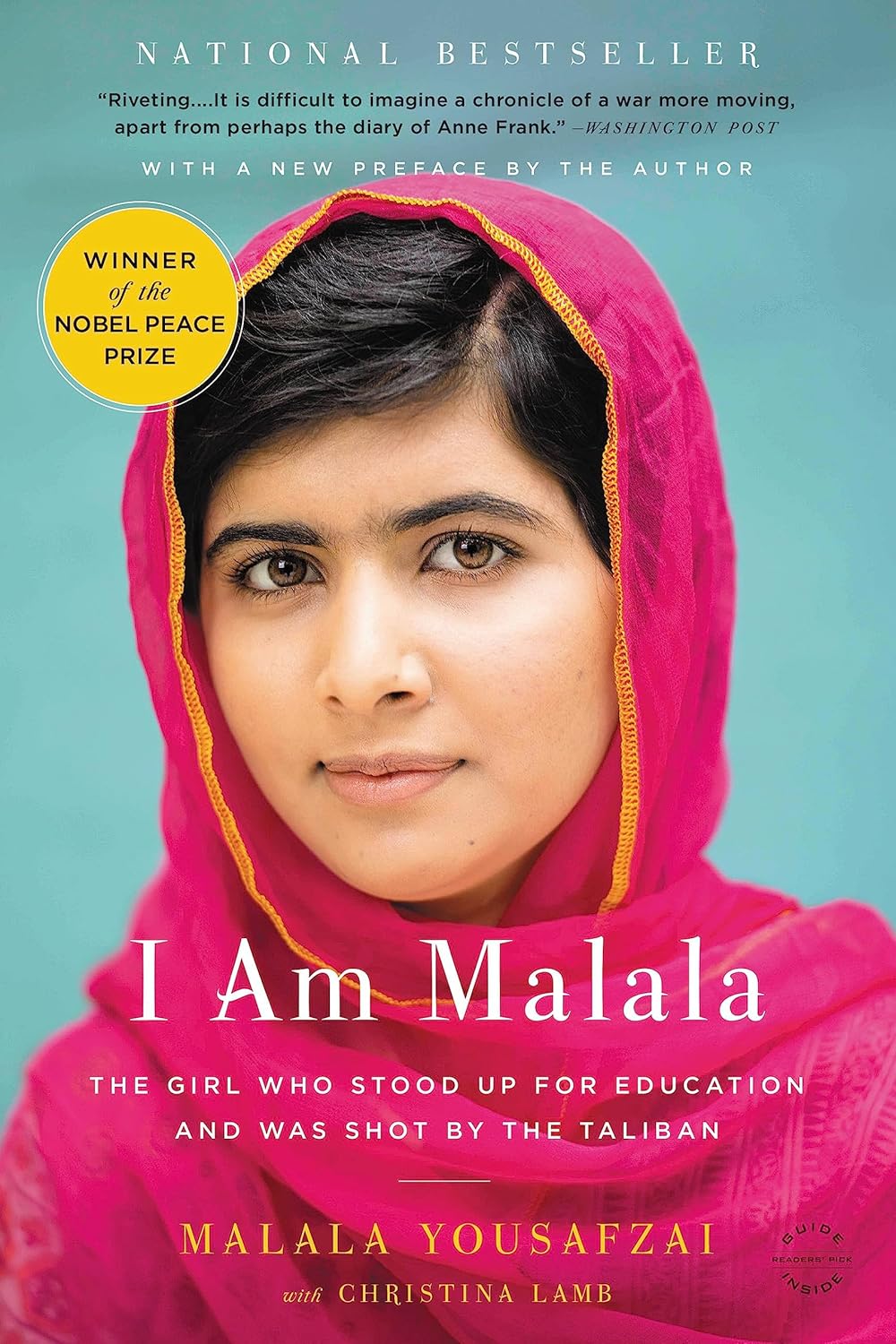
I Am Malala
Malala Yousafzai, Christina Lamb


 Amazon Best Sellers
 Apple Books


 128 Min Reading Time
 Audio Version Available
About this book
In Pakistan's Swat Valley, the Taliban seized control, banning girls from school and silencing dissent. But one girl, Malala Yousafzai, refused to be quiet. I Am Malala is the unforgettable true story of Malala's fight for education, her near-fatal attack by the Taliban, and her extraordinary journey from a remote village to the United Nations. It is a testament to the power of family, the courage of a young girl, and the unwavering belief that one person's voice can ignite change worldwide.
Summary of Key Ideas
- •
The Transformative Power of Education
Malala's unwavering belief in the power of education, especially for girls, is a central theme. She demonstrates how education can empower individuals, provide them with knowledge and critical thinking skills, and enable them to shape their own destinies. In the face of threats from the Taliban, Malala passionately advocates for girls' access to schools, highlighting the transformative impact of learning on individuals and society. Her story underscores the idea that education is not just about acquiring knowledge but also about fostering independence, equality, and social progress. Malala's courageous fight for education serves as an inspiration for advocating for equal opportunities worldwide.
- •
Culture, Extremism, and Identity
Malala's memoir vividly portrays the clash between traditional Pashtun values and extremist ideologies. She navigates the complexities of her cultural heritage, cherishing its positive aspects such as hospitality and community, while challenging oppressive customs that limit women's freedom and opportunities. The book reveals how extremist groups, like the Taliban, exploit and distort cultural and religious norms to justify their actions. Malala's struggle highlights the importance of reinterpreting cultural traditions in a way that promotes equality, justice, and human rights. She emphasizes that true cultural preservation lies in embracing progress and inclusivity rather than clinging to outdated practices.
- •
Courage in the Face of Adversity
Malala's courage in the face of adversity is a prominent theme throughout the book. Despite facing threats, violence, and ultimately a near-fatal attack, she remains steadfast in her commitment to advocating for girls' education. Her resilience demonstrates the strength of her convictions and inspires others to stand up for what they believe in, even when faced with daunting challenges. Malala's story highlights that courage is not the absence of fear, but the triumph over it. Her bravery encourages individuals to find their voice, challenge injustice, and make a difference in the world, regardless of the personal risks involved.
- •
The Power of Family Support
The book emphasizes the crucial role of family, particularly Malala's father, Ziauddin Yousafzai, in shaping her values and activism. Ziauddin's progressive views and unwavering support empower Malala to pursue her education and speak out against injustice. Their close relationship demonstrates the importance of parental encouragement in fostering a child's potential and instilling a sense of social responsibility. The Yousafzai family's unity and resilience in the face of threats underscore the strength of familial bonds and the power of love and support in overcoming adversity. Malala's story highlights how a supportive family can provide the foundation for individuals to become agents of change.
- •
Faith, Extremism, and Interpretation
Malala's memoir explores the complexities of religious faith and its interpretation. While she deeply respects Islam, she critiques the ways in which extremist groups manipulate religious teachings to justify violence and oppression, particularly against women. Malala's understanding of Islam emphasizes peace, compassion, and equality, contrasting sharply with the Taliban's distorted version. She advocates for a more inclusive and tolerant interpretation of Islam that aligns with principles of justice and human rights. Her story encourages critical engagement with religious texts and traditions, promoting a faith-based approach to social justice and equality.
- •
Global Interconnectedness and Social Justice
The narrative underscores the global interconnectedness of social justice issues. Malala's story resonates with people from diverse backgrounds, highlighting the universal importance of education, equality, and human rights. Her activism transcends geographical boundaries, inspiring individuals and communities worldwide to advocate for positive change. The book demonstrates how local struggles can have global implications, and how international solidarity can amplify the impact of grassroots movements. Malala's journey exemplifies the power of cross-cultural understanding and collaboration in addressing systemic injustices and promoting a more equitable world.
- •
The Fight for Gender Equality
Malala’s story brings to light the harsh realities faced by girls and women in patriarchal societies, particularly in regions under extremist rule. She exposes the systemic discrimination, limited opportunities, and violence that women endure, highlighting the urgent need for gender equality and empowerment. The book serves as a powerful call to action, urging individuals and institutions to challenge patriarchal norms and create a more just and equitable world for women. Malala’s advocacy emphasizes that women’s rights are not just a matter of fairness but are essential for the progress and well-being of society as a whole.
- •
The Power of Speaking Out
Malala's experiences highlight the importance of speaking out against injustice, even in the face of great personal risk. She demonstrates that silence can be complicity, and that individuals have a moral responsibility to challenge oppression and defend the rights of others. Her courageous voice inspires others to overcome fear and speak truth to power. The book encourages readers to recognize their own potential to make a difference, no matter how small, and to use their voices to advocate for a more just and equitable world. Malala's story reminds us that collective action, fueled by individual courage, can bring about meaningful change.
Chapter Recap

About The Author
Malala Yousafzai
Main Quotes
"We realize the importance of our voices only when we are silenced."
"When the whole world is silent, even one voice becomes powerful."
"I don't want to be thought of as the 'girl who was shot by the Taliban' but the 'girl who stood up for her rights.'"
"With guns you can kill terrorists, with education you can kill terrorism."
"Let us remember: One book, one pen, one child, and one teacher can change the world."
"Education is education. We should learn everything and then choose which path to follow."
"I told myself, Malala, you have already faced death. This is your second life. Don't be afraid — if you are afraid, you can't move forward."
"If people are good only because they fear punishment, and hope for reward, then we are a sorry lot indeed."
"I come from a country that was created at midnight. When I almost died it was just after midday."
"Some people think I am against Pakistan, but that's not true. I love Pakistan. I want Pakistan to be an educated country."
Who Should Read This Book
Young adults and teens interested in social justice and activism
Readers of memoirs and autobiographies
Individuals interested in international affairs, particularly in Pakistan and Afghanistan
Those passionate about education and human rights
People seeking inspiring stories of courage and resilience
Educators and students in middle school, high school, and college settings
Readers interested in learning about Islam and the cultural context of the Swat Valley
Individuals interested in women's rights and gender equality
Parents and adults looking for a book to discuss important social issues with their children
People who enjoy stories about overcoming adversity and fighting for what you believe in
Book Summaries Like
I Am Malala



FAQ

Free Access to LitNotes