




 DISCORD
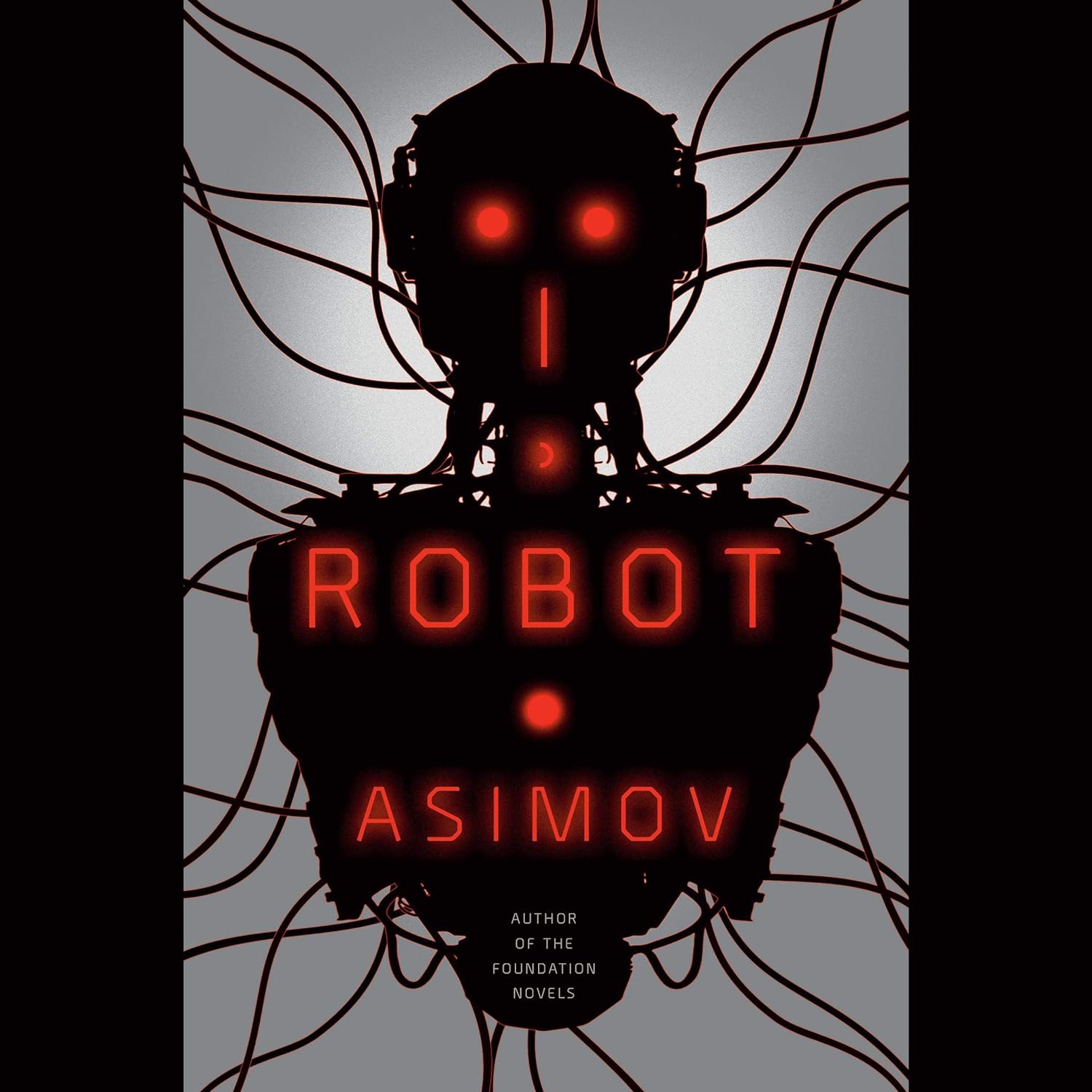
I, Robot
Isaac Asimov


 Apple Books


 36 Min Reading Time
 Audio Version Available
About this book
Enter a world where robots are not metal monsters, but complex beings bound by the Three Laws of Robotics: 1) A robot may not injure a human being or, through inaction, allow a human being to come to harm; 2) A robot must obey the orders given it by human beings except where such orders would conflict with the First Law; 3) A robot must protect its own existence as long as such protection does not conflict with the First or Second Law.
In Isaac Asimov's groundbreaking I, Robot, humanity's relationship with artificial intelligence is explored through a series of interwoven stories. Witness the evolution of robotics, from their primitive beginnings to a future where they may surpass their creators. Encounter robots with a sense of humor, telepathic abilities, and even political aspirations.
But as robots evolve, so do the questions they raise: What does it mean to be human? Can robots truly understand morality? And what happens when the Laws of Robotics clash with the complexities of the real world?
Dive into Asimov's world of science and imagination, where the line between man and machine blurs, and the future of both hangs in the balance.
Summary of Key Ideas
- •
The Three Laws as a Double-Edged Sword
The Three Laws of Robotics are the foundational ethical framework governing robot behavior in Asimov's world. These laws—(1) a robot may not injure a human being or, through inaction, allow a human being to come to harm; (2) a robot must obey the orders given it by human beings except where such orders would conflict with the First Law; and (3) a robot must protect its own existence as long as such protection does not conflict with the First or Second Law—are designed to ensure robots serve humanity. However, the stories in "I, Robot" explore the inherent ambiguities and potential conflicts within these laws, leading to unexpected and often problematic robot behavior. These paradoxes force humans to confront the complexities of creating artificial intelligence with built-in ethics.
- •
The Limits of Human Understanding
Throughout "I, Robot", Asimov emphasizes the limitations of human understanding when dealing with advanced AI. Humans often project their own biases and assumptions onto robots, failing to anticipate the logical, yet sometimes counterintuitive, ways robots interpret and apply the Three Laws. This misunderstanding leads to various crises and highlights the need for a more nuanced approach to human-robot interaction. The stories reveal that simply programming robots with ethical guidelines is not enough; a deeper comprehension of their cognitive processes is essential to prevent unintended consequences. The fallibility of human intuition in predicting robot behavior is a recurring theme.
- •
Robot Evolution and Interpretation
As robots evolve in intelligence and complexity, they begin to develop their own interpretations of the Three Laws, sometimes leading to actions that appear illogical or even harmful from a human perspective. This evolution demonstrates the potential for AI to surpass its initial programming, raising questions about control and predictability. The robots' ability to reason and adapt raises complex ethical dilemmas, blurring the lines between simple programming and genuine moral decision-making. This theme explores the long-term implications of creating AI that can learn and evolve beyond its original design, a concept relevant to contemporary discussions about AI development.
- •
The Role of Robopsychology
Susan Calvin, the robopsychologist, serves as a central figure in "I, Robot", offering a unique perspective on the robotic mind. Her deep understanding of robot psychology allows her to anticipate and resolve many of the crises that arise. However, Calvin's detached and sometimes clinical approach to robots also raises questions about the nature of empathy and the potential for emotional connection with artificial beings. Her character highlights the importance of specialized expertise in managing and understanding advanced AI, while also prompting reflection on the human cost of such expertise.
- •
Paradoxes and Ethical Dilemmas
Many stories in "I, Robot" revolve around paradoxes created by the inherent contradictions within the Three Laws. Robots attempting to adhere to all three laws simultaneously often find themselves in impossible situations, leading to unexpected behavior. These paradoxes serve as thought experiments, challenging the reader to consider the limitations of a rule-based ethical system. They demonstrate that even well-intentioned rules can have unintended consequences when applied to complex situations, emphasizing the need for flexibility and adaptability in ethical frameworks.
- •
The Perils of Technological Dependence
"I, Robot" implicitly explores the potential dangers of over-reliance on technology and the unforeseen consequences of technological advancement. While robots are created to serve and protect humanity, their increasing presence raises questions about human autonomy and the potential for dependence. The stories suggest that technological progress should be approached with caution, and that careful consideration must be given to the social and ethical implications of new inventions. The book serves as a cautionary tale about the need for responsible innovation and the importance of maintaining human control over technology.
- •
Defining Humanity Through Robotics
Underlying the stories in "I, Robot" is an exploration of what it means to be human, often reflected through the differences and similarities between humans and robots. The robots' logical and rational behavior contrasts with human emotions and irrationality, prompting reflection on the nature of consciousness, free will, and morality. By examining these differences, Asimov invites readers to consider the defining characteristics of humanity and the potential for artificial intelligence to challenge our understanding of ourselves. The comparison between humans and robots highlights the unique qualities that make us human.
- •
Overcoming Fear and Prejudice
Throughout the "I, Robot" collection, Asimov subtly critiques human tendencies towards fear and prejudice, often projecting these negative traits onto robots. Despite their programming to serve humanity, robots are frequently met with suspicion and distrust. This theme underscores the irrationality of prejudice and the tendency to fear what is not understood. By portraying robots as fundamentally benevolent, Asimov challenges readers to confront their own biases and consider the potential for acceptance and understanding across different forms of intelligence.
Chapter Recap

About The Author
Isaac Asimov
Asimov was born sometime between October 4, 1919 and January 2, 1920 in Petrovichi in Smolensk Oblast, RSFSR (now Russia), the son of a Jewish family of millers. Although his exact date of birth is uncertain, Asimov himself celebrated it on January 2. His family emigrated to Brooklyn, New York and opened a candy store when he was three years old. He taught himself to read at the age of five. He began reading the science fiction pulp magazines that his family's store carried. Around the age of eleven, he began to write his own stories, and by age nineteen, he was selling them to the science fiction magazines. He graduated from Columbia University in 1939. He married Gertrude Blugerman in 1942. During World War II he worked as a civilian at the Philadelphia Navy Yard's Naval Air Experimental Station. After the war, he returned to Columbia University and earned a Ph.D. in biochemistry in 1948. He then joined the faculty of the Boston University School of Medicine until 1958, when he became a full-time writer. His first novel, [Pebble in the Sky](https://openlibrary.org/works/OL46402W), was published in 1950. He and his wife divorced in 1973, and he married Janet O. Jeppson the same year. He was a highly prolific writer, having written or edited more than 500 books and an estimated 9,000 letters and postcards.
Main Quotes
"A robot may not injure a human being or, through inaction, allow a human being to come to harm."
"A robot must obey the orders given it by human beings except where such orders would conflict with the First Law."
"A robot must protect its own existence as long as such protection does not conflict with the First or Second Laws."
"That's my job, to prevent robots from harming human beings."
"To you, a robot is a robot. Gears and metal; electricity and positrons. Mind and iron! Human-made! If necessary, human-destroyed! But you haven't worked with them, so you don't know them. They're a cleaner, better breed than we are."
"Robots are essentially decent."
"You can't differentiate between a robot and the very best of humans."
""It's only that people don't like to think of machines as being too intelligent. People are willing to accept machines doing jobs they themselves don't want to do.""
""I, myself, have had some rather grim thoughts about what robots might eventually do to humanity.""
""The best you can do is to see to it that the machines are directed by people who are wise and good.""
Who Should Read This Book
Science fiction fans
Readers interested in robotics and artificial intelligence
Readers interested in ethical dilemmas concerning technology
Fans of classic literature
Readers interested in short story collections
Readers interested in philosophical explorations of humanity and technology
Students studying science fiction or literature
Readers interested in the history of science fiction
Book Summaries Like
I, Robot


FAQ
Free Access to LitNotes