




 DISCORD
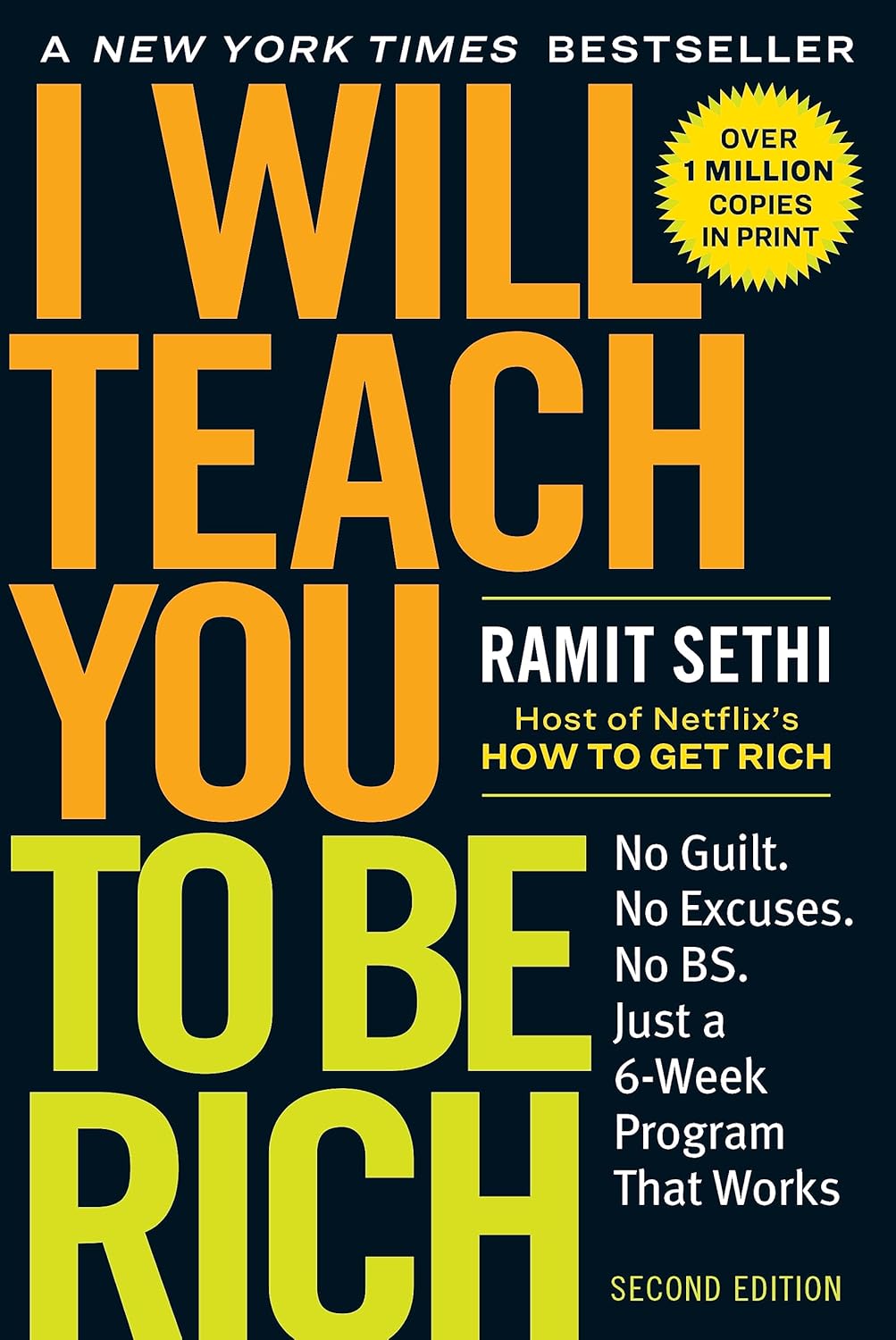
I Will Teach You To Be Rich
Ramit Sethi


 Amazon Best Sellers
 Apple Books


 70 Min Reading Time
 Audio Version Available
About this book
Ready to ditch financial stress and live a richer life?
As seen on Netflix's "How to Get Rich," I Will Teach You To Be Rich is your no-BS, 6-week program to mastering your money. Forget restrictive budgeting and confusing jargon. Personal finance expert Ramit Sethi delivers a practical, step-by-step guide to earning more, saving smarter, and spending guilt-free on what you love.
In this updated and expanded edition, you'll discover how to:
- Crush debt and student loans faster than you thought possible.
- Automate your finances so your money flows exactly where you want it to.
- Negotiate like a pro and save hundreds each month (without sacrificing your lattes).
- Set up a simple, yet powerful investment strategy that outperforms the experts.
- Confidently handle big expenses like buying a car or house, planning a wedding, or starting a family.
Join the thousands who have already used Ramit's groundbreaking advice to build wealth and achieve financial freedom. It's time to take control of your money and start living a rich life, today.
Summary of Key Ideas
- •
Automate Your Finances
Automating your finances is a cornerstone of the "I Will Teach You To Be Rich" philosophy. Sethi advocates for setting up automatic transfers from your checking account to your savings and investment accounts. This system ensures that your bills are paid on time, savings goals are consistently met, and investments are made regularly without requiring constant manual effort. By automating these processes, you remove the temptation to spend impulsively and create a financial system that works for you, even when you're not actively thinking about it. This proactive approach minimizes the risk of missed payments, late fees, and underfunded savings, paving the way for long-term financial security and growth.
- •
Focus on Big Wins, Not Penny-Pinching
Sethi emphasizes focusing on the "big wins" in personal finance rather than getting bogged down in meticulous penny-pinching. Big wins include optimizing your credit cards, automating your savings and investments, and negotiating better rates on your existing bills. These actions have a significantly larger impact on your overall financial health compared to obsessively tracking every small expense. By concentrating on these high-impact areas, you can achieve substantial financial improvements with less effort and mental energy. This approach aligns with the principle of Pareto efficiency, where 80% of the results come from 20% of the efforts, making your financial management more effective and sustainable.
- •
Practice Conscious Spending
Conscious spending involves aligning your spending with your values and priorities. It's about intentionally deciding where your money goes, ensuring that you spend generously on the things you love while cutting back on the things that don't bring you joy. This approach requires you to identify your personal values and then create a spending plan that reflects those values. Conscious spending isn't about deprivation; it's about making deliberate choices that maximize your happiness and satisfaction. By understanding where your money is going and why, you can create a more fulfilling and sustainable financial life.
- •
Design Your Rich Life
Sethi challenges the conventional wisdom that you must deprive yourself to save money. Instead, he promotes the idea of living a "rich life" by spending freely on the things you love while cutting back ruthlessly on the things you don't. This involves identifying your core values and aligning your spending with those values. By focusing on what truly brings you joy, you can create a lifestyle that feels abundant and fulfilling, even while saving and investing for the future. This approach emphasizes enjoyment and personal satisfaction, making financial management a more positive and sustainable part of your life.
- •
Invest Early and Consistently
Investing early and consistently is crucial for long-term wealth accumulation. Sethi advocates for starting to invest as soon as possible, even if it's with small amounts. He emphasizes the power of compound interest, where your earnings generate further earnings over time, leading to exponential growth. By investing early, you take advantage of time, the most powerful asset in investing. Consistency is also key; regular contributions, no matter how small, can significantly increase your investment portfolio over the long run. This proactive approach helps you build a solid financial foundation and achieve your long-term financial goals.
- •
Negotiate Fees and Rates
Negotiating fees and rates with banks and credit card companies can save you a significant amount of money over time. Sethi encourages readers to proactively contact these institutions and ask for lower interest rates, waived fees, or better terms. Many people are hesitant to negotiate, but banks are often willing to work with customers to retain their business. By being assertive and advocating for yourself, you can reduce your expenses and free up more money for savings and investments. This simple yet effective strategy can have a substantial impact on your financial well-being.
- •
Optimize Your Credit Cards
Understanding and optimizing your credit cards is essential for building a strong financial foundation. Sethi advises using credit cards strategically to earn rewards and build credit, but always paying the balance in full each month to avoid interest charges. He also recommends choosing credit cards with rewards that align with your spending habits. By managing your credit cards responsibly, you can take advantage of their benefits without falling into debt. This approach helps you build a positive credit history, which is crucial for securing loans, mortgages, and other financial products in the future.
Chapter Recap

About The Author
Ramit Sethi
Main Quotes
"Spend extravagantly on the things you love, and cut costs mercilessly on the things you don't."
"A rich life is about more than money. It starts by managing your own. And it continues by helping others become rich."
"The single most important factor to getting rich is getting started, not being the smartest person in the room."
"Your network is your net worth."
"Don't be afraid to negotiate everything."
"It's fine to keep an eye on your expenses, but you should focus on spending time on the things that matter, the Big Wins."
"We know that being rich isn't just about money. We know that conscious spending can be fun (especially when it's automated)."
"Anyone can be rich."
"No guilt, no excuses - just a 6-week programme that works."
"People often give up too soon because they don't know what to do next."
Who Should Read This Book
Young adults and millennials (20-35 year olds)
Individuals seeking a practical, step-by-step guide to personal finance
People who are new to investing and want to automate their finances
Those who are interested in a no-nonsense, sometimes humorous approach to money management
Readers who want to optimize their spending and saving habits
Individuals looking for a simple system to manage their money without feeling restricted
Book Summaries Like
I Will Teach You To Be Rich


FAQ

Free Access to LitNotes