




 DISCORD
Inverting the Pyramid
Jonathan Wilson


 Apple Books


 99 Min Reading Time
 Audio Version Available
About this book
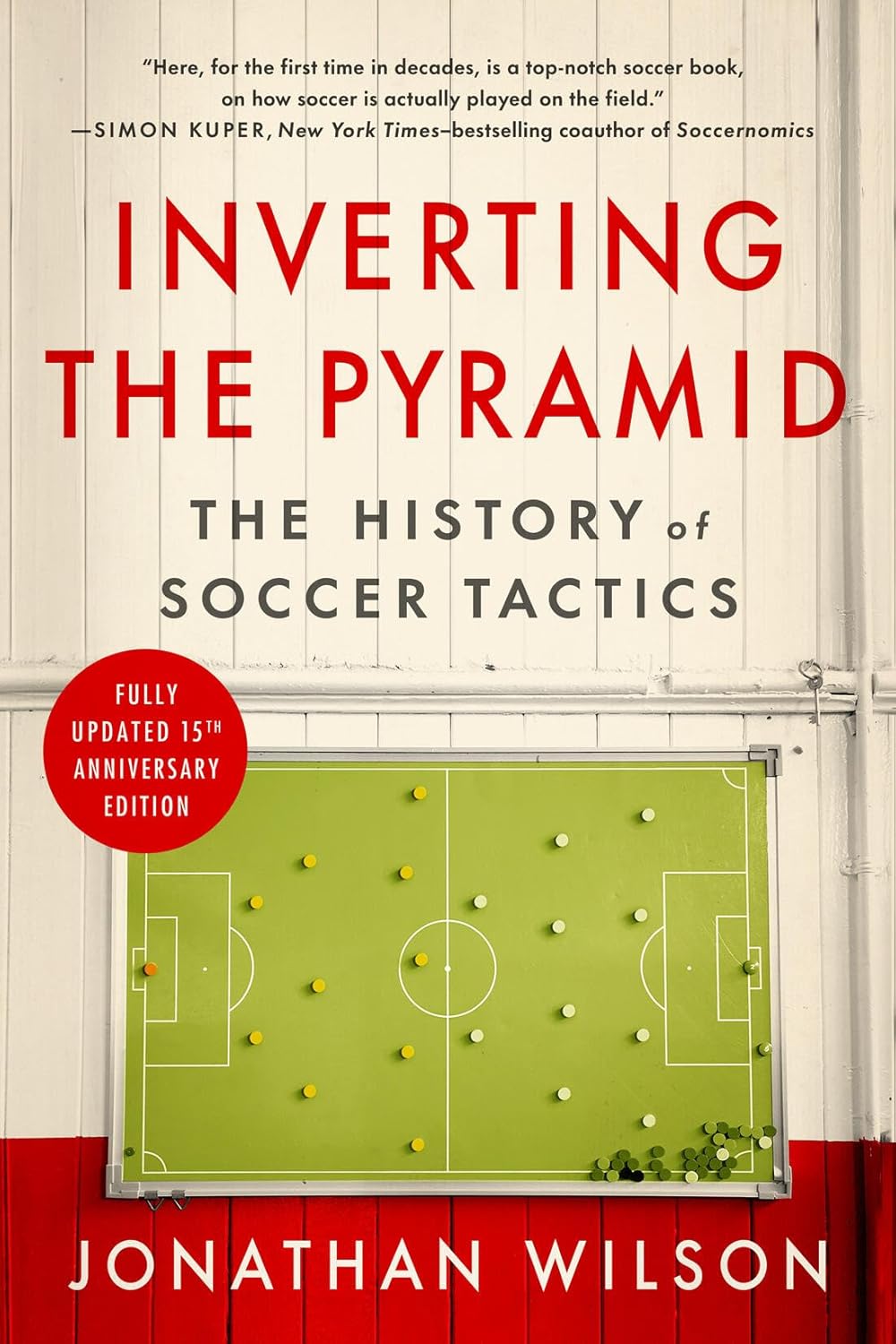
Delve into the tactical evolution of soccer with Jonathan Wilson's "Inverting the Pyramid," a groundbreaking exploration of the beautiful game's strategic history. From the early days of chaotic formations to the sophisticated systems of modern giants like Barcelona, Wilson dissects the philosophies, innovations, and coaching geniuses that have shaped the sport. Discover how South American flair challenged British convention, how European organization revolutionized teamwork, and why the English have struggled with tactical abstraction. Updated with analysis of the 2022 World Cup and the influence of contemporary coaches like Klopp and Guardiola, this classic is essential reading for any fan seeking a deeper understanding of soccer's ever-evolving art.
Summary of Key Ideas
- •
The Genesis of Tactics: The 2-3-5 Pyramid
The Pyramid (2-3-5) formation is explored as the original global tactical system in football. It highlights how early football tactics were heavily influenced by the physical demands of the game and the limited understanding of positional play. The formation emphasized direct attacking play and relied on individual skill rather than coordinated teamwork. Wilson delves into the historical context, explaining the societal and cultural factors that shaped the adoption and evolution of this formation across different countries. The book uses the pyramid formation as a starting point, illustrating the gradual shift towards more sophisticated and strategically diverse formations.
- •
The Hungarian Revolution: Fluidity and Innovation
Wilson examines the rise of the Hungarian team of the 1950s as a pivotal moment in football history. This team, featuring players like Ferenc Puskás, revolutionized the game with its fluid movement, tactical flexibility, and innovative use of space. The “Magical Magyars” demonstrated the effectiveness of a more dynamic and adaptable approach to football, moving away from rigid formations towards a system that prioritized player intelligence and positional interchange. Their influence extended far beyond their era, shaping the tactical thinking of subsequent generations of coaches and players. This key idea underscores the importance of adaptability and innovation in football tactics.
- •
Total Football: The Dutch Tactical Blueprint
The concept of Total Football, pioneered by the Dutch national team and Ajax in the 1970s, is analyzed as a significant advancement in tactical thinking. Total Football emphasized the ability of every player to seamlessly interchange positions, requiring exceptional technical skill, tactical awareness, and physical conditioning. This system, masterminded by Rinus Michels, challenged traditional notions of player roles and responsibilities, creating a more dynamic and unpredictable attacking force. Wilson explores the philosophical underpinnings of Total Football, highlighting its emphasis on collective intelligence and the blurring of lines between defensive and offensive duties. It showcases how a cohesive tactical philosophy can elevate a team's performance.
- •
The Art of Defence: From Catenaccio to Zonal Marking
Wilson discusses the evolution of defensive strategies, from the early emphasis on man-marking to the development of zonal marking and pressing systems. He examines how different defensive approaches have been employed by various teams and managers, highlighting the strengths and weaknesses of each. The analysis covers the Italian catenaccio system, known for its defensive solidity, as well as the more proactive pressing tactics favored by teams like Barcelona under Pep Guardiola. This section underscores the constant tactical battle between attack and defense, and how defensive innovations often lead to new offensive strategies.
- •
Globalization and Tactical Convergence
The book delves into the impact of globalization on football tactics, examining how the movement of players and coaches across different leagues and continents has led to a convergence of styles and ideas. Wilson explores how tactical concepts originating in one country can be adapted and refined in another, leading to the emergence of hybrid styles. This section highlights the interconnectedness of modern football and the importance of cultural exchange in driving tactical innovation. It also touches on the challenges of adapting tactical systems to different cultural contexts and player skill sets.
- •
The Managerial Maestros: Shaping Tactical Identity
The influence of individual managers on the evolution of football tactics is a recurring theme throughout the book. Wilson profiles key figures such as Herbert Chapman, Vittorio Pozzo, Helenio Herrera, and Rinus Michels, analyzing their tactical innovations and their impact on the game. He examines how these managers not only developed new systems but also instilled a specific tactical philosophy within their teams. This section emphasizes the importance of leadership and vision in shaping a team's tactical identity. It also illustrates how a manager's personality and beliefs can influence the way a team plays.
Chapter Recap

About The Author
Jonathan Wilson
Main Quotes
"The game isn't about hoping; it's about doing."
"The sides that adapt best, that are most flexible, are the ones that tend to be most successful."
"The history of tactics is, to a large extent, the history of the struggle to control space."
"To play well, a team needs not only good players, but also a system that allows those players to express themselves."
"The key to understanding football tactics is to recognize the game as a constantly evolving conversation between attack and defence."
"Good football, like any art, is about creating something beautiful."
"The best teams are those that can combine defensive solidity with attacking flair."
"Football is a reflection of society."
"Anti-intellectualism is one thing, but faith in wrongheaded pseudointellectualism is far worse."
"Right-wing football wants to suggest that life is struggle."
Who Should Read This Book
Avid soccer/football fans
Students of sports history
Coaches and football/soccer analysts
Readers interested in the evolution of sports tactics
Fans of Jonathan Wilson's writing
Individuals seeking a deeper understanding of football strategy
People interested in the cultural history of football
Readers of "Ted Lasso" who want to understand the tactical references in the show
Book Summaries Like
Inverting the Pyramid



FAQ

Free Access to LitNotes