




 DISCORD
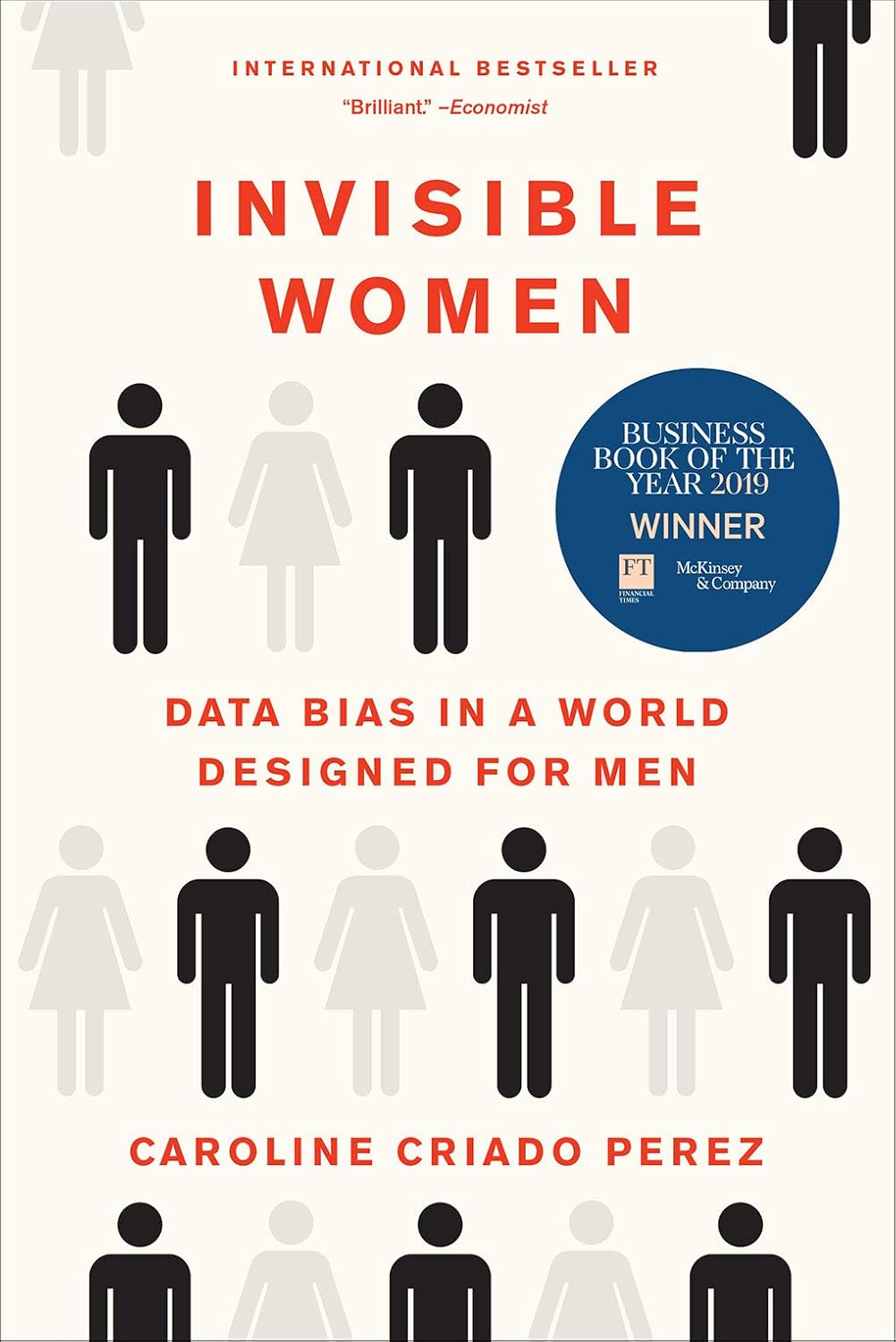
Invisible Women
Caroline Criado Perez


 Goodreads Choice Awards
 Apple Books


 68 Min Reading Time
 Audio Version Available
About this book
Have you ever wondered why your phone feels too big, why medical advice sometimes seems inadequate, or why car accidents are more dangerous for women?
In Invisible Women, Caroline Criado Perez uncovers the shocking reality of a world designed for men, where data consistently overlooks women, leading to systemic bias and inequality. This groundbreaking exposé reveals how this gender data gap affects every facet of women's lives, from healthcare and technology to urban planning and workplace dynamics.
Drawing on hundreds of studies from around the globe, Criado Perez exposes the hidden ways in which women are forgotten, ignored, and even harmed by a world built on male-centric data. With sharp wit and compelling evidence, Invisible Women is a powerful call for change, urging us to challenge our assumptions and build a more equitable world for everyone. Prepare to see the world in a whole new light.
Summary of Key Ideas
- •
The Myth of a Gender-Neutral World
The 'Default Male' Problem: The book highlights how men are often considered the default or standard in various aspects of life, from product design to medical research. This leads to a world designed primarily for men, often neglecting the specific needs and experiences of women. This can manifest in various ways, such as car safety features designed for the average male body, or medical dosages based on male physiology, potentially endangering women.
- •
Exposing the Gender Data Gap
The Gender Data Gap: A core argument is the pervasive lack of sex-disaggregated data across numerous fields. Without specific data on women, it's impossible to understand their unique needs and challenges accurately. This absence of data reinforces the 'default male' bias and perpetuates inequalities, as policies and products are developed without considering the female perspective. The book emphasizes that this gap isn't just a matter of inconvenience; it has real-world, often life-threatening, consequences for women.
- •
Designing Cities for Men
Public Spaces and Infrastructure Neglect: 'Invisible Women' reveals how urban planning and public infrastructure often fail to account for women's needs. Examples include inadequate public restrooms for women (who generally take longer) and poorly lit streets, which increase the risk of harassment and violence. These oversights stem from a male-centric perspective in design, failing to consider the different ways women interact with and navigate public spaces.
- •
The Male-Shaped Workplace
Workplace Bias and Inequality: The book exposes how workplaces are often designed around the male experience, from office temperatures to work schedules. This can disadvantage women, whose physiological needs (e.g., requiring warmer temperatures) and societal roles (e.g., primary caregivers) are often ignored. These biases contribute to gender inequality in the workplace, affecting women's productivity, well-being, and career advancement.
- •
The Medical Gender Bias
Medical Research and Healthcare Disparities: Invisible Women addresses the significant gender bias in medical research, where women are often excluded from clinical trials or their data isn't analyzed separately. This leads to misdiagnosis, ineffective treatments, and adverse drug reactions in women, as medical knowledge is primarily based on male bodies. The book underscores the urgent need for more inclusive and gender-specific medical research to improve women's health outcomes.
- •
The Value of Invisible Work
The Underestimation of Unpaid Labor: The book highlights the disproportionate amount of unpaid labor performed by women, including housework, childcare, and eldercare. This labor is often undervalued and overlooked in economic analyses, contributing to women's economic disadvantage. By making this invisible work visible, the book argues for its recognition and redistribution to promote greater gender equality.
- •
When Design Ignores Half the Population
Safety and Product Design Flaws: 'Invisible Women' provides numerous examples of how products designed with men in mind can be dangerous or ineffective for women. From ill-fitting safety equipment to car crash tests that don't accurately represent female bodies, the book demonstrates how gender bias in design can have serious safety implications. The key idea is that inclusive design, based on data that reflects the diversity of users, is crucial for ensuring everyone's safety and well-being.
Chapter Recap

About The Author
Caroline Criado Perez
Main Quotes
"There is no such thing as a woman who doesn't work. There is only a woman who isn't paid for her work."
"For too long we have positioned women as a deviation from standard humanity and this is why they have been allowed to become invisible."
"If we continue to use exclusively male data, we will continue to design a world that privileges men."
"The result of a gender-blind approach is, almost always, a world designed for men."
"Whiteness and maleness are silent precisely because they do not need to be vocalized. Whiteness and maleness are implicit. They are unquestioned. They are the norm."
"Women have always worked. They have worked unpaid, underpaid, underappreciated, and invisibly, but they have always worked."
"The problem is that when we say 'human', we tend to picture a man."
"...ignoring female physiology can have fatal consequences."
"Data is like garbage. You’ve got to know what you’re looking for before you collect it."
"The male body is treated as the default, and the female body is treated as a variation of that default."
Who Should Read This Book
Readers interested in feminism and gender equality
Individuals working in data science, urban planning, product design, and public policy
People interested in social justice and advocacy
Readers of non-fiction books that expose societal biases and inequalities
Anyone curious about the ways in which gender bias impacts everyday life
Students and academics in fields such as sociology, gender studies, and public health
Book Summaries Like
Invisible Women




FAQ

Free Access to LitNotes