




 DISCORD
Jurassic Park
Michael Crichton


 Indie Bestsellers


 149 Min Reading Time
 Audio Version Available
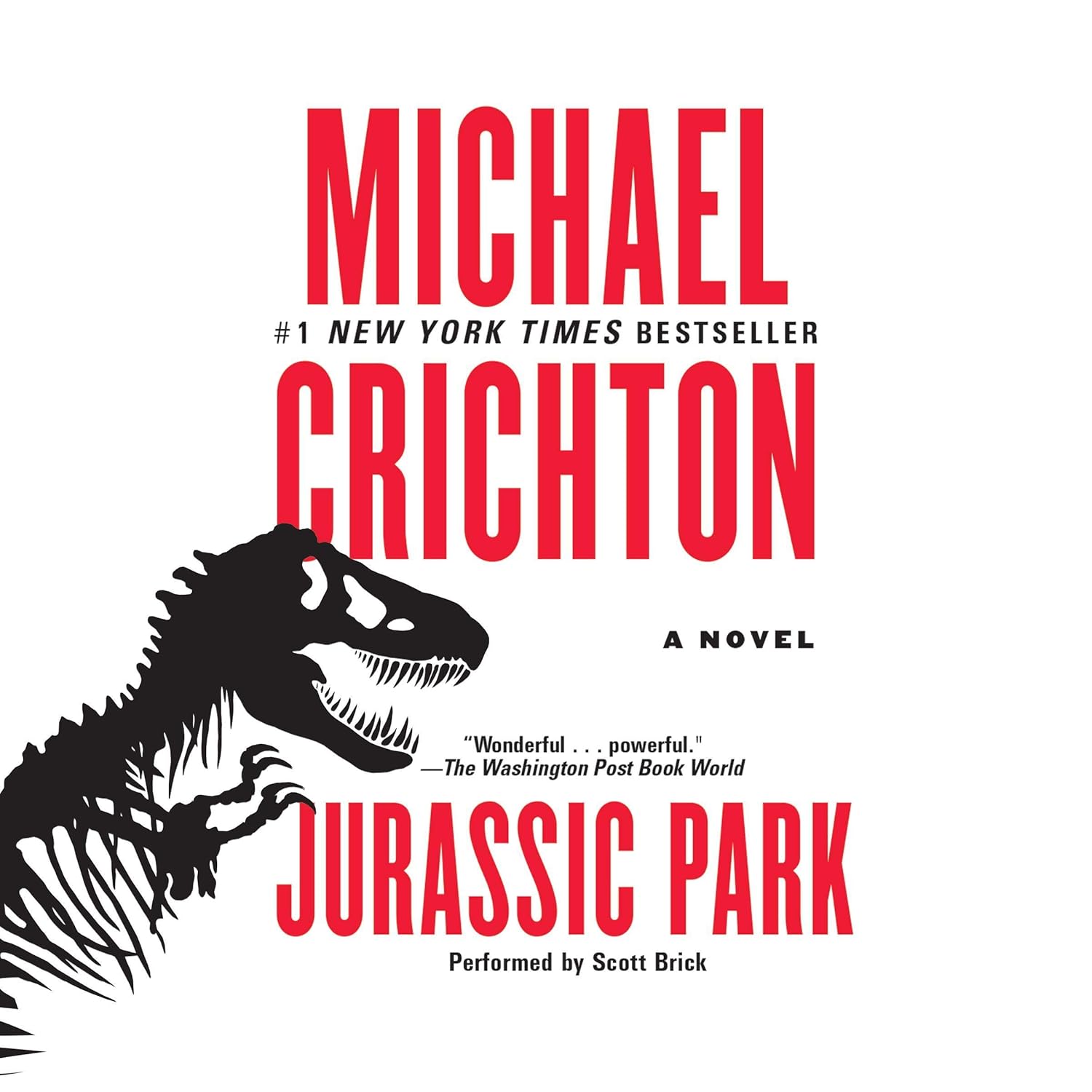
About this book
Venture into Jurassic Park, where science unlocks the ultimate fantasy: dinosaurs resurrected from extinction. A visionary theme park brings these magnificent creatures to life, allowing visitors to witness their awesome power and primeval mystery firsthand—for a price. But when cutting-edge technology spirals out of control, humanity's dream becomes a nightmare. As chaos descends, the park's guests must fight for survival against predators from the past, proving that some secrets are best left buried. Michael Crichton's electrifying technothriller explores the perilous intersection of ambition and nature, delivering a cautionary tale that will grip you until the very last page.
Summary of Key Ideas
- •
The Perils of Playing God
The allure of scientific advancement is a central theme. The novel delves into the profound implications of genetic engineering, presenting a scenario where scientists, driven by ambition and curiosity, resurrect dinosaurs from extinction. This act of playing God raises fundamental questions about the ethical boundaries of science and the potential dangers of tampering with nature. John Hammond's vision of a dinosaur theme park epitomizes the ambition to control and manipulate the natural world for entertainment and profit. The consequences of this ambition serve as a warning about the unforeseen repercussions of unchecked scientific progress.
- •
The Illusion of Control
Jurassic Park explores the theme of mankind's hubris and the illusion of control over nature. The scientists and engineers behind the park believe they can contain and manage the dinosaurs, showcasing a profound underestimation of the power and unpredictability of the natural world. The park's inevitable collapse demonstrates the futility of trying to impose order on a complex and dynamic ecosystem. The dinosaurs, once extinct, reclaim their dominance, revealing the arrogance of human attempts to control forces beyond their comprehension.
- •
Chaos Theory in Action
The concept of chaos theory is interwoven into the narrative, highlighting the inherent unpredictability of complex systems. Ian Malcolm, the mathematician, serves as the voice of chaos theory, warning against the dangers of attempting to control intricate systems like Jurassic Park. Despite the park's elaborate safety measures and technological safeguards, unforeseen events and minor disruptions cascade into catastrophic failures. The dinosaurs' ability to breed despite being engineered as sterile underscores the limitations of human planning and the inevitability of unintended consequences.
- •
The Dangers of Commercialization
The novel critiques the commercialization of science and the prioritization of profit over safety and ethical considerations. John Hammond's primary motivation for creating Jurassic Park is financial gain, leading him to cut corners and disregard warnings about the park's inherent risks. The pressure to create a sensational attraction blinds him to the potential dangers, resulting in a catastrophic failure. The novel suggests that when scientific endeavors are driven by commercial interests, the pursuit of profit can eclipse crucial safety measures and ethical responsibilities.
- •
Nature's Resilience
Jurassic Park underscores the power and resilience of nature in the face of human intervention. Despite the scientists' attempts to engineer and control the dinosaurs, the creatures exhibit an innate ability to adapt and overcome their artificial constraints. They find ways to breed, escape their enclosures, and ultimately reclaim their dominance over the island. This highlights the idea that nature, in its raw and untamed form, possesses a force that cannot be fully suppressed or controlled by human ingenuity. The park's downfall serves as a testament to nature's enduring power.
- •
Ethical Responsibilities in Science
The book examines the ethical responsibilities that come with scientific advancements, particularly in genetic engineering. The creation of Jurassic Park raises questions about the moral implications of resurrecting extinct species and the potential consequences of disrupting the natural order. The scientists' actions are scrutinized for their lack of foresight and their failure to consider the broader ethical ramifications of their work. The novel suggests that scientific progress should be guided by a strong ethical framework, ensuring that innovation does not come at the expense of safety, responsibility, and respect for the natural world.
- •
Evolution and Adaptation
The theme of evolution and adaptation is central to the plot. The dinosaurs, brought back from extinction, quickly adapt to their new environment, demonstrating the power of natural selection. Their ability to overcome the engineered constraints placed upon them, such as the inability to breed, highlights the relentless drive of life to find a way. This adaptation becomes a key factor in the park's downfall, as the dinosaurs evolve beyond the control of their creators, showcasing the dynamic and unpredictable nature of evolution.
- •
Awe vs. Consequences
Crichton explores the contrast between the awe-inspiring potential of scientific discovery and the sobering reality of its potential consequences. The initial wonder and excitement surrounding the resurrection of dinosaurs quickly give way to terror and chaos as the park's systems fail. This juxtaposition serves as a cautionary tale, reminding readers that scientific advancements should be approached with humility and a deep understanding of their potential risks. The novel emphasizes the importance of responsible innovation and the need to carefully consider the long-term implications of scientific breakthroughs.
Chapter Recap

About The Author
Michael Crichton
Main Quotes
"“God creates dinosaurs, God destroys dinosaurs. God creates Man, Man destroys God. Man creates dinosaurs.”"
""Life breaks free. It expands to new territories. It crashes through barriers. It pains me to say it... but I don't know that we can contain it.""
"“The planet has survived everything, in its time. It will certainly survive us.”"
"“Genetic power is the most awesome force the planet's ever seen, but you wield it like a kid that's found his dad's gun.”"
""Don't you see? That is the point. You are abusing science. You are running so fast that you haven't even bothered to ask yourself if you should be doing what you're doing.""
"“Must go faster.”"
""Life finds a way.""
"“John, the kind of control you're attempting simply is... it's not attainable. I'm not saying you shouldn't try. But maybe you should be prepared for some程度的failure.""
""See, here's the problem with scientists. They are so concerned with whether or not they can do something, they don't stop to think if they should do it.""
"“That's how it always starts. But then later there's running and screaming.”"
Who Should Read This Book
Fans of science fiction and thriller novels
Readers interested in genetics, dinosaurs, and technology
People who enjoy cautionary tales about scientific advancements
Adults and young adults who appreciate fast-paced, suspenseful stories
Readers who like Michael Crichton's other works
Those familiar with the "Jurassic Park" film franchise seeking a deeper story
Readers interested in adventure stories with high stakes
Individuals who enjoy intellectual and thought-provoking books
Book Summaries Like
Jurassic Park
FAQ

Free Access to LitNotes