




 DISCORD
Killers of the Flower Moon
David Grann


 Anthony Award
 Apple Books


 97 Min Reading Time
 Audio Version Available
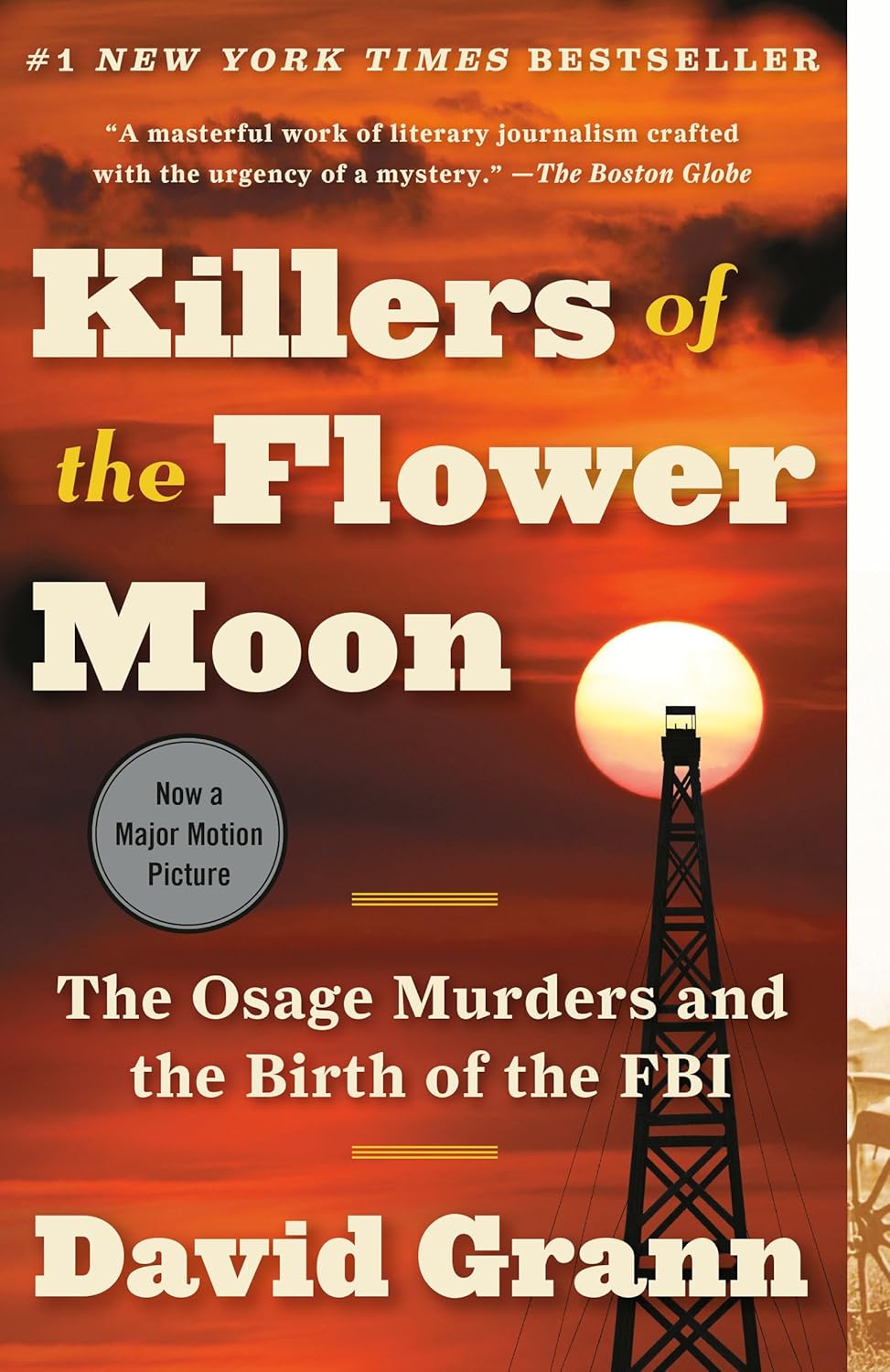
About this book
In the 1920s, the Osage Nation of Oklahoma became the wealthiest people per capita in the world overnight, when oil was discovered beneath their land. They reveled in their newfound riches, building mansions and sending their children to Europe. But this prosperity came at a price.
One by one, the Osage began to die under mysterious circumstances. Mollie Burkhart watched helplessly as her family was targeted: one relative shot, another poisoned. As the death toll climbed and local law enforcement proved inept, the newly formed FBI stepped in. J. Edgar Hoover, desperate to solve the case, turned to Tom White, a former Texas Ranger, to unravel the chilling conspiracy.
White assembled an undercover team, including a Native American agent, who infiltrated the region. Together with the Osage, they began to expose a horrifying plot, a sweeping betrayal fueled by greed and prejudice.
Killers of the Flower Moon is a haunting true-life murder mystery from David Grann, author of The Lost City of Z, that exposes a shocking chapter in American history. It is a searing indictment of a nation's callousness toward its Native American population, and a riveting account of a conspiracy that would forever stain the soul of the American West.
Summary of Key Ideas
- •
The Allure and Peril of Osage Wealth
The Osage Nation's wealth, derived from oil discovered on their land, attracted widespread attention and envy, leading to their systematic exploitation and murder. The book meticulously details how the Osage people, who were forcibly relocated to Oklahoma, became some of the wealthiest individuals in the world due to oil beneath their land. This sudden wealth made them targets of unscrupulous individuals, highlighting the destructive consequences of greed and the vulnerability of marginalized communities when faced with immense wealth.
- •
A Conspiracy of Greed and Prejudice
The systematic murders of Osage people were not isolated incidents but part of a larger conspiracy driven by greed and racial prejudice. The investigation uncovered a network of individuals, including prominent members of the community, who were involved in the plot to eliminate Osage individuals and inherit their wealth. This conspiracy exposed deep-seated corruption and the extent to which prejudice fueled the exploitation and violence against the Osage Nation. The book emphasizes the calculated and organized nature of the crimes.
- •
The FBI's Burgeoning Role and Challenges
The early FBI, under J. Edgar Hoover, played a crucial role in investigating the Osage murders, marking one of its first major cases. The investigation was fraught with challenges, including corruption, lack of resources, and racial biases. Despite these obstacles, the FBI's involvement was pivotal in bringing some of the perpetrators to justice, albeit with limitations. The book provides insights into the early methods and struggles of the FBI, as well as its complex relationship with the Osage Nation.
- •
Systemic Corruption and Obstacles to Justice
The investigation into the Osage murders faced significant obstacles due to widespread corruption, racial prejudice, and a lack of cooperation from local authorities. Many individuals in positions of power were complicit in the crimes or actively hindered the investigation, making it difficult to uncover the truth. This systemic corruption underscored the deeply ingrained biases and inequalities that allowed the exploitation and murder of the Osage people to persist for so long.
- •
Betrayal and Moral Compromise
Ernest Burkhart's complex relationship with his Osage wife, Mollie, lies at the heart of the narrative, illustrating the personal betrayals and moral compromises that fueled the Reign of Terror. Ernest's involvement in the murders of Mollie's family members highlights the insidious nature of greed and the devastating impact it had on personal relationships. The book delves into the psychological aspects of Ernest's actions, exploring the conflicting emotions and motivations that drove him to betray his loved ones.
- •
Unearthing a Forgotten History
David Grann's meticulous research and narrative approach shed light on a forgotten chapter of American history, giving voice to the victims and their descendants. The book serves as a powerful reminder of the injustices suffered by the Osage Nation and the importance of acknowledging and addressing historical wrongs. Grann's storytelling brings to life the human stories behind the statistics, making the history accessible and emotionally resonant for a wide audience.
- •
Racial Injustice and Prejudice
The killings exposed deep-seated racial injustices and prejudices against Native Americans in the 1920s. The Osage people were seen as inferior and disposable by many white Americans, which fueled the conspiracy against them. This racial bias was a significant factor in the lack of attention and justice given to the murders initially. The book underscores the systemic racism that allowed the crimes to occur and persist for so long, emphasizing the need for continued vigilance against prejudice and discrimination.
- •
Lasting Trauma and Intergenerational Impact
Beyond the immediate investigation, the book explores the lasting impact of the Reign of Terror on the Osage Nation, including intergenerational trauma, loss of trust, and the erosion of cultural identity. The murders had a profound and enduring effect on the Osage people, shaping their collective memory and sense of identity. The book emphasizes the importance of remembering and acknowledging this history in order to promote healing and reconciliation within the Osage community and beyond.
Chapter Recap

About The Author
David Grann
Main Quotes
"This land is saturated with blood."
"What is gone is treasured because it was what we once were."
"We are still Osage. We live and we reach old age for our forefathers."
"In the early 1870s, the Osage had been driven from their lands in Kansas onto a rocky, presumably worthless reservation in northeastern Oklahoma."
"The Osage Nation became incongruously wealthy."
"White people are going to settle all this country, and we get the best land because we get here first and take our pick."
"The question for them to decide is whether a white man killing an Osage is murder—or merely cruelty to animals."
"Today our hearts are divided between two worlds."
"To me, the purpose of money was to buy, and to build. And that's what I've done. And if that's what they mean, then I'm guilty."
"We gather our past and present into the depths of our being and face tomorrow."
Who Should Read This Book
Readers of non-fiction crime and historical accounts
Individuals interested in Native American history and culture, specifically the Osage Nation
Fans of David Grann's previous works
Readers interested in themes of injustice, corruption, and the dark side of American history
Those who enjoy true crime stories with a strong historical context
Readers who appreciate investigative journalism and in-depth reporting
Book clubs focusing on non-fiction and historical events
People interested in the history of the American West and the oil boom
Readers who enjoy books that have been adapted into films
Book Summaries Like
Killers of the Flower Moon
FAQ

Free Access to LitNotes