




 DISCORD
Leaders Eat Last
Simon Sinek


 Goodreads Choice Awards
 Apple Books


 108 Min Reading Time
 Audio Version Available
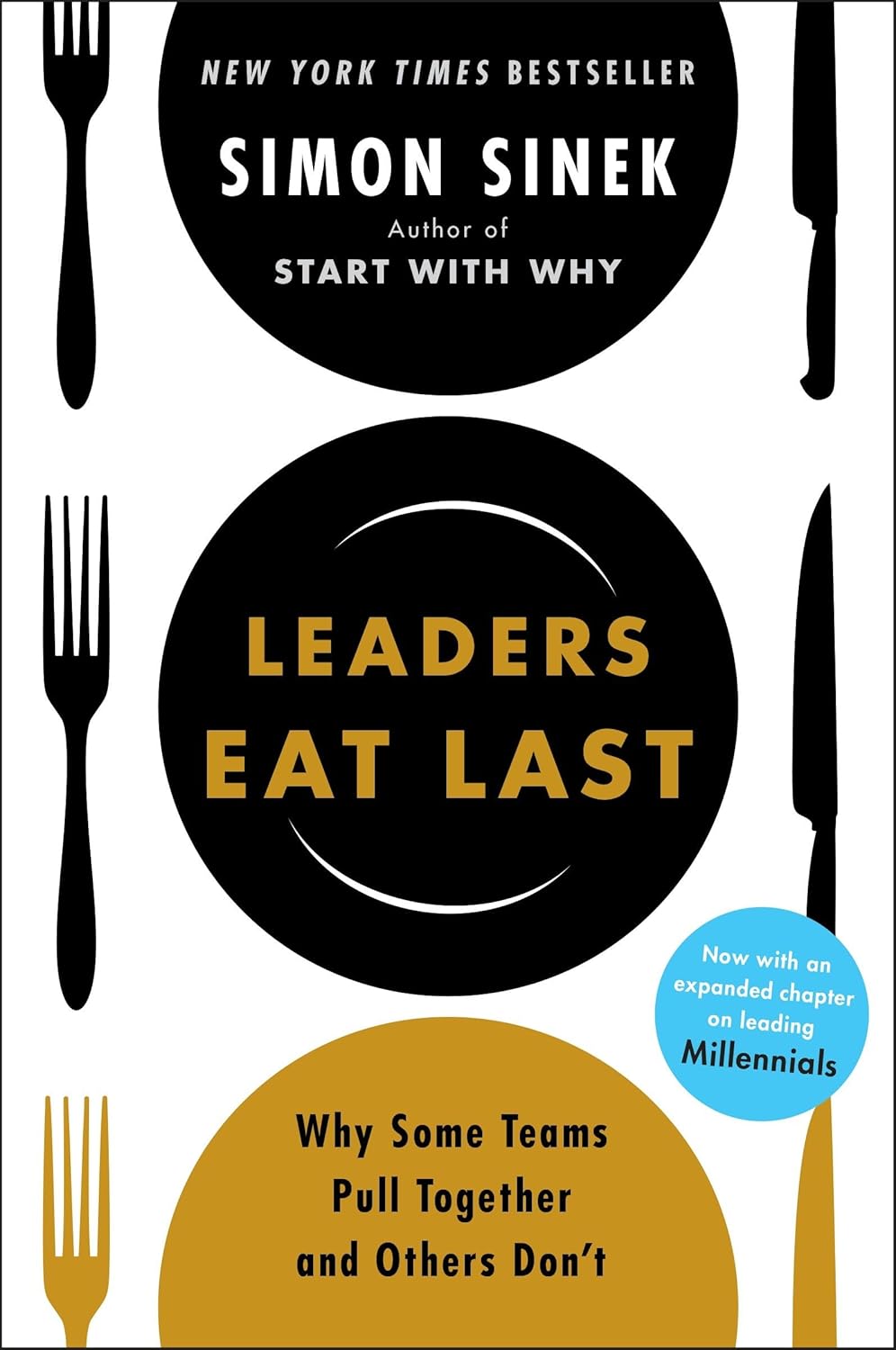
About this book
Why do so few people truly love their jobs? Is workplace fulfillment just a lucky draw? Simon Sinek, bestselling author of Start With Why, explores this critical question, revealing the powerful biological basis of trust and cooperation that drives extraordinary teams.
Imagine a workplace where people feel valued, safe, and inspired. Sinek discovered that in organizations where trust thrives, teams achieve remarkable feats, even to the point of risking their lives for one another. But what sets these teams apart?
Inspired by a conversation with a Marine Corps general, Sinek unveils the timeless lesson: "Officers eat last." True leaders prioritize the well-being of their team, creating a "Circle of Safety" where loyalty and commitment flourish. Drawing on compelling stories from the military, business, and beyond, Sinek demonstrates that this isn't just a management theory—it's deeply rooted in our biology.
In a world often defined by cynicism and self-interest, Leaders Eat Last offers a revolutionary perspective: build a culture of trust, and watch your people—and your organization—thrive. Discover how you can create a workplace where everyone belongs and is inspired to achieve their best.
Summary of Key Ideas
- •
Creating a 'Circle of Safety'
The 'Circle of Safety' is a central concept, illustrating how strong leadership fosters trust and loyalty within a team. Sinek argues that when employees feel safe and protected by their leaders, they are more likely to collaborate, innovate, and take risks for the benefit of the organization. This sense of security comes from knowing that their leaders have their backs, creating an environment where individuals feel valued and supported. The 'Circle of Safety' promotes a culture of mutual respect and understanding, leading to increased employee engagement and a more resilient, high-performing team. This directly contrasts with environments driven by fear, where self-preservation hinders collective progress.
- •
Selfless Leadership: Putting People First
True leadership, according to Sinek, is about prioritizing the well-being of your team members above your own. The title 'Leaders Eat Last' is a metaphor derived from observing military protocols where officers ensure their subordinates are fed before themselves. This selflessness builds trust and demonstrates that leaders are genuinely invested in the success and welfare of their people. By putting their team first, leaders inspire loyalty, commitment, and a strong sense of camaraderie. This approach fosters a positive and supportive work environment where individuals are motivated to go the extra mile, knowing their efforts are appreciated and their leaders are looking out for them.
- •
Understanding the Biology of Trust
Sinek emphasizes the importance of understanding human biology, particularly the roles of chemicals like dopamine, serotonin, oxytocin, and endorphins, in shaping behavior and fostering cooperation. Dopamine and endorphins are linked to individual achievement, while serotonin and oxytocin are released in social environments, promoting trust, loyalty, and feelings of connection. Leaders who create environments that stimulate the release of these 'social' chemicals cultivate stronger bonds within their teams. By understanding these biological drivers, leaders can create a workplace that fosters collaboration, empathy, and a shared sense of purpose, leading to increased productivity and job satisfaction.
- •
Rejecting Short-Term Thinking
The book critiques modern business practices that prioritize short-term gains over long-term sustainability and employee well-being. Sinek argues that the relentless pursuit of profit can erode trust, damage morale, and ultimately harm the organization. He advocates for a more humanistic approach to leadership, one that values people over profits and focuses on building a strong, sustainable culture. By prioritizing the needs of employees and fostering a sense of purpose, leaders can create organizations that are not only successful but also ethical and resilient. This involves making decisions that benefit all stakeholders, not just shareholders, and investing in the long-term development of their people.
- •
Leadership as Responsibility, Not Authority
Sinek stresses that leadership is not about authority or position, but about responsibility. True leaders take ownership of their team's performance and are accountable for their actions. They understand that their primary responsibility is to create an environment where their people can thrive. This involves providing the resources, support, and guidance that team members need to succeed. By embracing responsibility, leaders inspire trust and create a culture of accountability throughout the organization. This means not only celebrating successes but also taking ownership of failures and learning from mistakes.
- •
The Power of Organizational Culture
Building a strong organizational culture is essential for long-term success. Sinek contends that culture is the foundation upon which all other aspects of the organization are built. A healthy culture is one that is characterized by trust, respect, and a shared sense of purpose. Leaders play a crucial role in shaping and nurturing this culture by setting the tone, modeling desired behaviors, and reinforcing core values. A strong culture attracts and retains top talent, fosters innovation, and enables the organization to weather challenges more effectively. This involves consistent communication, transparency, and a commitment to living the organization's values every day.
- •
Service Over Self: The Antidote to Toxic Ambition
Sinek highlights the dangers of unchecked ambition and the pursuit of power for its own sake. He argues that leaders who are motivated by ego rather than service are more likely to create toxic work environments and make decisions that harm their people and the organization. True leaders, on the other hand, are driven by a desire to serve others and make a positive impact. They understand that their success is directly linked to the success of their team. By focusing on serving others, leaders can build trust, inspire loyalty, and create a more fulfilling and meaningful work experience for everyone involved.
- •
The Importance of Open Communication
Effective communication is critical for building trust and fostering collaboration. Sinek emphasizes the importance of leaders being clear, transparent, and honest in their communication. This involves not only sharing information but also actively listening to their team members and soliciting their feedback. By creating open lines of communication, leaders can build stronger relationships, resolve conflicts more effectively, and ensure that everyone is aligned on the organization's goals. This also involves being willing to have difficult conversations and address issues head-on, rather than avoiding them.
Chapter Recap

About The Author
Simon Sinek
British/American author and motivational speaker
Main Quotes
"Leadership is not a license to do less. It is a responsibility to do more."
"The true price of leadership is the willingness to place the needs of others above your own."
"Great companies don't hire skilled people and motivate them, they hire already motivated people and inspire them."
"When we feel safe among the people we work with, we naturally trust them. And when trust is high, we can take more risks."
"Working hard for something we don't care about is called stress. Working hard for something we love is called passion."
"Truly human leadership protects an organization from the internal rivalries that can shatter a culture."
"The goal is not to be perfect by the end. The goal is to be better today."
"It is not the genius at the top giving directions that makes people great. It is great people that make the guy at the top look like a genius."
"Stress and anxiety at work have less to do with the work we do and more to do with weak management and leadership."
"The responsibility of leadership is not to come up with all the great ideas. The responsibility of leadership is to create an environment in which great ideas can happen."
Who Should Read This Book
Current and aspiring leaders in various sectors (business, non-profit, government).
Managers seeking to improve team dynamics and organizational culture.
Individuals interested in leadership principles and their impact on group behavior.
Students of management, organizational behavior, and leadership studies.
Human resources professionals focused on employee engagement and workplace satisfaction.
Readers of Simon Sinek's previous books who appreciate his optimistic and insightful approach to leadership.
Anyone interested in understanding the biological basis of trust and cooperation in organizations.
Individuals seeking to create a more positive and supportive work environment.
Book Summaries Like
Leaders Eat Last

FAQ

Free Access to LitNotes