




 DISCORD
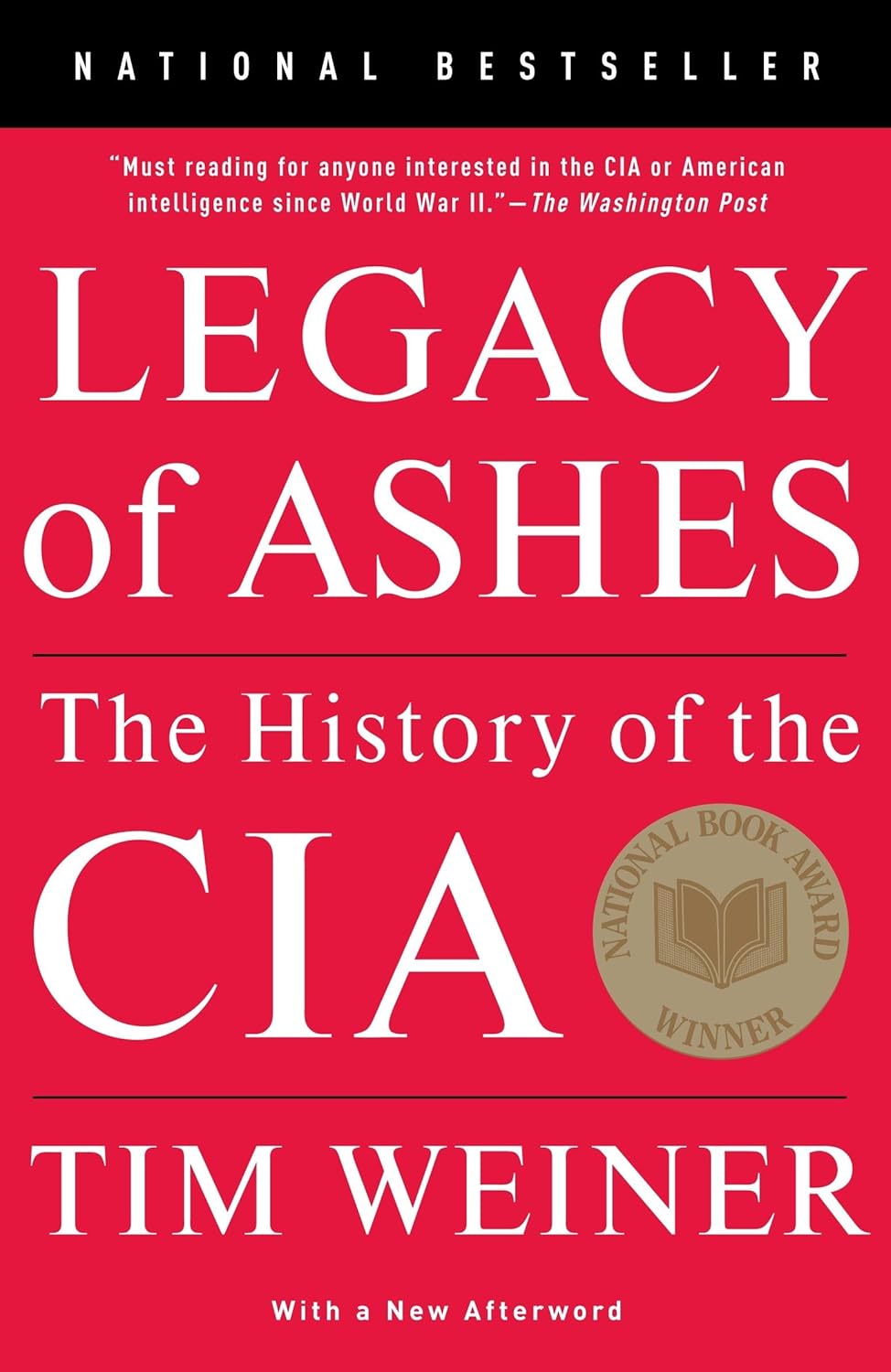
Legacy of Ashes
Tim Weiner


 Los Angeles Times Book Prize
 Apple Books


 195 Min Reading Time
 Audio Version Available
About this book
For over half a century, the CIA has cultivated an image of brilliance and ruthless effectiveness. But behind the glamorous myth lies a hidden history of stunning failures and systemic missteps. In Legacy of Ashes, Pulitzer Prize-winning author Tim Weiner delivers a landmark exposé, revealing how the CIA's blunders have compromised American national security for generations.
Based on more than 50,000 declassified documents and hundreds of interviews with CIA veterans—including ten Directors of Central Intelligence—Legacy of Ashes traces the agency's কার্যক্রম from its post-World War II origins to its near-collapse after 9/11. Weiner uncovers a pattern of presidents and CIA officers who, unable to comprehend the world, resorted to covert actions, disastrous interventions, and a profound neglect of intelligence gathering.
From botched coups to missed targets and fatal errors, Legacy of Ashes exposes the truth behind the CIA's formidable reputation, revealing an agency whose failures, in President Eisenhower's words, have handed us "a legacy of ashes." This is the definitive, shocking, and essential history of the CIA—and a crucial examination of its ongoing impact on the world.
Summary of Key Ideas
- •
A History of Failures
Consistent Failure: The CIA's primary legacy, according to Weiner, is a history of repeated failures across its various operations. These failures stem from flawed intelligence gathering, poor analysis, and ineffective execution of covert actions. The book meticulously chronicles numerous instances where the CIA's actions backfired, leading to unintended consequences and undermining American foreign policy objectives. This consistent pattern of failure raises fundamental questions about the agency's structure, leadership, and overall effectiveness in serving its intended purpose.
- •
Intelligence Blunders
Intelligence Mismanagement: The CIA has struggled with effectively gathering, analyzing, and disseminating intelligence. The book highlights instances where crucial information was either missed, misinterpreted, or ignored, leading to significant strategic blunders. Weiner points to systemic issues within the agency, such as bureaucratic infighting, lack of coordination, and a culture that discourages dissenting opinions, as contributing factors to this chronic mismanagement of intelligence.
- •
Political Interference
Politicization of Intelligence: Throughout its history, the CIA has been susceptible to political influence, which has compromised its objectivity and analytical rigor. Weiner argues that political pressure from administrations and policymakers often led the agency to tailor its intelligence assessments to fit predetermined agendas, rather than providing unbiased analysis. This politicization has resulted in flawed decision-making and a distorted understanding of complex global issues.
- •
Covert Calamities
Ineffective Covert Operations: The book reveals a pattern of poorly planned and executed covert operations that often resulted in unintended and negative consequences. Weiner details numerous operations that were based on flawed assumptions, lacked adequate resources, or were compromised by leaks and betrayals. These failed operations not only undermined American credibility but also contributed to instability and resentment in various regions of the world.
- •
Absence of Oversight
Lack of Accountability: A recurring theme in Legacy of Ashes is the lack of accountability within the CIA. Weiner argues that the agency has often operated with impunity, shielded from meaningful oversight and public scrutiny. This lack of accountability has fostered a culture of recklessness and contributed to the agency's repeated failures. The book suggests that greater transparency and accountability are essential for reforming the CIA and ensuring its future effectiveness.
- •
Leadership Challenges
The Director's Dilemma: The effectiveness of the CIA is heavily dependent on the Director of Central Intelligence. The book examines how different directors, with their varying leadership styles and priorities, have shaped the agency's trajectory. Some directors are portrayed as competent reformers who attempted to address the CIA's systemic problems, while others are depicted as political appointees who exacerbated its shortcomings. The Director's ability to navigate political pressures, manage internal conflicts, and foster a culture of integrity is crucial to the agency's success.
Chapter Recap

About The Author
Tim Weiner
Main Quotes
"Intelligence fails because it is human, no stronger than the power of one mind to understand another."
"The CIA's job was to steal secrets, not to wage wars."
"Secrecy is for losers. For people who don't have a good idea and are afraid to share it."
"The agency's failures were due to human error, not technological shortcomings."
"Deception was the heart of the agency's tradecraft."
"The CIA's greatest successes were often its best-kept secrets."
"The Cold War was a battle of wits and espionage, not just military might."
"The agency's culture of secrecy often led to a lack of accountability."
"The CIA's primary mission was to protect American interests, even if it meant bending the rules."
"Now the CIA must be rebuilt if it is to survive. That task will take years. The challenge of understanding the world as it is has overwhelmed them since their creation."
Who Should Read This Book
Readers interested in intelligence history
Readers interested in US history and foreign policy
Readers interested in government and political science
Readers with an interest in espionage and international relations
Readers looking for non-fiction thrillers
Academics and researchers studying the CIA
Journalists and political analysts
Readers interested in investigative journalism
History buffs
Readers interested in Cold War history
Book Summaries Like
Legacy of Ashes



FAQ

Free Access to LitNotes