




 DISCORD
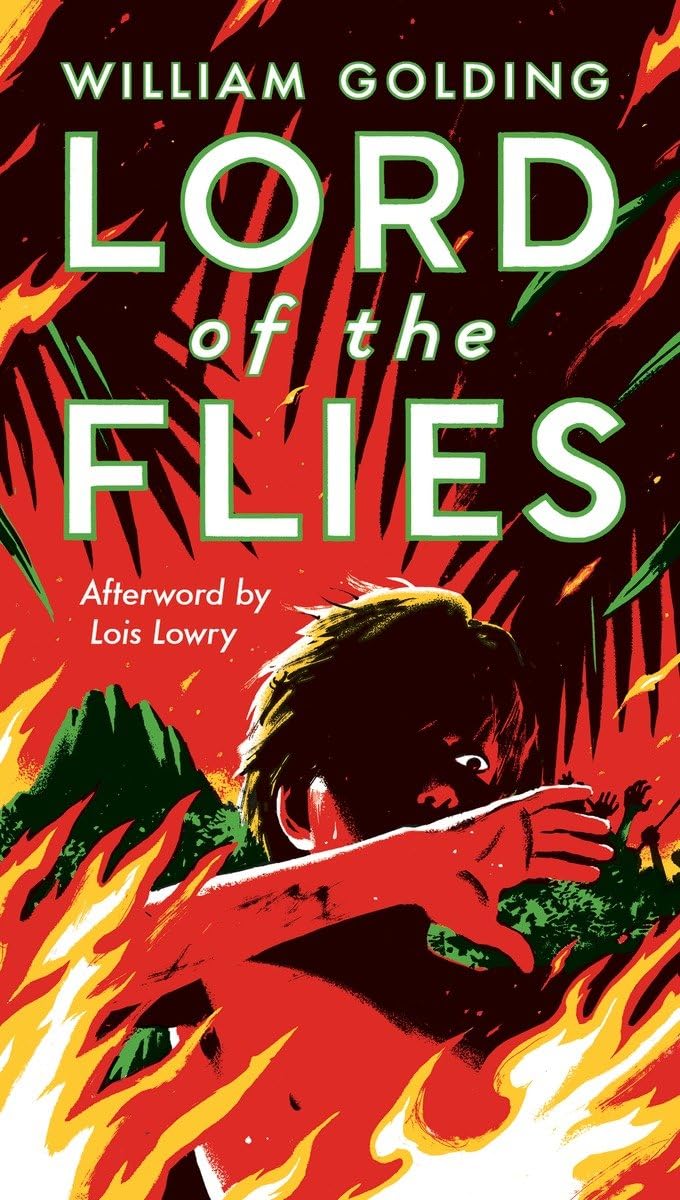
Lord of the Flies
William Golding


 Amazon Best Sellers
 Indie Bestsellers


 40 Min Reading Time
 Audio Version Available
About this book
On a remote island, civilization unravels. When a plane crashes, a group of British schoolboys are stranded, far from adult supervision. Initial elation at their newfound freedom soon descends into a terrifying struggle for survival. As order collapses and primal instincts take over, the boys establish their own savage society, complete with rituals and tribal warfare. "Lord of the Flies" explores the inherent conflict between civilization and savagery, challenging the very essence of human nature in a haunting and unforgettable tale.
Summary of Key Ideas
- •
The Fragility of Civilization
Civilization vs. Savagery: This is arguably the central theme of the novel. The boys, initially attempting to create a civilized society modeled after the adult world, gradually descend into savagery. This descent is marked by a loss of reason, an embrace of primal instincts, and a breakdown of social order. The conflict between Ralph, who represents order and reason, and Jack, who embodies primal desires and savagery, exemplifies this theme. The novel suggests that civilization is a fragile construct that can easily collapse under pressure, revealing the inherent savagery within human nature. Golding explores how fear, power, and the absence of adult supervision contribute to the boys' transformation.
- •
The Inevitable Erosion of Innocence
Loss of Innocence: As the boys succumb to savagery, they experience a profound loss of innocence. Initially, they are innocent children playing at adventure. However, the isolation, fear, and absence of adult guidance lead them to commit increasingly violent acts, culminating in Piggy's death and the relentless hunt for Ralph. This loss of innocence is not merely a personal transformation but a commentary on the inherent capacity for evil within humanity. The island setting, initially perceived as a paradise, becomes a stage for the boys' moral degradation, symbolizing the corruption of innocence when societal structures and moral constraints are removed.
- •
The Beast Within: Inherent Evil
Inherent Human Evil: Golding presents a pessimistic view of human nature, suggesting that evil is not a product of society but is inherent within individuals. The boys' descent into savagery reveals their primal instincts and their capacity for violence and cruelty. The Lord of the Flies, represented by the pig's head on a stick, symbolizes this inherent evil and serves as a physical manifestation of the beast within the boys. Golding implies that societal rules and moral codes are necessary to suppress these darker impulses, but when these structures are removed, the inherent evil emerges, leading to chaos and destruction. The novel challenges the notion of inherent goodness and explores the potential for savagery that lies dormant within everyone.
- •
Fear: The Catalyst for Savagery
The Power of Fear and Superstition: Fear plays a significant role in the boys' descent into savagery. The imagined 'beast' becomes a symbol of their fears and anxieties, driving them to irrational behavior and violence. Jack exploits this fear to gain power and control over the other boys, using the promise of protection from the beast as a means of manipulation. Superstition replaces reason as the boys embrace primitive beliefs and rituals, further fueling their descent into savagery. Golding illustrates how fear can be a powerful force that undermines rational thought and societal order, leading to mob mentality and ultimately, destruction.
- •
The Futility of Reason Alone
The Failure of Reason and Logic: Piggy, with his intellectual capacity and reliance on reason, represents the power of logic and rational thought. However, his inability to physically assert himself and his reliance on the conch as a symbol of order render him ineffective in the face of the boys' growing savagery. The disregard for Piggy's ideas and his eventual death symbolize the triumph of primal instincts over reason. The novel suggests that reason and logic, while valuable, are not sufficient to maintain order and prevent the descent into savagery, especially when confronted with the powerful forces of fear, emotion, and the desire for power.
- •
Rules as a Foundation of Society
The Importance of Rules and Order: The conch shell serves as a symbol of rules, order, and democratic process. As the boys disregard the conch and its associated rules, their society descends into chaos. Ralph's attempts to maintain order and enforce rules are increasingly challenged by Jack's charismatic appeal to primal instincts and the promise of immediate gratification. The breakdown of rules and order leads to a loss of accountability and a sense of impunity, allowing the boys to indulge in their darker impulses. Golding emphasizes the importance of social structures and moral codes in maintaining civilization and preventing the descent into savagery.
- •
The Corrupting Influence of Power
Leadership and Power Dynamics: The novel explores different styles of leadership and the dynamics of power. Ralph, elected leader, attempts to govern through democratic principles and a focus on long-term goals, such as maintaining a signal fire for rescue. Jack, on the other hand, appeals to the boys' immediate desires and emotions, offering them hunting, feasting, and protection from the imagined beast. As Jack's power grows, he resorts to manipulation, intimidation, and violence to maintain control. The novel illustrates how the lust for power can corrupt individuals and undermine the common good, leading to tyranny and oppression.
- •
Echoes of Adult Savagery
The Blindness of Adults: The absent adult world is portrayed as equally flawed and prone to violence. The war raging in the background serves as a parallel to the boys' own conflict, suggesting that savagery and violence are not limited to children but are inherent aspects of human society. The naval officer who rescues the boys at the end is a symbol of this adult hypocrisy, as he is engaged in his own form of warfare while expressing disappointment in the boys' behavior. Golding implies that the problems of the adult world are reflected in the microcosm of the island, highlighting the pervasive nature of human fallibility.
Chapter Recap

About The Author
William Golding
Main Quotes
"We've got to have rules and obey them. After all, we're not savages. We're English, and the English are best at everything."
"The thing is, fear can't hurt you any more than a dream."
"What are we? Humans? Or animals? Or savages?"
"Which is better--to have rules and agree, or to hunt and kill?"
"Maybe there is a beast... maybe it's only us."
"Fancy thinking the Beast was something you could hunt and kill! You knew, didn’t you? I’m part of you? Close, close, close! I’m the reason why it’s no go? Why things are what they are?"
"Piggy could think. He could see things clearly."
"There isn't anyone to help you. Only me. And I'm the Beast."
"What I mean is, maybe it's only us."
"Ralph wept for the end of innocence, the darkness of man's heart, and the fall through the air of the true, wise friend called Piggy."
Who Should Read This Book
High school students
College students
Readers interested in dystopian fiction
Readers interested in allegorical novels
Those interested in themes of civilization vs. savagery
Readers of classic literature
Educators and students studying post-World War II literature
Individuals interested in philosophical explorations of human nature
Readers interested in political and social commentary
Book clubs
Book Summaries Like
Lord of the Flies

FAQ

Free Access to LitNotes