




 DISCORD
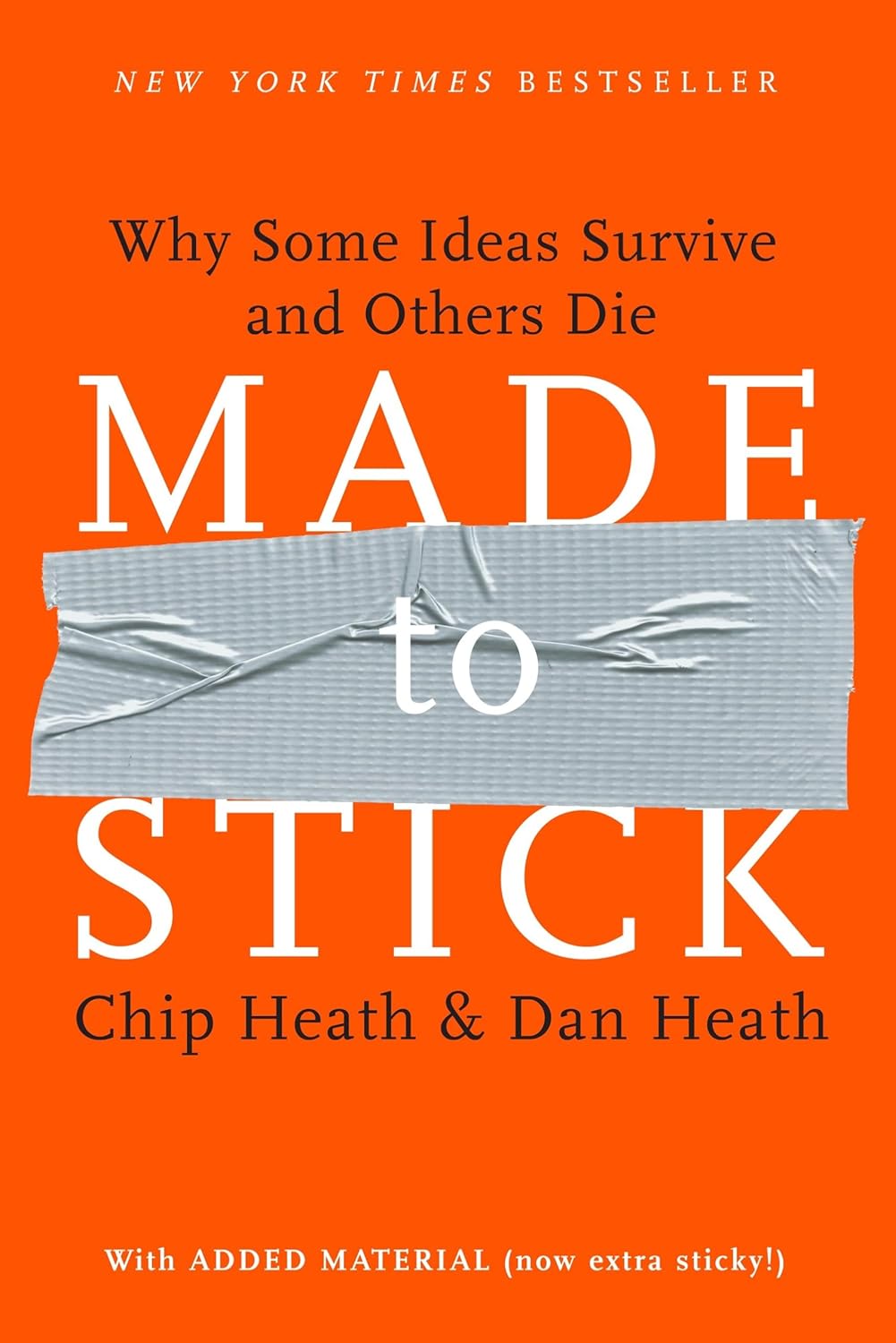
Made to Stick
Chip Heath, Dan Heath


 Amazon Best Sellers
 Apple Books


 49 Min Reading Time
 Audio Version Available
About this book
Why do some ideas thrive while others die? And how do you improve your idea's chances of success?
In Made to Stick, Chip and Dan Heath reveal the anatomy of ideas that stick and explain how to make your ideas stickier. Using compelling stories and practical frameworks, the authors dismantle misconceptions about what makes an idea memorable. They demonstrate that sticky ideas aren't necessarily complex, profound, or high-tech; instead, they share common traits that make them easily understood, remembered, and effective in changing thought or behavior.
This book is a guide to transforming your communication style, whether you're a manager, marketer, teacher, or simply someone with something to say. Made to Stick will empower you to communicate your ideas so they grab attention, hold interest, and leave a lasting impact. You will discover the SUCCESs principles—Simple, Unexpected, Concrete, Credible, Emotional, and Stories—that are essential for creating winning messages that resonate and endure.
Summary of Key Ideas
- •
Simplicity: Finding the Core Message
Simplicity is about finding the core of an idea and communicating it in a way that is both profound and simple. It's not about dumbing down the message, but rather prioritizing the essential elements. A simple idea is easily understood and remembered, making it more likely to influence behavior. The Heath brothers emphasize that simplicity requires ruthless prioritization and a focus on the single, most important thing you want your audience to remember. They introduce the concept of "Commander's Intent" from the military, which illustrates how a clear, concise goal can guide action even in complex situations. Stripping away unnecessary details makes the core message more powerful and more likely to stick.
- •
Unexpectedness: Grab Attention with Surprise
To be unexpected, an idea must defy people's expectations and break through their normal patterns of thinking. Generating surprise grabs attention, and then, to make the idea stick, you need to maintain interest by creating curiosity. The Heath brothers highlight the importance of identifying and violating schemas – the mental models people use to understand the world. By presenting information that contradicts these schemas, you can create a moment of surprise that makes people sit up and take notice. The key is to be unpredictable in a meaningful way, creating a gap in knowledge that people are motivated to fill. This element ensures that the audience not only listens but actively engages with the idea to resolve the unexpected twist.
- •
Concreteness: Make Ideas Tangible and Understandable
Concreteness involves translating abstract ideas into tangible, easily visualized concepts. The more concrete an idea is, the easier it is for people to understand and remember. Abstract ideas are often difficult to grasp and retain, while concrete ideas provide a mental image that people can hold onto. The Heath brothers emphasize the importance of using sensory language and vivid details to bring ideas to life. They suggest using analogies, metaphors, and real-world examples to make abstract concepts more accessible. Concreteness grounds the idea in reality and makes it easier for people to relate to and remember.
- •
Credibility: Build Trust and Believability
Credibility ensures that your idea is believable and trustworthy. Since people often lack direct experience with many concepts, they rely on external validation to assess the truthfulness of a message. Credibility can be established through various means, including using statistics, testimonials, or expert endorsements. The Heath brothers introduce the "Sinatra Test," suggesting that if something worked in one tough situation (e.g., "If I can make it there, I can make it anywhere"), it's more likely to be credible. Allowing people to "try before they buy" – experiencing a small, low-risk version of the idea – also enhances credibility. Credibility transforms belief into conviction, increasing the likelihood that an idea will stick and influence action.
- •
Emotionality: Connect Through Feelings
Emotionality is about connecting with people's feelings and tapping into what matters to them. People care about things that evoke emotions, and when ideas trigger an emotional response, they are more likely to be remembered and acted upon. The Heath brothers emphasize that appealing to self-interest is not enough; you need to create empathy and make people feel something. They discuss the "association principle," explaining that people associate products with things they already feel emotional about. By linking your idea to something people already care about, you can create a powerful emotional connection. This emotional connection transforms passive understanding into active engagement.
- •
Stories: Use Narrative to Drive Action
Stories provide a framework for understanding and remembering information. They create a narrative that people can easily follow and relate to. Stories are particularly effective because they engage people's emotions and encourage them to mentally simulate the experience. The Heath brothers highlight three basic plot structures: the Challenge plot (David vs. Goliath), the Connection plot (bridging a gap), and the Creativity plot (solving a problem in a novel way). By framing your ideas as stories, you make them more memorable and persuasive. Stories offer not just a way to remember, but a call to action and inspire others.
Chapter Recap

About The Author
Chip Heath
Main Quotes
"The most basic way to make people care is to pattern-break."
"The first problem of communication is getting people's attention."
"The most common curse of knowledge is that it causes us to wrongly assume that others know what we know."
"Simple = core + compact."
"The core is always simple."
"Unexpected ideas make us pay attention."
"Concrete details anchor abstract concepts, turning them into something memorable and easy to grasp."
"Credibility supplies believability."
"Stories drive action through simulation and inspiration."
"Sticky ideas are more likely to motivate and direct action."
Who Should Read This Book
Business professionals
Marketers
Sales professionals
Teachers
Public speakers
Leaders
Managers
Entrepreneurs
Anyone who wants to communicate ideas more effectively
Anyone interested in psychology and persuasion
Students of communication, marketing, or business
Science communicators
Engineers
Politicians
Journalists
Book Summaries Like
Made to Stick

FAQ

Free Access to LitNotes