




 DISCORD
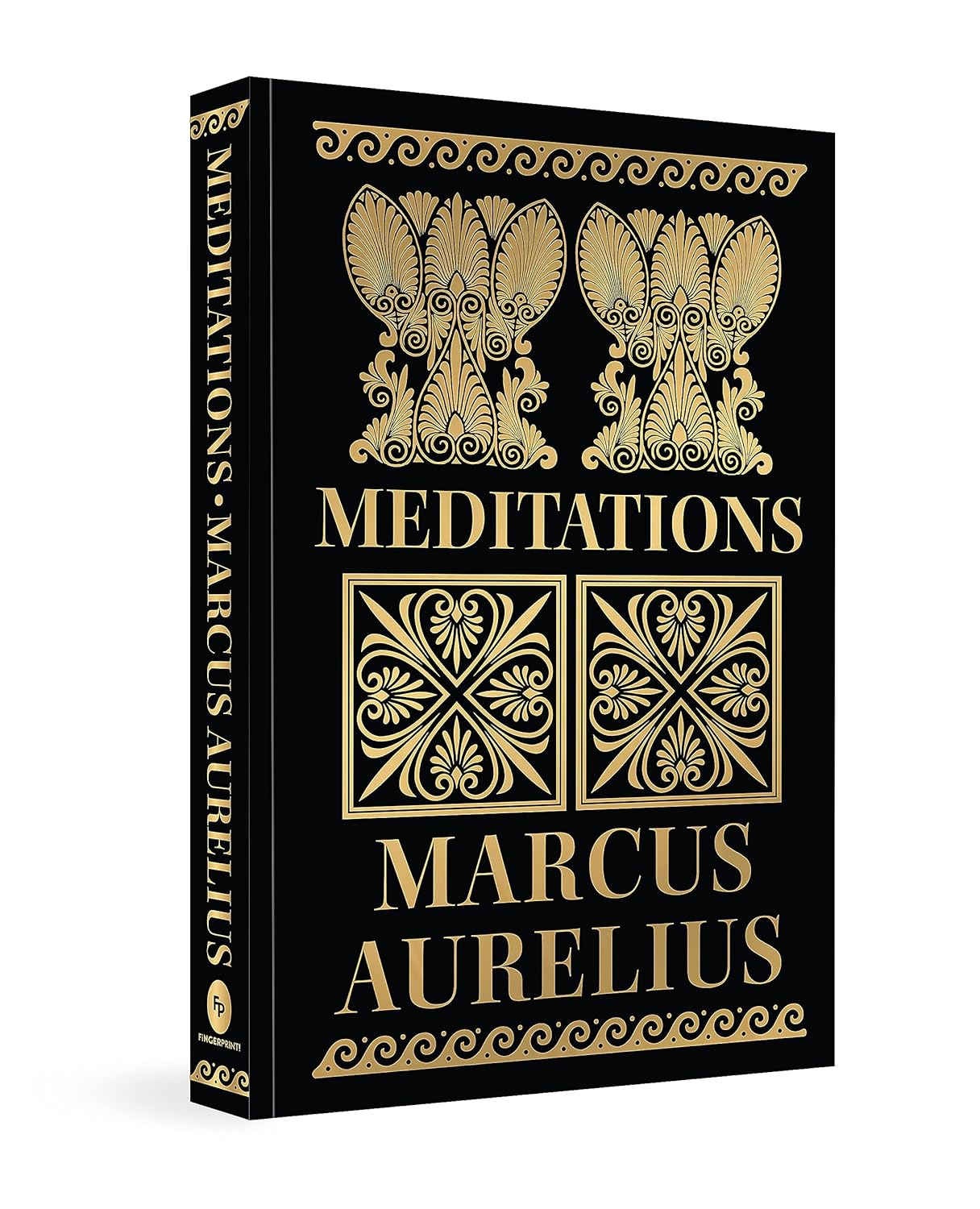
Meditations
Marcus Aurelius


 Amazon Best Sellers
 Barnes & Noble Bestsellers


 59 Min Reading Time
 Audio Version Available
About this book
In Meditations, the philosopher-king Marcus Aurelius delivers timeless wisdom on life, virtue, and resilience. Penned not for publication but as a personal guide, these reflections offer a unique window into the mind of a Roman Emperor grappling with duty, mortality, and the pursuit of inner peace amidst war and the burdens of leadership. Discover practical guidance and profound insights into Stoic philosophy, as Aurelius explores self-discipline, mindfulness, and the acceptance of what lies beyond our control. A powerful source of inspiration for personal growth, Meditations remains a relevant and essential read for anyone seeking meaning and tranquility in a chaotic world.
Summary of Key Ideas
- •
Living in Harmony with Nature
Living in Accordance with Nature: A central theme in Meditations is the importance of living in harmony with nature, both the external universe and one's own internal nature. This means understanding and accepting the natural order of things, recognizing that everything is interconnected and that change is a constant process. By aligning our actions and thoughts with nature, we can find peace and fulfillment, accepting what we cannot control and focusing on what we can.
- •
Reason and Virtue as Guiding Principles
The Power of Reason and Virtue: Aurelius emphasizes the importance of reason as a guiding force in life. He advocates for using logic and critical thinking to make sound judgments and to control our emotions. Virtue, including wisdom, justice, courage, and temperance, is also crucial. By cultivating these virtues and using reason, individuals can navigate life's challenges with resilience and integrity, leading a more meaningful and fulfilling existence.
- •
Embracing Impermanence
Acceptance of Impermanence and Death: Meditations frequently addresses the transient nature of life and the inevitability of death. Aurelius encourages readers to accept these realities without fear or resistance. Recognizing that everything is temporary allows us to appreciate the present moment and to let go of attachments that cause suffering. By contemplating our mortality, we can gain perspective and live with greater purpose and urgency.
- •
Controlling the Internal, Accepting the External
Focus on What You Can Control: A core tenet of Stoicism, and prominent in Meditations, is the distinction between what we can control (our thoughts, actions, and attitudes) and what we cannot (external events, the actions of others). Aurelius advises focusing our energy on managing our internal responses and making virtuous choices, rather than trying to control the external world. This focus promotes inner peace and reduces anxiety.
- •
Duty to Society
Duty and the Common Good: Aurelius stresses the importance of fulfilling one's duty to society and contributing to the common good. As rational beings, we have a responsibility to act in accordance with reason and justice, working for the benefit of all. This involves treating others with kindness and compassion, even when they may not deserve it, and recognizing our interconnectedness with humanity. Serving the greater good is essential for a meaningful life.
- •
The Power of Self-Reflection
The Importance of Self-Reflection and Introspection: Meditations itself is a testament to the power of self-reflection. Aurelius frequently engages in introspection, examining his thoughts, motives, and actions. This process of self-awareness allows him to identify areas for improvement and to cultivate greater virtue. Regular self-reflection is essential for personal growth and for aligning our lives with our values.
- •
Detachment from Externalities
Overcoming External Distractions: Meditations advises readers to minimize the impact of external distractions on their inner peace. This involves avoiding excessive concern with reputation, wealth, or pleasure, and instead focusing on cultivating inner virtue and wisdom. By detaching ourselves from external validation, we become more resilient to the ups and downs of life and more able to maintain our equilibrium.
- •
Embracing the Present Moment
Living in the Present Moment: Marcus Aurelius consistently emphasizes the importance of focusing on the present moment. He cautions against dwelling on the past or worrying about the future, as these are beyond our control. The present is the only time we can act and make choices, so it is essential to be fully present and mindful in our actions. This mindful approach allows us to appreciate life more fully and to make the most of each day.
Chapter Recap

About The Author
Marcus Aurelius
Marcus Aurelius Antoninus was Roman Emperor from 161 to 180. He ruled with Lucius Verus as co-emperor from 161 until Verus' death in 169. He was the last of the "Five Good Emperors", and is also considered one of the most important Stoic philosophers. During his reign, the empire defeated a revitalized Parthian Empire; Aurelius' general Avidius Cassius sacked the capital Ctesiphon in 164. Aurelius fought the Marcomanni, Quadi, and Sarmatians with success during the Marcomannic Wars, but the threat of the Germanic Tribes began to represent a troubling reality for the empire. A revolt in the east led by Avidius Cassius failed to gain momentum and was suppressed immediately. Marcus Aurelius' work Meditations, written in Greek while on campaign between 170 and 180, is still revered as a literary monument to a government of service and duty. It serves as an example of how Aurelius approached the Platonic ideal of a philosopher-king and how he symbolized much of what was best about Roman civilization.
Main Quotes
"You have power over your mind - not outside events. Realize this, and you will find strength."
"Waste no more time arguing about what a good man should be. Be one."
"The happiness of your life depends upon the quality of your thoughts."
"Accept the things to which fate binds you, and love the people with whom fate brings you together, but do so with all your heart."
"Death smiles at us all, but all a man can do is smile back."
"Begin each day by telling yourself: Today I shall be meeting with interference, ingratitude, insolence, disloyalty, ill-will, and selfishness – all of them due to the offenders’ ignorance of what is good and evil."
"How much more grievous are the consequences of anger than the causes of it."
"Never let the future disturb you. You will meet it, if you have to, with the same weapons of reason which today arm you against the present."
"Everything we hear is an opinion, not a fact. Everything we see is a perspective, not the truth."
"The object of life is not to be on the side of the majority, but to escape finding oneself in the ranks of the insane."
Who Should Read This Book
Individuals interested in Stoicism and Stoic philosophy
Readers seeking self-improvement and personal growth strategies
People interested in ancient Roman history and philosophy
Individuals looking for guidance on leadership and ethical decision-making
Those who appreciate philosophical reflections on life, death, and the universe
Readers interested in practical wisdom and mindfulness
Individuals seeking a more meaningful and fulfilling life
People who enjoy introspective and reflective writing
Students of philosophy and classical literature
Individuals looking for timeless wisdom applicable to modern life
Book Summaries Like
Meditations


FAQ

Free Access to LitNotes