




 DISCORD
Miracles
C.S. Lewis


 Apple Books


 60 Min Reading Time
 Audio Version Available
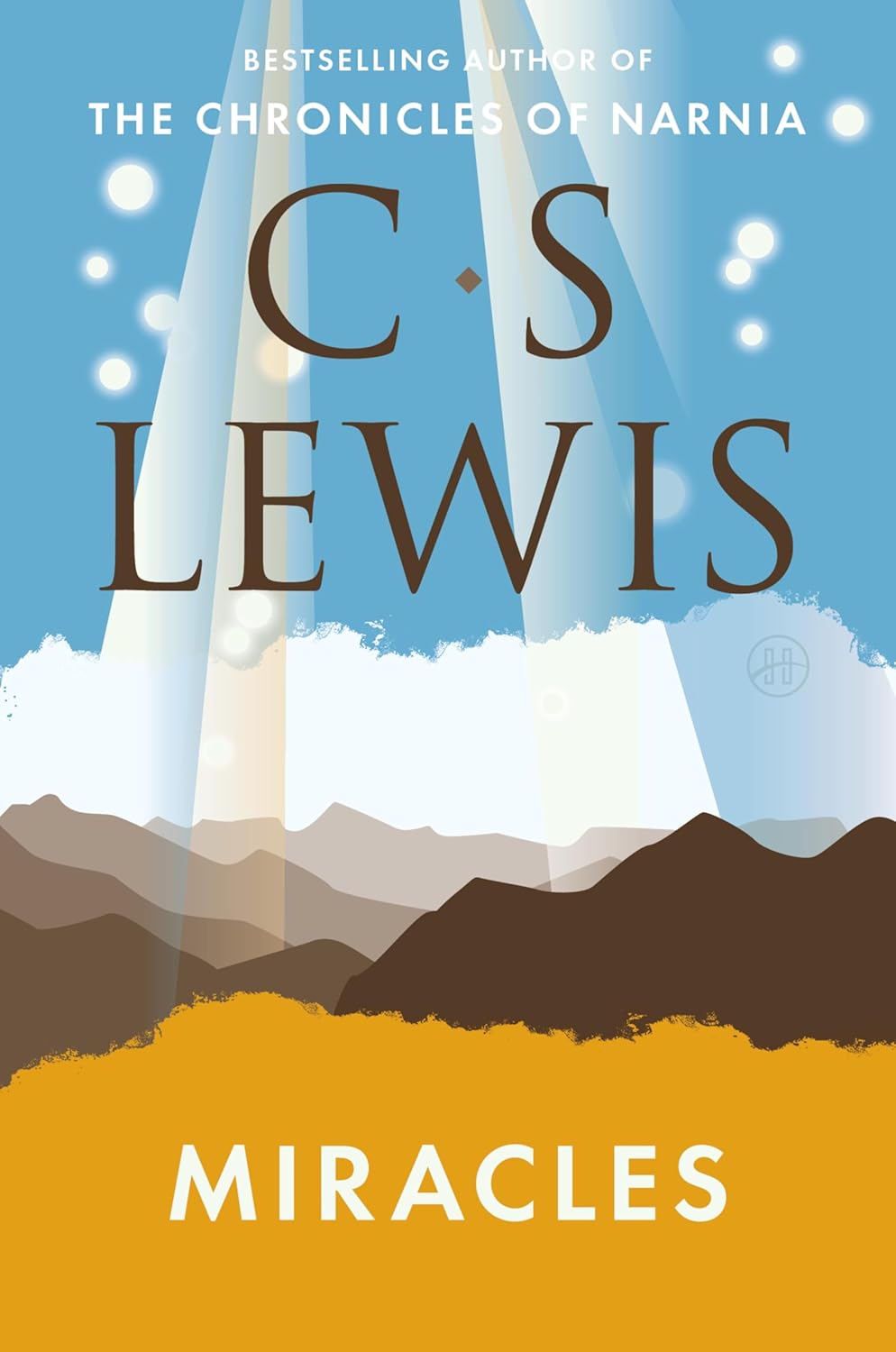
About this book
In Miracles, C.S. Lewis, one of the twentieth century's most influential Christian writers, invites readers to explore the possibility of the supernatural in our world. With his signature warmth, wit, and remarkable logic, Lewis doesn't just ask if miracles happen; he challenges skeptics and rationalists to consider whether miracles are not only possible but a cause for joy, a testament to God's personal and unique involvement in His creation. Lewis builds a compelling case for divine intervention, inviting you to reconsider the boundaries of the natural world and open your mind to the extraordinary.
Summary of Key Ideas
- •
Defining the Boundaries: Natural vs. Supernatural
The Natural and the Supernatural: Lewis establishes a crucial distinction between the natural (the observable, predictable world governed by natural laws) and the supernatural (a reality beyond the natural world, from which miracles originate). He argues that belief in the possibility of miracles hinges on accepting the existence of a supernatural realm capable of interacting with the natural one. Understanding this dichotomy is fundamental to grasping Lewis's overall argument, as he posits that miracles are not violations of natural law but rather interventions from a higher power.
- •
Reason's Limits: Why Naturalism Fails
The Argument from Reason: Lewis contends that reason itself undermines a purely naturalistic worldview. If everything is the product of mindless, deterministic forces, then our thoughts, including our reasoning processes, are also products of these forces. This would mean our capacity for rational thought is merely accidental and not necessarily reliable, thus destroying any basis for trusting our own reasoning about anything, including naturalism itself. Therefore, a basis for reason must come from something beyond nature.
- •
Intervention, Not Violation: Understanding Miraculous Action
Miracles as Interference: Lewis defines a miracle as an intervention or interference with nature by a supernatural power. This interference doesn't necessarily break natural laws but rather redirects or supplements them. He emphasizes that miracles are not random occurrences but purposeful acts with specific intentions, usually stemming from God's will. This definition forms the basis for his analysis of different types of miracles and their implications.
- •
The Incarnation: The Core of Christian Miracles
The Grand Miracle: The Incarnation: Lewis considers the Incarnation (God becoming human in the person of Jesus Christ) as the central and most significant miracle in Christianity. He argues that all other miracles either prepare for or flow from this supreme event. The Incarnation demonstrates God's profound love and commitment to humanity, providing the ultimate solution to the problem of sin and separation from God. It serves as the focal point for understanding God's interaction with the world.
- •
Coexisting Realities: Miracles and Natural Laws
Miracles and Natural Law: Lewis clarifies that miracles do not contradict or abolish natural laws. Instead, they represent a temporary suspension or redirection of these laws by a higher power for a specific purpose. He uses analogies like an author intervening in their own story to illustrate how God can act within the natural world without disrupting its fundamental order. This distinction addresses the common objection that miracles are scientifically impossible.
- •
Miracles Amidst Suffering: A Matter of Purpose
The Problem of Suffering: Lewis tackles the difficult question of why, if God performs miracles, does suffering still exist? He suggests that miracles are not meant to eliminate all suffering but rather to offer glimpses of hope and divine intervention within a fallen world. Suffering can serve a purpose in shaping character, drawing people closer to God, and highlighting the need for redemption. Miracles, therefore, are not a universal panacea but rather strategic acts of grace.
- •
Classifying the Divine: Different Forms of Miracles
Types of Miracles: Lewis categorizes miracles into different types, such as miracles of healing, miracles involving inanimate objects, and miracles of nature. He examines the philosophical implications of each type, demonstrating how they point to a supernatural power at work in the world. By analyzing various examples, Lewis builds a comprehensive case for the plausibility and coherence of miracles within a Christian worldview. Each miracle type serves as a specific demonstration of God's power.
- •
Worldview Matters: Shaping Belief in Miracles
The Importance of Worldview: Lewis emphasizes that one's worldview significantly influences their acceptance or rejection of miracles. A naturalistic worldview, which denies the existence of the supernatural, will inherently reject miracles. Conversely, a theistic worldview, which acknowledges a divine Creator, is more open to the possibility of miracles. Ultimately, Lewis argues that the question of miracles cannot be separated from the broader question of God's existence and relationship with the world.
Chapter Recap

About The Author
C.S. Lewis
Main Quotes
"A miracle is by definition an exception."
"Nothing can seem extraordinary until you have discovered what is ordinary."
"Belief in miracles, far from depending on an ignorance of the laws of nature, is only possible in so far as those laws are known."
"Omnipotence means power to do all that is intrinsically possible, not to do the intrinsically impossible. You may attribute miracles to Him, but not nonsense."
"The central miracle asserted by Christians is the Incarnation."
"To believe in the Laws of Nature is to believe that every event is connected with every other event."
"If we are to use the words 'Nature' and 'natural' with any vestige of meaning, we must clearly distinguish between the source of events and their regularity."
"For if my own mind is a product of the Nature I am investigating, how can I trust my own operations so far as to build a proof on them?"
"Unless human reasoning is valid no science can be true."
"The Supernatural is not simply the natural plus itself; it is the corrective of the natural."
Who Should Read This Book
Christians seeking intellectual grounding for their faith
Individuals interested in philosophical arguments for the existence of God
Readers exploring the relationship between science and religion
Those open to considering the possibility of miracles
C.S. Lewis fans interested in his apologetic works
Theologians and students of theology
People questioning naturalism and rationalism
Readers seeking a deeper understanding of Christian theology
Individuals struggling with doubt and seeking intellectual affirmation of their beliefs
Those interested in arguments for and against miracles
Book Summaries Like
Miracles
FAQ

Free Access to LitNotes