




 DISCORD
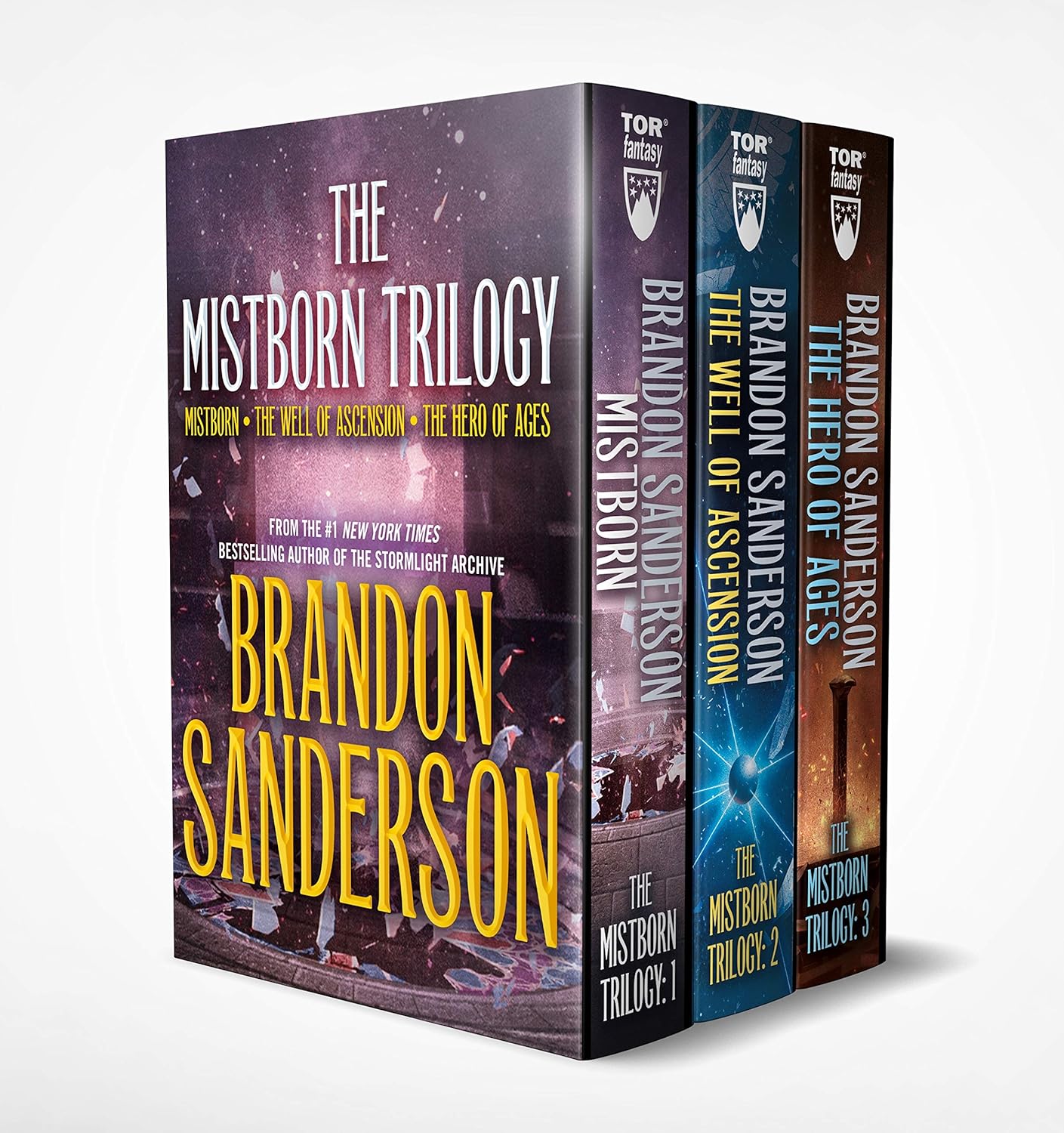
Mistborn
Brandon Sanderson


 Indie Bestsellers


 116 Min Reading Time
 Audio Version Available

About this book
For a thousand years, ash has fallen from the sky, and the Skaa have lived as slaves in a world choked by the Lord Ruler's iron fist. Hope died long ago, but in the depths of the Lord Ruler's most brutal prison, a scarred and broken Kelsier discovers the power of a Mistborn.
A brilliant thief and natural leader, Kelsier plots the ultimate heist: to overthrow the Lord Ruler himself. He assembles a crew of skilled allomancers, each with unique powers, and together, they plan the impossible. But even with the best team, the odds are stacked against them until a chance encounter brings Vin, a street urchin with untapped Mistborn abilities, into their fold.
Vin, hardened by a life of betrayal, must learn to trust and master her powers. As Kelsier trains her, they ignite a spark of rebellion, daring to ask: What if the prophesied hero failed? Experience a world of political intrigue, high-stakes action, and a unique magic system in this landmark fantasy saga.
Summary of Key Ideas
- •
The Failed Hero: A World Forged in Defeat
The narrative unfolds in a world where the prophesied hero failed, leaving a tyrannical Lord Ruler to reign for a thousand years. This subversion of the chosen one trope highlights the consequences of failure and sets the stage for a rebellion built on hope and desperation. The story explores how society adapts and suffers under long-term oppression, influencing the characters' motivations and the overall themes of the book. This premise allows Sanderson to delve into the complexities of a world shaped by defeat and the struggle to reclaim agency.
- •
Allomancy: A Metal-Based Magic System
Mistborn features a meticulously crafted magic system known as Allomancy, where individuals gain powers by ingesting and "burning" specific metals. This system isn't just a source of fantastical abilities; it's deeply integrated into the world's economics, politics, and social structure. The limitations and strategic applications of Allomancy drive the plot, influencing combat, espionage, and the characters' problem-solving approaches. Sanderson's hard magic system ensures consistency and allows readers to understand and predict the possibilities and constraints of Allomantic powers.
- •
The Ultimate Heist: Overthrowing an Immortal God
The story is fundamentally about a crew of thieves planning and executing a seemingly impossible heist: overthrowing the immortal Lord Ruler. This element infuses the narrative with tension, intricate planning, and unexpected twists. The heist framework provides a structured approach to the rebellion, showcasing the characters' diverse skills and forcing them to confront moral dilemmas. The focus on planning and execution emphasizes the importance of strategy, teamwork, and adaptability in the face of overwhelming odds.
- •
Social Stratification and Oppression
Set in a dystopian world, Mistborn critiques social inequality through the stark contrast between the opulent nobility and the oppressed Skaa. The Skaa are treated as expendable laborers, denied education and basic rights, while the nobility enjoy lives of luxury and power. This division fuels the rebellion, highlighting the ethical implications of systemic oppression and the desperate measures people take to fight for freedom. The narrative explores themes of class warfare, justice, and the potential for social change.
- •
Vin's Transformation: From Urchin to Mistborn
Vin's journey from a street urchin to a powerful Mistborn is central to the story. Her character arc explores themes of self-discovery, trust, and empowerment. As she learns to control her Allomantic abilities and navigate the complex world of politics and intrigue, Vin grapples with her identity and the responsibilities that come with her newfound power. Her growth is not only physical but also emotional, as she forms bonds with the crew and confronts her past traumas.
- •
Kelsier: The Charismatic Revolutionary
Kelsier, a charismatic and rebellious Mistborn, serves as a pivotal figure in galvanizing the Skaa to fight against the Lord Ruler. His past trauma and unwavering belief in the possibility of change drive his actions, inspiring hope in the oppressed masses. Kelsier's leadership style, which often involves manipulation and risk-taking, raises questions about the ethics of revolution and the sacrifices required to achieve freedom. His character embodies the themes of hope, sacrifice, and the power of belief.
- •
The Power of Belief: Faith as Control and Resistance
Faith and belief play a crucial role, both in the Lord Ruler's oppressive regime and in the rebellion against it. The Lord Ruler maintains control through a distorted religion that presents him as a divine figure, while the rebels must develop their own system of belief to justify their actions and inspire their followers. The narrative explores the power of faith to motivate individuals and shape societies, highlighting both its potential for manipulation and its capacity for positive change.
- •
Ethical Dilemmas of Revolution
The characters frequently face difficult ethical dilemmas as they navigate the complexities of revolution. The ends versus means debate is a recurring theme, as the rebels must decide what sacrifices are acceptable in their fight for freedom. The narrative explores the moral ambiguities of war and the potential for even well-intentioned actions to have unintended consequences. The characters' struggles with these dilemmas add depth and complexity to the story, forcing readers to consider the ethical implications of their choices.
Chapter Recap

About The Author
Brandon Sanderson
Main Quotes
"“Hope is a fleeting thing maybe, but it’s the reason I’m still alive.”"
"“The greatest trick the Lord Ruler ever pulled was convincing people that he didn't exist.”"
"“Belief isn't simply a thing you can switch on and off like a light.”"
"“Sometimes, I think that the greatest battles are fought within us.”"
"“Our belief is often strongest when it should be weakest. That is the nature of hope.”"
"“The right belief is like a good cloak, I think. If it fits you well, it keeps you warm and safe.”"
"“It's not about what you deserve, it's about what you believe. And I believe in love.”"
"“You can't build an empire on love, that's for certain.”"
"“I represent that one thing you've never been able to kill, no matter how hard you try. I am hope.”"
"“Unpredictability is freedom.”"
Who Should Read This Book
Readers of fantasy fiction
Young adults interested in dystopian themes
Adults who enjoy epic fantasy with complex magic systems
Readers who appreciate character-driven stories with strong female protagonists
Fans of Brandon Sanderson's other works
Individuals seeking accessible adult fantasy
Readers who enjoy detailed world-building and political intrigue
People looking for fantasy with elements of heist and rebellion
Book Summaries Like
Mistborn
FAQ

Free Access to LitNotes