




 DISCORD
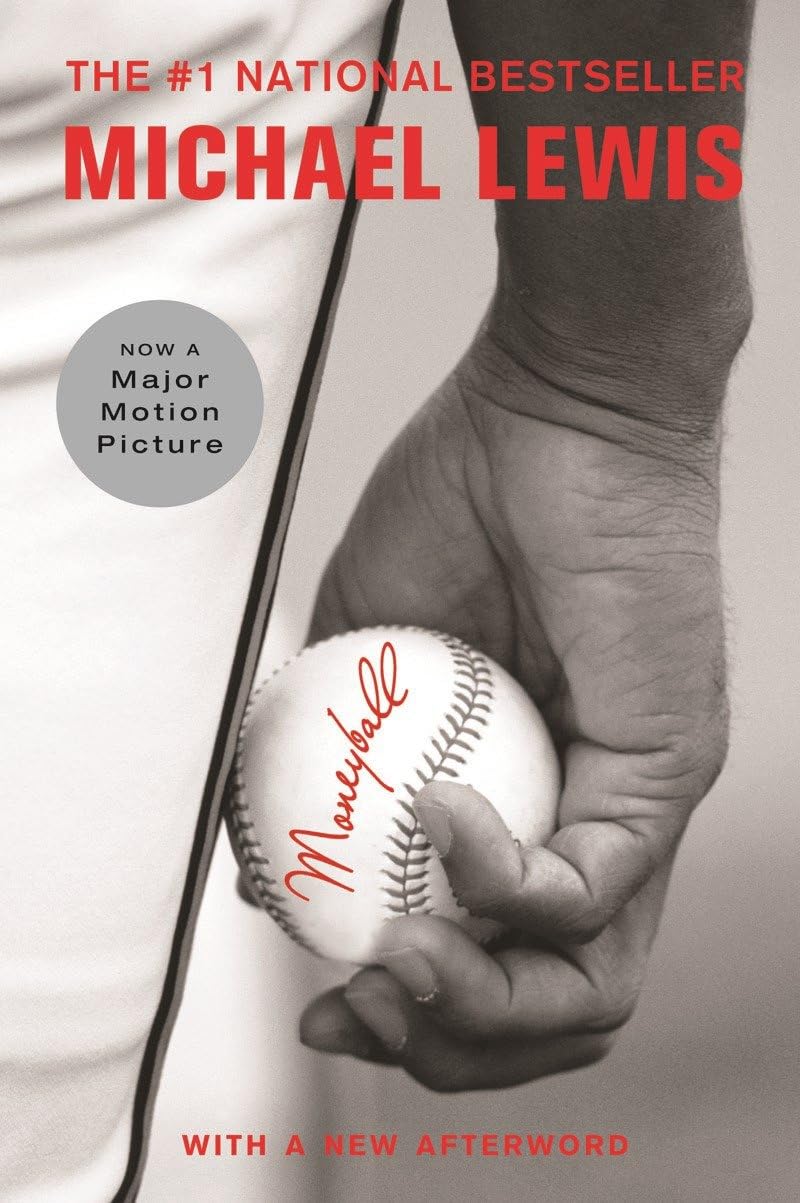
Moneyball: The Art of Winning an Unfair Game
Michael Lewis


 Amazon Best Sellers
 Apple Books


 78 Min Reading Time
 Audio Version Available
About this book
In the high-stakes world of Major League Baseball, where money talks and tradition reigns, the Oakland A's were an anomaly. With a shoestring budget and a league of naysayers, general manager Billy Beane dared to defy conventional wisdom. Michael Lewis's Moneyball is the gripping story of Beane's revolutionary quest to build a winning team by throwing out old scouting methods and embracing a radical, data-driven approach.
Meet the castoffs, the undervalued, and the statistically gifted—a motley crew of players and baseball theorists who saw the game in a way no one else did. They unearthed hidden potential in overlooked statistics, challenging the very foundation of how talent was assessed.
Moneyball isn't just a baseball story; it's a captivating underdog tale about innovation, risk-taking, and the courage to challenge the establishment. Whether you're a die-hard baseball fan or a business enthusiast, prepare to be captivated by this groundbreaking narrative that proves even in the most unfair of games, ingenuity can triumph over big money.
Summary of Key Ideas
- •
The Power of Data-Driven Decisions
Embracing Sabermetrics: The core of "Moneyball" lies in the adoption of sabermetrics, a data-driven approach to baseball analysis. This involves using statistical evidence to evaluate players and strategies, moving away from traditional scouting methods that rely on subjective opinions and gut feelings. Sabermetrics emphasizes objective measurements like on-base percentage and slugging percentage, which provide a more accurate assessment of a player's true value. This shift in perspective challenges conventional wisdom and allows teams with limited resources to identify undervalued players.
- •
Questioning Traditional Methods
Challenging Conventional Wisdom: "Moneyball" highlights the importance of questioning established norms and beliefs. The Oakland A's success stemmed from their willingness to challenge the traditional scouting methods and player evaluation techniques prevalent in baseball. By daring to think differently and embrace unconventional strategies, they gained a competitive edge. This key idea encourages readers to critically examine the status quo in their own fields and consider alternative approaches that may lead to innovation and success.
- •
Unearthing Hidden Potential
Finding Value in the Undervalued: One of the central themes of "Moneyball" is the ability to identify and acquire undervalued assets. The Oakland A's focused on players who were overlooked or dismissed by other teams due to perceived flaws or unconventional skill sets. By recognizing the potential in these players and understanding their true value based on statistical analysis, the A's were able to build a competitive team on a fraction of the budget of larger, more affluent teams. This strategy demonstrates the power of resourcefulness and creative thinking in achieving success.
- •
Exploiting Market Inefficiencies
The Inefficiency of the Market: "Moneyball" exposes the inefficiencies of the baseball player market, where biases and outdated evaluation methods often lead to mispricing of talent. Teams relying on traditional scouting techniques often overvalue certain attributes while undervaluing others, creating opportunities for teams like the Oakland A's to exploit these market inefficiencies. By understanding these inefficiencies and employing a more objective, data-driven approach, teams can gain a significant advantage in player acquisition and team building.
- •
The Importance of Adaptability
Adaptability and Innovation: The success of the Oakland A's was not solely based on their initial adoption of sabermetrics, but also on their continuous ability to adapt and innovate. As other teams began to adopt similar data-driven approaches, the A's had to constantly refine their strategies and find new ways to gain an edge. This highlights the importance of adaptability and innovation in maintaining a competitive advantage in a constantly evolving environment. The book underscores the need to stay ahead of the curve and embrace change in order to achieve long-term success.
- •
Navigating Resistance to Innovation
Overcoming Resistance to Change: The implementation of sabermetrics in the Oakland A's organization was not without its challenges. Billy Beane and his staff faced resistance from traditional scouts, coaches, and even some players who were skeptical of the new approach. Overcoming this resistance required strong leadership, effective communication, and a commitment to the new methodology. This key idea emphasizes the importance of perseverance and conviction in the face of opposition when implementing innovative strategies.
- •
Redefining Achievement Metrics
Redefining Success: "Moneyball" challenges the traditional definition of success in baseball, which often focuses solely on winning championships. While winning is certainly important, the book suggests that success can also be measured by a team's ability to maximize its resources and compete effectively despite financial limitations. The Oakland A's, despite not winning a World Series, achieved remarkable success by consistently outperforming expectations and challenging the dominance of wealthier teams. This broader definition of success highlights the importance of setting realistic goals and measuring progress based on individual circumstances.
Chapter Recap

About The Author
Michael Lewis
Main Quotes
"It's about getting things done. It's about using what you have to win."
"Your goal shouldn't be to buy players, your goal should be to buy wins."
"The problem we're trying to solve is that there are 25,000 kids out there who've played baseball, and only 50 of them are valuable."
"People who run ballclubs think in terms of buying talent. They don't understand that what they should be buying is performance."
"He's the only guy I've ever met who is exactly the same person, whether he is talking to the owner of the team or the guy who sweeps up after the games."
"If we win, we'll win because we figured out how to run a baseball team better than rich guys."
"How can you not be romantic about baseball?"
"That’s the question I ask myself almost every day."
"Anybody who’s not tearing down walls is just rearranging furniture."
"Adapt or die."
Who Should Read This Book
Baseball fans, particularly those interested in the Oakland A's
Readers interested in data analytics and statistical analysis, especially in the context of sports
Individuals interested in business strategy, management, and organizational change
Readers of Michael Lewis's other books, who appreciate his narrative style and exploration of unconventional topics
People interested in underdog stories and innovative approaches to problem-solving
Those working in or interested in sports management and scouting
Readers interested in economics and the application of economic principles to real-world situations
General readers who enjoy non-fiction narratives with compelling characters and storylines
Book Summaries Like
Moneyball: The Art of Winning an Unfair Game



FAQ

Free Access to LitNotes