




 DISCORD
Morning Star
Pierce Brown


 Goodreads Choice Awards
 Apple Books


 161 Min Reading Time
 Audio Version Available
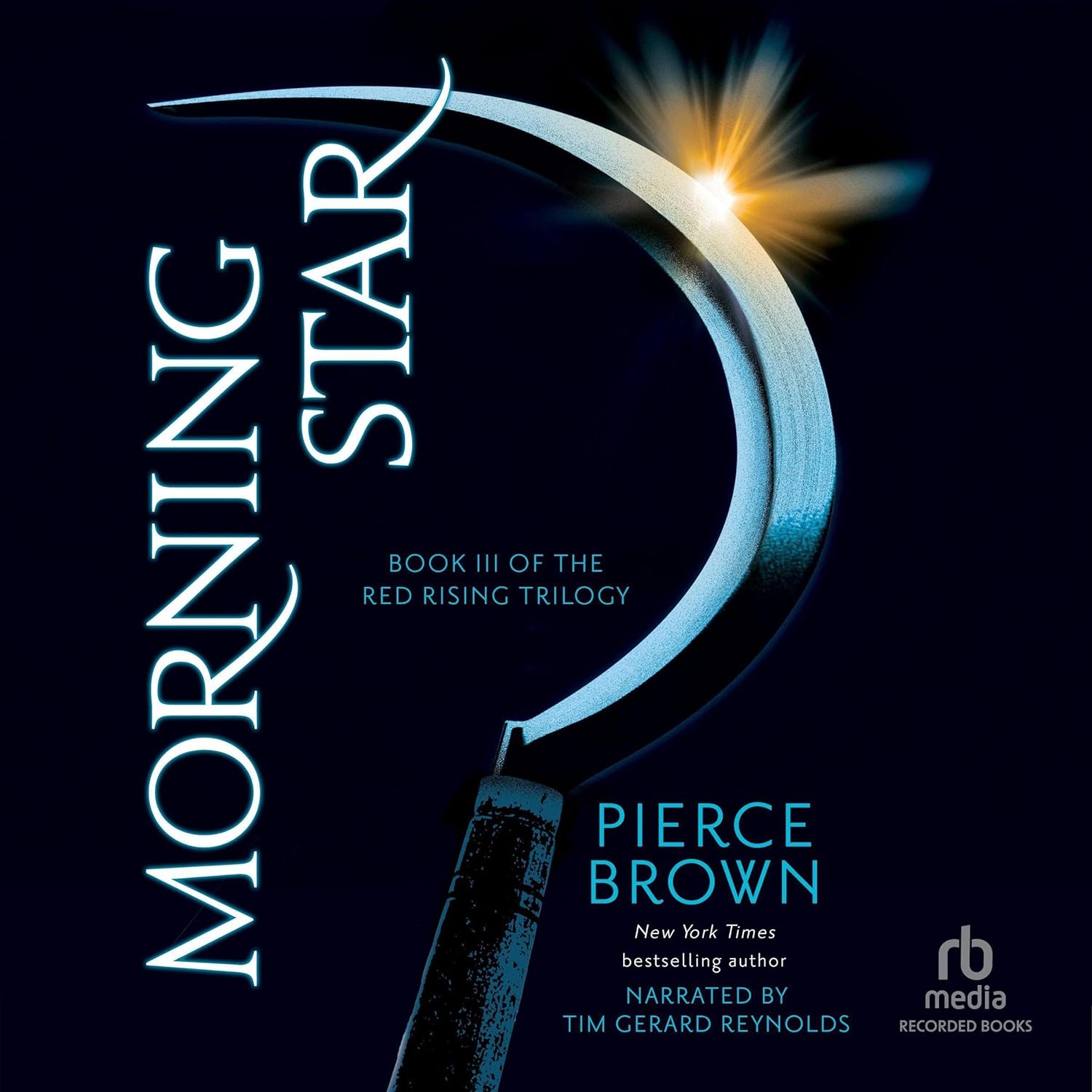
About this book
The Republic teeters on the brink. Darrow, once a Red miner, now the Gold-infiltrated Reaper, has ignited a revolution that threatens to shatter the Society. After a devastating defeat that saw him broken and humiliated, Darrow must rebuild his strength and rally his allies to strike the final blow against the tyrannical Sovereign.
But the war for freedom is a bloody, brutal affair. Loyalties are tested, alliances shift, and the cost of victory may be more than Darrow can bear. To triumph, he must become more than a rebel; he must become a leader, a symbol, a Morning Star for a new age.
As he navigates political treachery, faces impossible odds, and confronts the ghosts of his past, Darrow will discover the true meaning of power and the devastating price of revolution. Will he succeed in his quest to dismantle the Society and build a more just world, or will the dream of equality be crushed beneath the iron fist of oppression? The fate of humanity hangs in the balance in this epic conclusion to the Red Rising Saga.
Summary of Key Ideas
- •
Uprising Against Oppression
The central conflict of *Morning Star* revolves around the fight against the oppressive Society and its rigid color-coded caste system. Darrow, once a Helldiver, becomes the leader of a rebellion aiming to dismantle the Golds' tyrannical rule and establish a society based on equality and justice. This theme underscores the immense challenges and sacrifices required to overthrow deeply entrenched power structures, highlighting the moral complexities and ethical dilemmas faced by revolutionaries. The narrative explores the strategies, alliances, and internal conflicts that arise when challenging a seemingly insurmountable regime, emphasizing the importance of unity, resilience, and unwavering commitment to the cause of freedom. Ultimately, the fight against oppression is portrayed as a brutal, transformative process that tests the limits of human endurance and resolve.
- •
Identity and Sacrifice
Throughout *Morning Star*, Darrow grapples with his identity as a Red who has been surgically altered to infiltrate the Gold society. He struggles to reconcile his loyalty to his people with the relationships he has forged among the Golds, including his complex feelings for Mustang. This internal conflict highlights the blurred lines between right and wrong, and the sacrifices one must make in the pursuit of a greater good. Darrow's journey is marked by constant questioning of his own motives and the consequences of his actions, as he navigates a world where allegiances are constantly shifting and the price of freedom is steep. His exploration of identity underscores the profound impact of societal structures on individual lives and the enduring quest for self-discovery in the face of overwhelming adversity.
- •
The Brutality and Complexity of War
War is depicted as a brutal and complex affair in *Morning Star*, showcasing both its strategic brilliance and devastating consequences. Brown doesn't shy away from portraying the grim realities of battle, including the loss of innocent lives and the psychological toll it takes on soldiers. The novel delves into the ethical considerations of warfare, examining the justifications for violence and the long-term impact of conflict on individuals and societies. Through vivid descriptions of battles and strategic maneuvers, Brown illustrates the chaos and unpredictability of war, while also highlighting the courage, camaraderie, and sacrifice that can emerge in the face of death. Ultimately, the novel presents a nuanced view of war, acknowledging its horrors while also exploring its potential to forge resilience and inspire change.
- •
Loyalty and Betrayal
*Morning Star* emphasizes the significance of loyalty and betrayal within the context of war and revolution. Darrow experiences both unwavering support and heartbreaking betrayals from those closest to him, forcing him to constantly question his trust in others. These relationships highlight the personal costs of conflict and the difficult choices individuals must make when allegiances are tested. The novel explores the motivations behind betrayal, examining the factors that drive characters to turn against their comrades. Ultimately, *Morning Star* underscores the fragility of trust in times of war, and the enduring impact of betrayal on individuals and the course of history.
- •
The Burden of Leadership
*Morning Star* delves into the theme of leadership, exploring the qualities and responsibilities required to lead a rebellion. Darrow's leadership is constantly tested as he faces difficult decisions that impact the lives of countless individuals. He grapples with the weight of his position, recognizing the need to inspire hope while also making tough choices that may result in loss. The novel examines the different styles of leadership, contrasting Darrow's approach with that of other prominent figures in the rebellion. Ultimately, *Morning Star* suggests that effective leadership requires a combination of vision, empathy, courage, and the ability to inspire others to believe in a better future.
- •
The Path to Redemption
Redemption serves as a powerful theme in *Morning Star*, particularly in the arcs of characters who have made questionable choices or committed acts of violence. Characters like Cassius, who once stood as Darrow's enemy, undergo significant transformations as they confront their past actions and seek to atone for their mistakes. The novel explores the possibility of redemption even for those who have caused great harm, suggesting that individuals are capable of change and growth. Through these redemption arcs, *Morning Star* offers a message of hope and forgiveness, highlighting the potential for healing and reconciliation even in the aftermath of war and conflict.
Chapter Recap

About The Author
Pierce Brown
Main Quotes
"“They call me the Morning Star. That star by which griffin-riders and travelers navigate the wastes in the dark months of winter.”"
"“Man is no island. We need those who love us. We need those who hate us. We need others to tether us to life, to give us a reason to live, to feel.”"
"“A man thinks he can fly, but he is afraid to jump. A poor friend pushes him from behind. A good friend jumps with.”"
"“Deep in darkness, far from warmth and sun and moons, I lie, quiet as the stone that surrounds me, imprisoning my hunched body in a dreadful womb.”"
"“Strength is not born from the absence of fear, but from the will to overcome it.”"
"“It beats inside me, this terrible hope, as I know that the end has begun, and I am finally awake.”"
"“We are the authors of our own fates.”"
"“I am the Reaper. And today is not the day I die.”"
"“There is no greater plague to an angry man than a stomach full of food.”"
"“I would have lived in peace, but my enemies brought me war.”"
Who Should Read This Book
Young adults and adults interested in science fiction and dystopian fiction
Readers of the Red Rising series
Fans of action-packed and violent stories
Readers who enjoy political intrigue and rebellion themes
Those who appreciate strong world-building and character development
Readers looking for a conclusion to a trilogy
Book Summaries Like
Morning Star



FAQ

Free Access to LitNotes