




 DISCORD
My Grandmother Asked Me to Tell You She's Sorry
Fredrik Backman


 Goodreads Choice Awards
 Apple Books


 105 Min Reading Time
 Audio Version Available
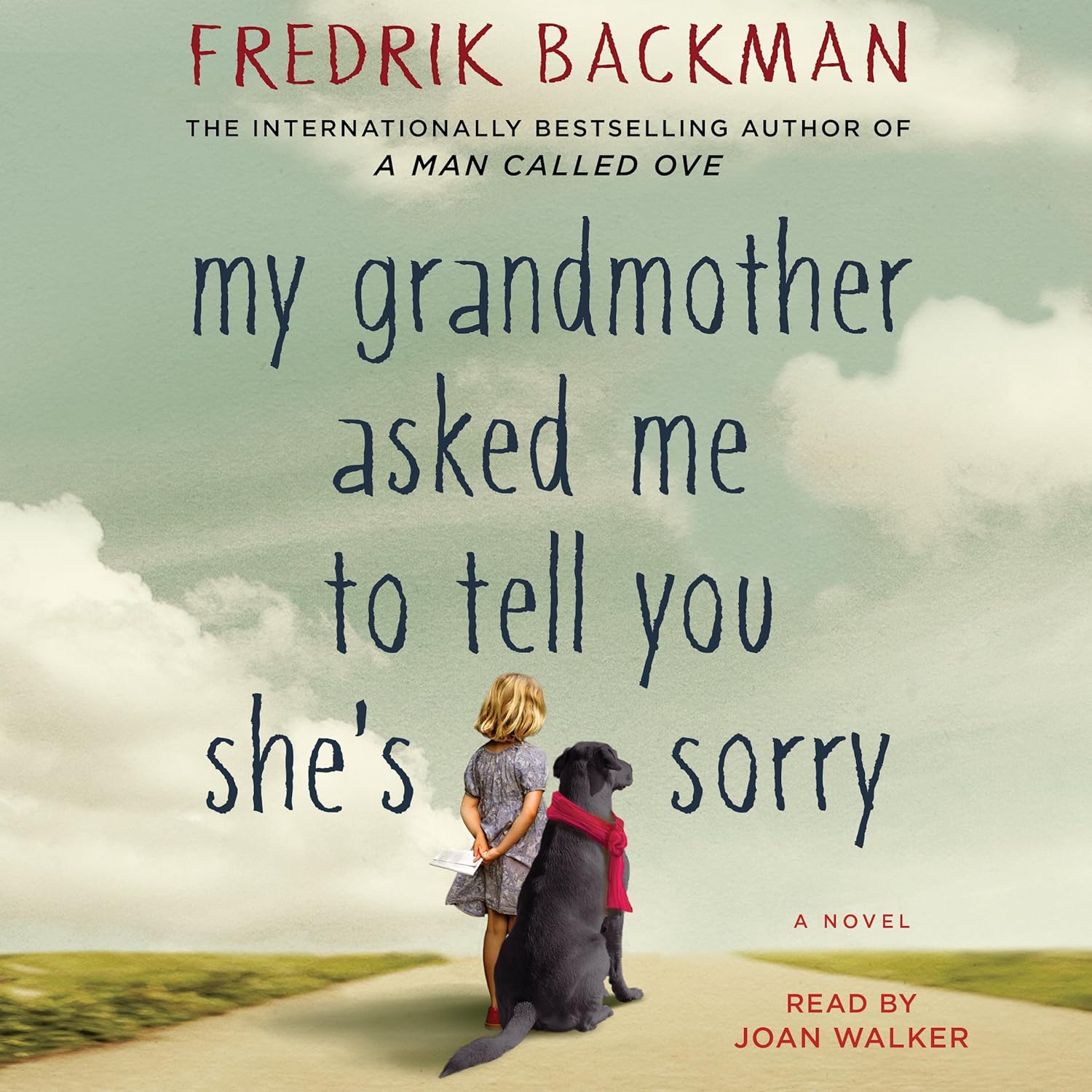
About this book
From Fredrik Backman, the internationally bestselling author of A Man Called Ove, comes a poignant and enchanting novel about love, loss, and the power of stories. Seven-year-old Elsa is different, and her grandmother is her only friend—a wildly eccentric seventy-seven-year-old who stands on balconies firing paintball guns. By night, Elsa escapes into her grandmother's fantastical tales of the Land-of-Almost-Awake, a magical kingdom where everyone is unique and accepted.
But when her grandmother dies, Elsa's world is turned upside down. Tasked with delivering a series of apology letters to people her grandmother has wronged, Elsa embarks on a real-life adventure that leads her to an apartment building filled with quirky and sometimes dangerous characters. As she uncovers the truth behind her grandmother's stories, Elsa discovers the profound connections between fairy tales and reality, and learns that even in the face of loss, love and forgiveness can conquer all. My Grandmother Asked Me to Tell You She's Sorry is a heartwarming exploration of life, death, and the enduring human need to be different.
Summary of Key Ideas
- •
Stories as Bridges to Understanding
The power of storytelling and imagination is central to the book. Elsa's grandmother creates a fantastical world called Miamas, filled with knights, princesses, and magical creatures. These stories, initially appearing as mere entertainment, serve as a vehicle for conveying important life lessons, coping mechanisms, and a means of understanding complex emotions and relationships. As Elsa embarks on her grandmother's final mission, she discovers that the stories are deeply intertwined with reality, reflecting the lives and histories of the people around her. The fantastical elements highlight the importance of imagination in navigating the challenges of the real world and processing grief.
- •
The Complexity of Family Bonds
The book explores the complex bond between Elsa and her grandmother. Their relationship is unconventional and filled with both love and conflict. The grandmother, despite her flaws and eccentricities, is Elsa's biggest champion and protector. After her grandmother's death, Elsa uncovers the depth of her grandmother's love and the sacrifices she made. This highlights how familial love can be expressed in imperfect ways. The novel showcases how these complex relationships can profoundly impact our lives and shape our identities.
- •
The Healing Power of Forgiveness
“My Grandmother Asked Me to Tell You She's Sorry” emphasizes the significance of forgiveness and reconciliation. Elsa's grandmother, through her apologetic mission, seeks to mend past mistakes and heal broken relationships. This act highlights the importance of acknowledging one's flaws and taking responsibility for one's actions. As Elsa delivers the letters, she witnesses the transformative power of forgiveness, both for those who offer it and those who receive it. The theme suggests that it's never too late to seek reconciliation and that forgiveness can lead to healing and redemption.
- •
Celebrating Individuality and Uniqueness
The book emphasizes the importance of accepting and celebrating individuality. Elsa is portrayed as a precocious and 'different' child who struggles to fit in. Her grandmother encourages her to embrace her uniqueness and not conform to societal expectations. The novel celebrates the beauty of being different and the value of finding one's own path. Through Elsa's journey, the book encourages readers to accept and appreciate their own unique qualities and to embrace the diversity in others.
- •
Navigating Grief and Loss
The story delves into themes of grief, loss, and the process of coping with death. Elsa's journey is initiated by the death of her grandmother, which forces her to confront the reality of loss and navigate the complex emotions associated with it. Through her mission to deliver the letters, Elsa gradually comes to terms with her grief and learns to cherish the memories of her grandmother. The book offers a poignant exploration of how individuals cope with loss and how relationships can endure even after death.
- •
Finding Heroism in the Ordinary
The novel explores themes of heroism and courage in unexpected places. While the stories within the story are filled with knights and heroic figures, the book showcases that ordinary people can also exhibit extraordinary courage in their everyday lives. Elsa's grandmother, despite her flaws, is portrayed as a hero in Elsa's eyes. The neighbors Elsa meets on her mission also demonstrate courage and resilience in the face of adversity. The book challenges the traditional notion of heroism and suggests that true heroism lies in acts of kindness, compassion, and standing up for what is right.
Chapter Recap

About The Author
Fredrik Backman
Main Quotes
"It's strange how close love and fear live to each other."
"The mightiest power of death is not that it can make people die, but that it can make the people you left behind want to stop living."
"Being a superhero is a lot of work. But it's also the best job in the world."
"People say that to play the hero you have to be brave, but maybe it’s not about being brave, maybe it’s about not having any choice."
"Having a grandmother is like having an army. This is a grandchild's ultimate privilege: knowing that someone is on your side, always, whatever happens."
"Death is only difficult for those who remain."
"Sometimes knowing you're not alone can get you through almost anything."
"If you don't like people, they can't hurt you."
"All seven-year-olds deserve superheroes. Anyone who doesn't agree with that should be locked up for life."
"Granny always said that if you couldn't use the imagination you were born with, you might as well be born a sheep."
Who Should Read This Book
Readers who enjoy heartwarming and quirky stories about family and relationships
Fans of Fredrik Backman's other novels, such as "A Man Called Ove" and "Britt-Marie Was Here"
Readers looking for books with a blend of humor, sadness, and hope
Individuals interested in stories that explore themes of grief, loss, and forgiveness
Book clubs seeking engaging and thought-provoking discussion material
Adults who appreciate stories told from a child's perspective
Readers who enjoy magical realism and fairytale elements in contemporary fiction
Individuals who appreciate Scandinavian literature and culture
Book Summaries Like
My Grandmother Asked Me to Tell You She's Sorry

FAQ

Free Access to LitNotes