




 DISCORD
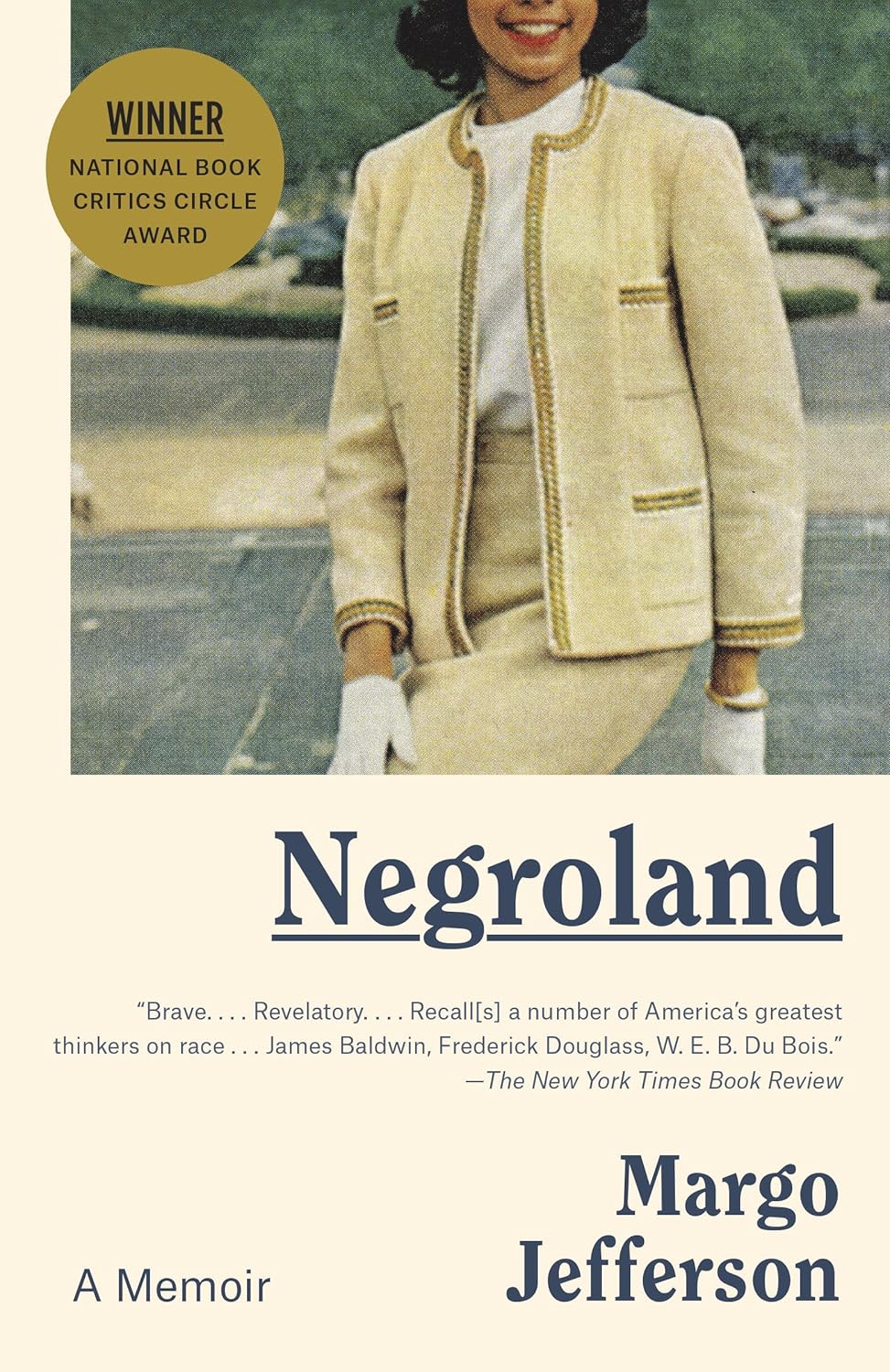
Negroland
Margo Jefferson

 National Book Critics Circle Award


 105 Min Reading Time
 Audio Version Available
About this book
NATIONAL BOOK CRITICS CIRCLE WINNER • NATIONAL BESTSELLER
Pulitzer Prize-winning cultural critic Margo Jefferson invites us into "Negroland," a self-defined enclave of Black America where privilege and discrimination intertwine. Born into Chicago's upper-crust Black society—her father a pioneering pediatrician, her mother a prominent socialite—Jefferson recounts a life shaped by the rigid expectations and paradoxical realities of an elite that meticulously cultivated achievement, invulnerability, and comportment, all while navigating the fraught landscape of race in America.
From generations of free Black forebears who amassed fortunes, this insulated world of exclusive networks and stringent evaluations—where skin color and hair texture were scrutinized alongside academic prowess—positioned itself as a "third race." Jefferson brilliantly chronicles her journey through this rarefied existence, reckoning with its psychological and moral contradictions against the backdrop of seismic historical shifts: the Civil Rights Movement, the rise of feminism, and the enduring myth of a post-racial society.
At once celebratory and elegiac, provocative and profound, Negroland is a deeply felt meditation on race, sex, class, and American culture. It is a testament to the grace of perseverance, even amidst heart-wrenching despair.
Summary of Key Ideas
- •
The Burden of "Best Negro" Status
Jefferson explores the complex and often contradictory experience of being part of the black elite in mid-20th century America. This group, often referred to as "Negroland," faced the pressure of representing the "best" of their race to a predominantly white society. They were expected to excel academically, culturally, and professionally, while simultaneously navigating the pervasive racism and segregation of the time. This constant pressure to prove their worth created a unique burden, as they were both privileged within the black community and marginalized by the wider American society. The book delves into the psychological toll of this balancing act and the inherent contradictions of striving for excellence within a system designed to limit their potential.
- •
Double Consciousness and Identity Formation
W.E.B. Du Bois' concept of "double consciousness" is a central theme, as Jefferson grapples with seeing herself through the eyes of both her own community and the white gaze. This duality creates a fragmented sense of self, where she is constantly aware of how her actions and appearance are perceived and judged by different groups. The memoir examines how this double consciousness shapes her identity and influences her understanding of race, class, and gender. Jefferson's narrative illustrates the internal conflicts and negotiations required to navigate a world where black identity is often defined and constrained by external forces.
- •
Privilege and its Paradoxes
While the inhabitants of "Negroland" enjoyed certain privileges compared to other African Americans, such as access to better education and social networks, Jefferson meticulously dissects the inherent limitations and paradoxes of this privilege. Their wealth and status did not shield them from the sting of racism or the pervasive inequalities of American society. In fact, their privilege often came with its own set of expectations and constraints, as they were expected to uphold a certain image and adhere to specific social norms. Jefferson challenges the notion of privilege as a straightforward advantage, revealing its complex and often contradictory nature within the context of racial inequality.
- •
The Price of Assimilation
The memoir confronts the difficult question of assimilation and the compromises made by the black elite in their pursuit of acceptance and success. Jefferson explores the ways in which her community adopted certain white cultural norms and values, sometimes at the expense of their own heritage and identity. This assimilationist impulse was driven by a desire to overcome racial barriers and achieve a sense of belonging in a society that often excluded them. However, Jefferson also acknowledges the potential costs of this assimilation, including the loss of cultural authenticity and the reinforcement of white supremacist standards. The book prompts readers to consider the ethical dilemmas and psychological consequences of navigating a dominant culture while striving to maintain one's own identity.
- •
Intra-racial Class Divisions
Negroland highlights the significant class divisions that existed within the African American community. Jefferson illustrates how the black elite maintained a distinct social distance from working-class and poor blacks, often reinforcing existing hierarchies and prejudices. The memoir examines the complex dynamics of intra-racial classism and the ways in which it mirrored and perpetuated broader societal inequalities. By exploring these internal divisions, Jefferson challenges the notion of a monolithic black identity and sheds light on the diverse experiences and perspectives within the African American community. She forces a reckoning with uncomfortable truths about status and judgement even within marginalized groups.
- •
The Impact of the Civil Rights Movement
The Civil Rights Movement profoundly impacted the world of "Negroland," challenging its values and forcing its members to confront their own complicity in maintaining the status quo. Jefferson explores how the movement disrupted the established social order and created new opportunities for African Americans, while also exposing the limitations of assimilation and the need for more radical change. The memoir examines the tensions between those who advocated for gradual progress through integration and those who demanded immediate and systemic transformation. Jefferson's narrative reveals how the Civil Rights Movement forced the black elite to re-evaluate their identities and their roles in the struggle for racial equality.
- •
Navigating Gender and Sexuality
Jefferson explores the constraints placed upon women within "Negroland," highlighting the expectations of proper behavior, appearance, and social roles. She discusses the limited opportunities available to women and the pressure to conform to traditional gender norms. Moreover, the memoir touches upon the complexities of sexuality and the challenges faced by those who deviated from heteronormative expectations. Jefferson's personal experiences offer insights into the intersection of race, class, and gender and the ways in which these identities shaped her own self-discovery and liberation.
- •
The Power and Limitations of Language
Jefferson is acutely aware of the power of language to shape perceptions and reinforce stereotypes. She examines the ways in which words like "Negro" and "black" have been used to define and control African Americans throughout history. The memoir also reflects on the limitations of language in capturing the full complexity of human experience, particularly when it comes to race and identity. Jefferson's writing is characterized by its precision and nuance, as she strives to find the right words to convey the subtleties and contradictions of her own story.
Chapter Recap

About The Author
Margo Jefferson
Main Quotes
""Negroland is my name for a small region of Negro America where residents were sheltered by a certain amount of privilege and plenty.""
""Race, gender, and class are basic elements of one's living. Basic as utensils and clothing; always in use; always needing repairs and updates.""
""White people wanted to be white just as much as we did. They worked just as hard at it. They failed more often. But they could pass, so no one objected.""
""I'm a chronicler of Negroland, a participant-observer, an elegist, dissenter, and admirer; sometime expatriate, ongoing interlocutor.""
""Blackness is a part of that identity, but blackness itself is a fraught spectrum of things: dark/light, good hair/bad hair, nose, lips.""
""I was taught to avoid showing off. I was taught to distinguish myself through presentation, not declaration, to excel through deeds and manner, not showing off.""
""We cared for our people — we loved our people but we refused to be held back by the lower element. We did not love white people, we did not love them enough to want to be like them.""
""Clever of me to become a critic. We critics scrutinize and show off to a higher end. For a greater good. Our manners, our tastes, our declarations are welcomed.""
""We are not what They want to see in their books and movies. Our We is too much like theirs.""
""I craved the right to turn my face to the wall, to create a death commensurate with bourgeois achievement, political awareness, and the strain of navigating both.""
Who Should Read This Book
Individuals interested in memoirs that explore themes of race, class, and privilege in America.
Readers who appreciate critical analysis of social structures and the complexities of identity.
Those interested in the history and experiences of the Black bourgeoisie in mid-20th century America.
Fans of literary non-fiction and authors known for their incisive and nuanced writing.
Readers who enjoy personal narratives that intersect with broader social and cultural commentary.
Academics and students studying American history, sociology, or African American studies.
Individuals interested in discussions about the psychological and emotional impact of social stratification.
Book Summaries Like
Negroland

FAQ

Free Access to LitNotes