




 DISCORD
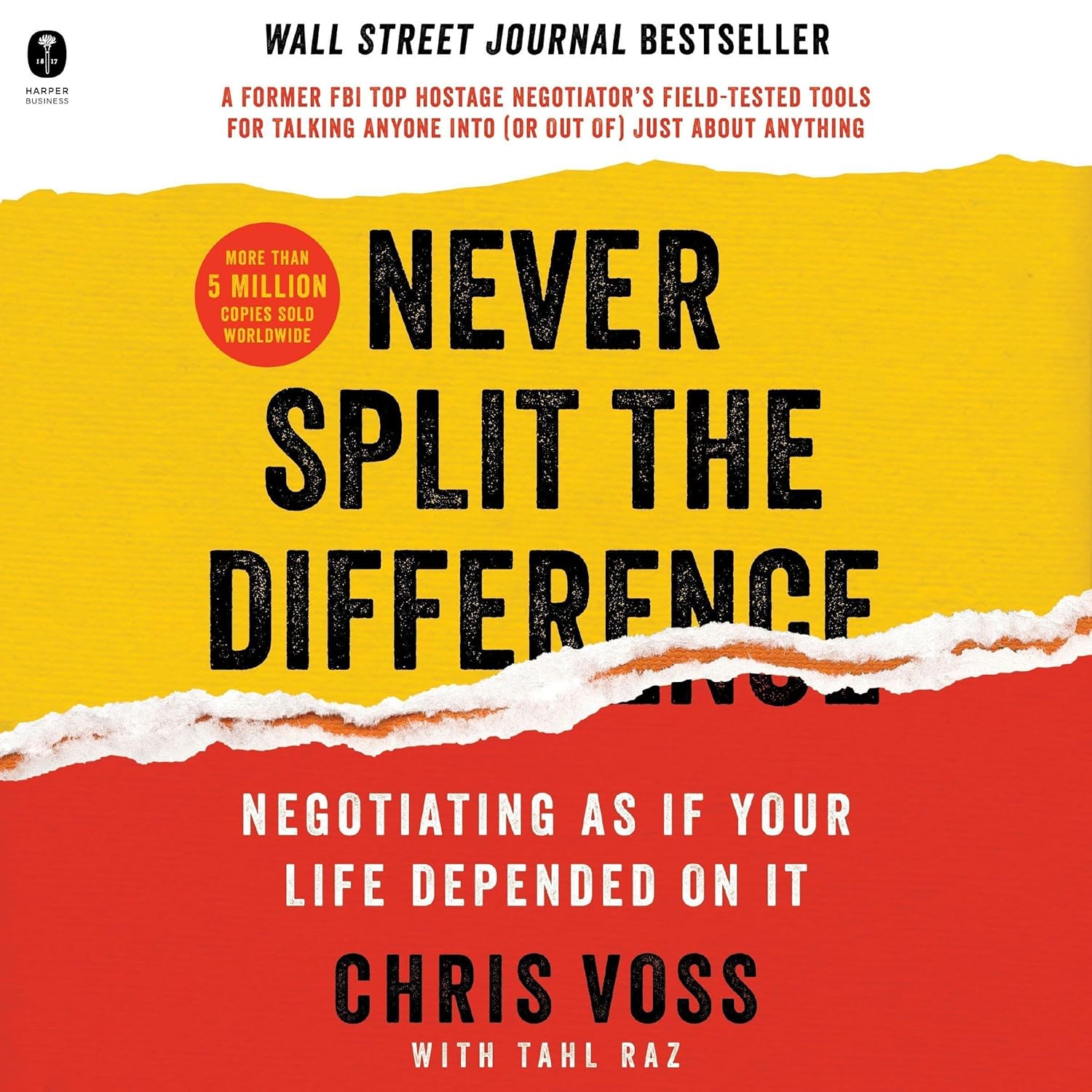
Never Split the Difference
Chris Voss, Tahl Raz


 Apple Books


 61 Min Reading Time
 Audio Version Available
About this book
Imagine facing down terrorists and bank robbers, where one wrong word could cost a life. Chris Voss, former FBI hostage negotiator, shares the high-stakes tactics he used to save lives, and how you can apply them to any negotiation.
In Never Split the Difference, Voss takes you behind the scenes of his most intense cases, revealing the counterintuitive strategies that helped him succeed when everything was on the line. Learn how to use emotional intelligence, active listening, and persuasive techniques to gain the upper hand in any situation, from negotiating a raise to buying a home.
This isn't just another business book; it's a masterclass in human interaction. Discover the nine principles that will transform your conversations, build trust, and ultimately, help you achieve your goals in both your professional and personal life. Prepare to gain the competitive edge in every discussion.
Summary of Key Ideas
- •
Master Tactical Empathy
Tactical empathy is understanding the emotions and perspective of the other party. It's not about agreeing with them but about recognizing and verbalizing their feelings. This involves active listening, observing body language, and using techniques like mirroring and labeling to create a connection and build trust. By showing that you understand their position, you can de-escalate tension and create a more collaborative environment for negotiation. Tactical empathy allows you to influence the other party's perceptions and guide them towards a mutually beneficial outcome, because people want to be understood and acknowledged.
- •
Use the Power of Mirroring
Mirroring involves repeating the last few words (or the critical word) of what the other person said. This shows you are listening and encourages them to elaborate. It creates a sense of rapport and helps you gather more information. Mirroring is a subtle yet powerful technique to encourage the other party to open up and share more, without feeling interrogated. It's a simple way to build trust and demonstrate that you are engaged in the conversation, making them feel heard and understood.
- •
Label Emotions Effectively
Labeling involves identifying and verbalizing the other person's emotions. Start your sentences with phrases like "It seems like..." or "It sounds like..." followed by the emotion you perceive. Labeling helps diffuse negative emotions and reinforces positive ones. By acknowledging their feelings, you demonstrate empathy and create a sense of connection. This makes the other party more receptive to your proposals and willing to collaborate on finding a solution, as they feel understood and validated.
- •
Master the Art of "You're Right"
Instead of directly agreeing, use phrases like "You're right" to validate the other person's perspective. This doesn't mean you concede your position, but it shows you understand their point of view. It can de-escalate tension and make them more open to your suggestions. By acknowledging their perspective as valid, you create a more collaborative atmosphere and make them more willing to consider your own needs and interests. This approach fosters mutual respect and encourages a more productive negotiation process.
- •
Ask Calibrated Questions
Calibrated questions are open-ended questions that start with "how" or "what." They encourage the other party to think and provide more detailed responses, giving you valuable information. Avoid questions that can be answered with a simple "yes" or "no." Calibrated questions shift the responsibility to the other party, making them feel in control while you guide the conversation. This technique helps you uncover their needs, priorities, and constraints, allowing you to craft a more compelling proposal that addresses their concerns.
- •
Beware of Deadlines
Deadlines can create unnecessary pressure and lead to poor decisions. Instead of imposing deadlines, focus on understanding the other party's time constraints and priorities. Work collaboratively to find a timeline that works for both sides. By avoiding artificial deadlines, you create a more relaxed and collaborative environment, allowing for more thoughtful decision-making. This approach reduces the risk of impulsive choices and fosters a more sustainable and mutually beneficial agreement.
- •
Embrace "No" as a Beginning
Rejection is an opportunity to learn and refine your approach. Instead of taking "no" as a final answer, see it as a starting point for further negotiation. Ask questions like "What would it take?" or "How can we make this work?" to uncover the underlying reasons for their rejection and identify potential solutions. By embracing rejection as a chance to explore new possibilities, you can turn potential setbacks into opportunities for creative problem-solving and ultimately achieve a more favorable outcome.
- •
Acknowledge the Irrationality of Emotions
People tend to act irrationally when emotions are involved. Recognize that negotiations are not purely logical exercises but are heavily influenced by feelings. By understanding and managing your own emotions and those of the other party, you can create a more rational and productive environment. Techniques like labeling and tactical empathy can help you address emotional barriers and build trust, leading to more successful outcomes. Recognizing the role of emotions is crucial for navigating complex negotiations effectively.
- •
Summarize to Ensure Agreement
Before making a final decision, summarize the agreement to ensure both parties are on the same page. This clarifies the terms and conditions, preventing misunderstandings and potential disputes in the future. Summarizing also demonstrates that you have been actively listening and that you value the other party's perspective. By taking the time to confirm the details, you solidify the agreement and build a foundation of trust for future interactions.
Chapter Recap

About The Author
Chris Voss
Main Quotes
"Negotiation is not an act of battle; it's a process of discovery."
"Life is negotiation."
"Tactical empathy is understanding the feelings and mindset of another in the moment and also hearing what is behind those feelings so you increase your influence in all the moments that follow."
"It all starts with the universally applicable premise that people want to be understood and accepted."
"People want to feel like they are in control, but they also want genuine connection."
"The goal is to identify what your counterparts actually need and get them feeling safe enough to talk about it."
"No deal is better than a bad deal."
"Compromise is often a bad strategy because it usually leads to bad outcomes."
"You should approach each negotiation with the attitude that you are going to discover something new."
"The late-night FM DJ voice, soft and slow, is one of the most powerful voices you can use in a negotiation."
Who Should Read This Book
Business professionals
Sales professionals
Managers and leaders
Entrepreneurs
Lawyers
Anyone interested in negotiation skills
Individuals in high-pressure situations
Students of business, law, or psychology
People looking to improve their communication skills
Readers of self-help and personal development books
FBI and law enforcement professionals
Negotiators
Book Summaries Like
Never Split the Difference


FAQ

Free Access to LitNotes