




 DISCORD
Night
Elie Wiesel


 Amazon Best Sellers
 Barnes & Noble Bestsellers


 19 Min Reading Time
 Audio Version Available
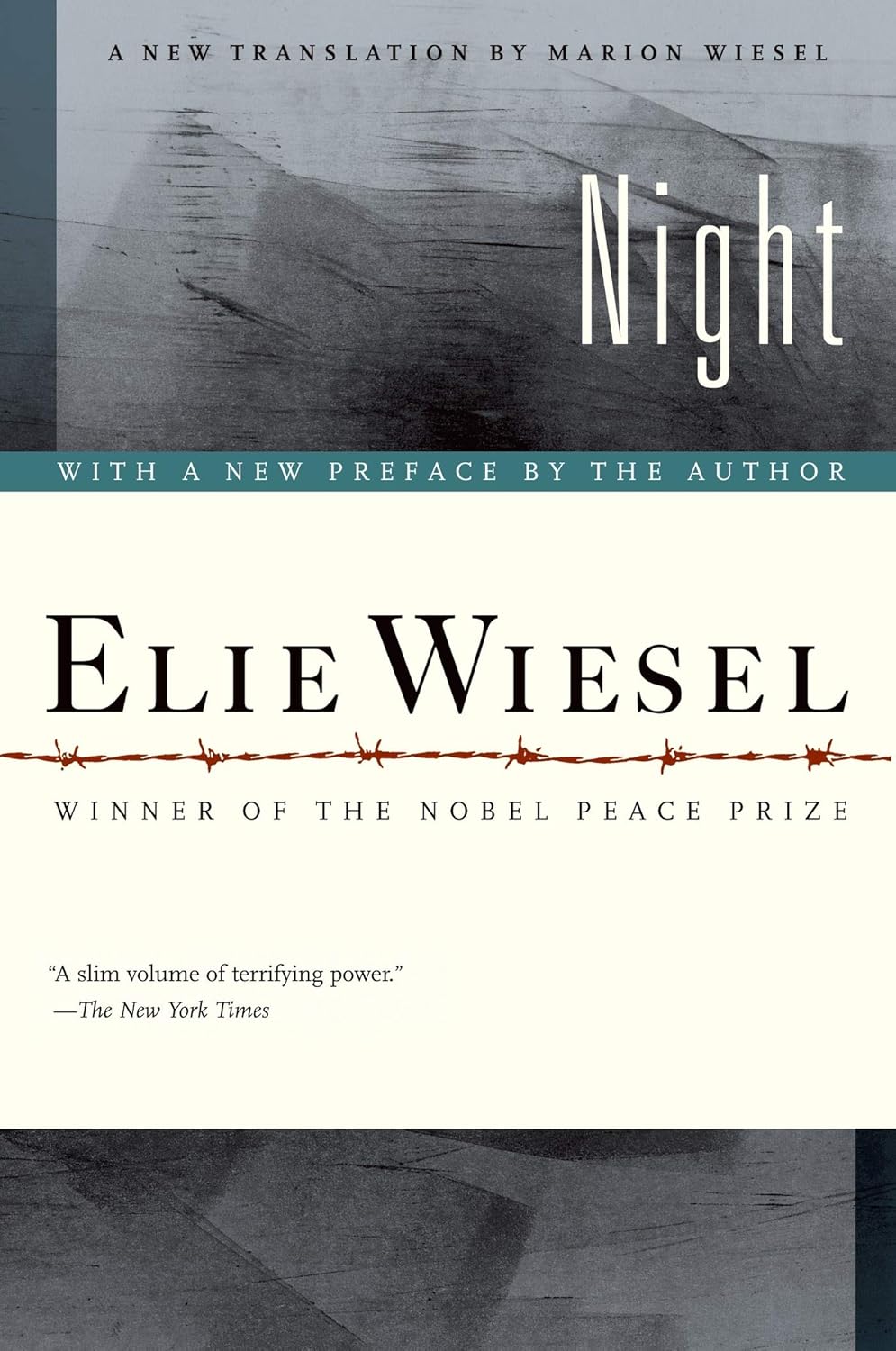
About this book
In the depths of World War II, young Elie Wiesel is torn from his family and community, thrust into the brutal reality of Auschwitz and Buchenwald. Night is his harrowing autobiographical account of those unspeakable horrors—the relentless dehumanization, the unimaginable cruelty, and the agonizing loss of his family, his innocence, and his faith.
More than a chronicle of suffering, Wiesel's masterpiece explores the profound philosophical questions raised by the Holocaust, challenging us to confront humanity's darkest capacity for evil. Written with stark simplicity and searing honesty, Night remains an enduring testament to the strength of the human spirit and a solemn vow that such atrocities must never be forgotten. This memorial edition includes tributes to Elie Wiesel by President Barack Obama and Samantha Power, as well as Wiesel's speech before the United Nations General Assembly, "Will the World Ever Know."
Summary of Key Ideas
- •
The Crisis of Faith
The Holocaust's impact on faith is a central theme. Eliezer's initial devout faith is progressively eroded by the atrocities he witnesses. The concentration camps become a place where traditional religious beliefs are challenged by the immense suffering and apparent absence of divine intervention. This loss of faith is not just a personal crisis for Eliezer but also reflects a broader questioning of religious institutions and theodicy in the face of unimaginable evil. The systematic dehumanization and senseless violence lead him to question the existence of a benevolent God, culminating in a profound spiritual struggle and a sense of abandonment.
- •
The Atrocities of Dehumanization
Dehumanization is a pervasive theme, illustrating how the Nazis systematically stripped Jews of their identity and humanity. This process involved physical abuse, psychological manipulation, and the reduction of individuals to mere numbers. The dehumanization is evident in the forced removal of clothing and possessions, the shaving of heads, and the tattooing of identification numbers. This stripping away of identity made it easier for the Nazis to perpetrate violence and maintain control. The dehumanization process also affected the prisoners' relationships with each other, leading to selfishness and a struggle for survival at any cost.
- •
The Frail Bond Between Father and Son
The bond between father and son is a crucial element, depicting both love and the strain of survival. Eliezer's relationship with his father, Shlomo, is a source of strength and motivation, but also of immense emotional burden. As they endure the horrors of the camps, Eliezer becomes his father's caretaker, striving to protect him from harm and provide him with sustenance. However, the harsh conditions and the instinct for self-preservation sometimes lead to moments of resentment and guilt. The father-son dynamic highlights the tension between familial loyalty and the brutal realities of the Holocaust, illustrating how even the closest relationships were tested and transformed.
- •
The Weight of Silence
Silence, both divine and human, is a recurring motif that amplifies the horror of the Holocaust. The silence of God in the face of such immense suffering is a major source of Eliezer's spiritual crisis. Additionally, the silence of the outside world, the lack of intervention from other nations and the indifference of bystanders, underscores the abandonment and isolation felt by the victims. This silence is not just an absence of noise but a powerful symbol of complicity and the failure of humanity to prevent or stop the genocide. Wiesel uses silence to convey the unspeakable nature of the Holocaust and the profound sense of loss and despair.
- •
The Relentless Pursuit of Survival
Survival is a central theme, exploring the physical, emotional, and moral challenges faced by those who endured the Holocaust. The struggle to survive in the concentration camps often meant compromising one's values and engaging in acts of selfishness. Eliezer grapples with the moral implications of prioritizing his own survival over the well-being of others, including his father. The instinct to live clashes with the desire to maintain one's humanity, creating a profound inner conflict. The theme of survival raises questions about the limits of human endurance and the compromises people make in extreme circumstances.
- •
The Obligation to Remember
Memory serves as a crucial tool for preserving the truth and preventing future atrocities. Elie Wiesel's act of bearing witness through his writing is a testament to the importance of remembering the Holocaust. The memoir emphasizes the need to confront the past, learn from its lessons, and ensure that such horrors are never repeated. Memory is not just a personal burden for the survivors but a collective responsibility for humanity. By refusing to forget, Wiesel seeks to honor the victims and promote a future of greater understanding and compassion.
- •
Shattered Innocence
Loss of innocence is intricately woven throughout the narrative, detailing Eliezer's transition from a young, faithful boy to a traumatized individual grappling with unimaginable horrors. The concentration camp environment swiftly strips away his naiveté, exposing him to unspeakable acts of cruelty and violence. This abrupt loss of innocence fundamentally alters his perception of the world, leaving him questioning humanity's capacity for evil and the existence of a just and benevolent God. The transformation underscores the profound and lasting psychological impact of the Holocaust on its survivors, marking a permanent departure from their former selves.
- •
The Shadow of Death
The ever-present shadow of death permeates every aspect of life in the concentration camps. The constant threat of selection, starvation, and arbitrary execution creates an atmosphere of pervasive fear and uncertainty. Death becomes commonplace, desensitizing the prisoners to its horrors and blurring the lines between life and survival. This proximity to death forces individuals to confront their own mortality and question the meaning of existence in the face of such overwhelming suffering. The theme highlights the dehumanizing effects of the Holocaust, where life is reduced to a precarious and often brutal struggle against inevitable demise.
Chapter Recap

About The Author
Elie Wiesel
Main Quotes
"Never shall I forget that night, the first night in camp, which has turned my life into one long night, seven times cursed and seven times sealed."
"Never shall I forget those moments which murdered my God and my soul and turned my dreams to dust."
"For God's sake, where is God?"
"Men to the left! Women to the right!"
"The world had become a hermetically sealed cattle car."
"Perhaps someone here has seen my son?"
"Bite your lips, little brother… Don’t cry. Keep your anger, your hate, for another day."
"From the depths of the mirror, a corpse gazed back at me."
"Never shall I forget the faces of the children whose bodies I saw turned into wreaths of smoke beneath a silent blue sky."
"Here, every man has to fight for himself and not think of anyone else. Even of his own father. Here, there are no fathers, no brothers, no friends. Everyone lives and dies for himself alone."
Who Should Read This Book
Readers interested in Holocaust literature and history
Students studying the Holocaust in middle school, high school, or college
Readers interested in memoirs and autobiographies
Individuals interested in stories of survival and resilience in the face of extreme adversity
Those interested in philosophical and theological explorations of faith, suffering, and the human condition
Readers seeking to understand the dangers of intolerance, prejudice, and dehumanization
People interested in Jewish history and culture
General readers seeking impactful and thought-provoking literature
Book Summaries Like
Night

FAQ

Free Access to LitNotes