




 DISCORD
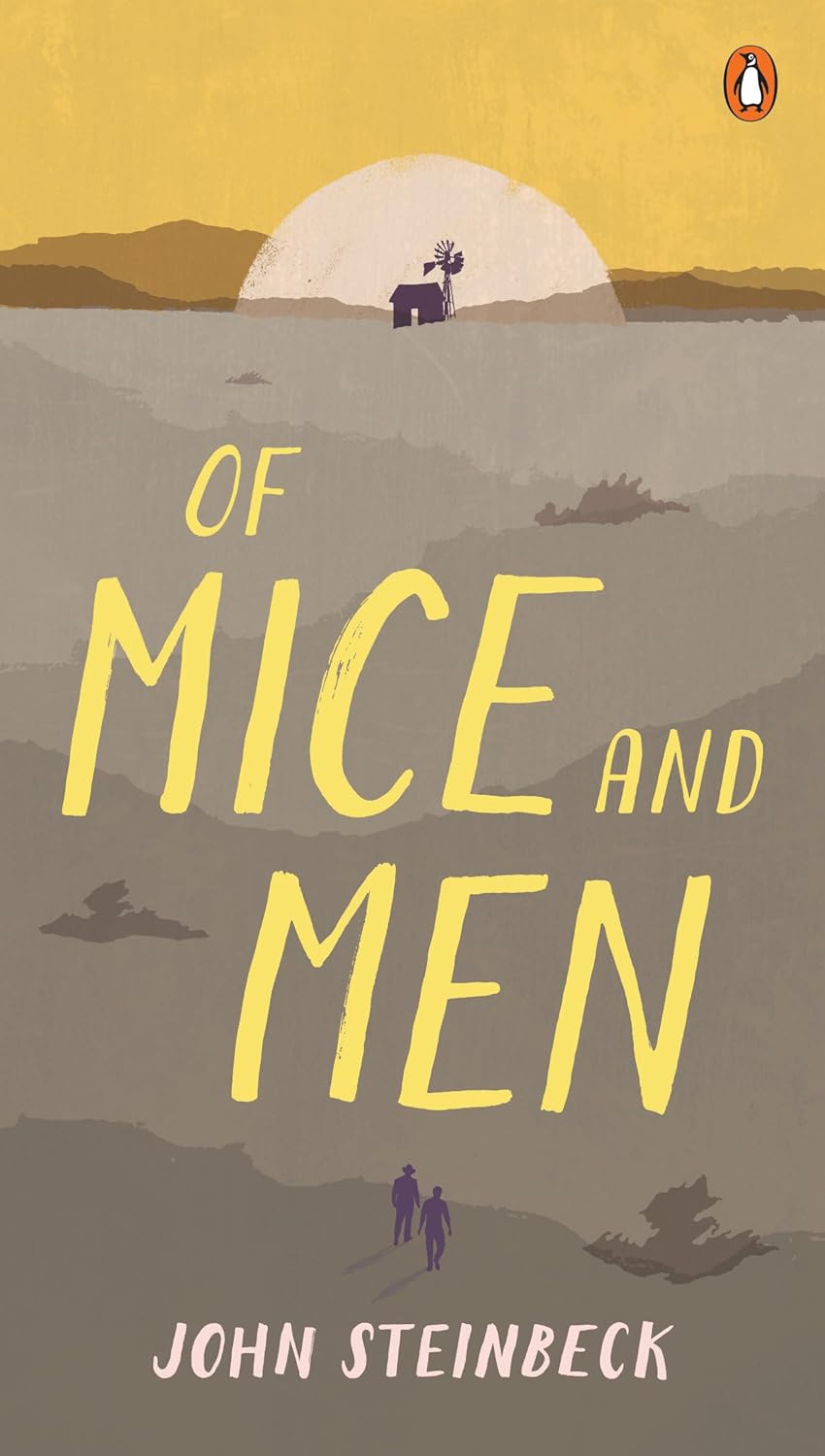
Of Mice and Men
John Steinbeck


 Amazon Best Sellers
 Barnes & Noble Bestsellers


 20 Min Reading Time
 Audio Version Available
About this book
In the heart of California's Salinas Valley, during the despair of the Great Depression, two migrant workers, George Milton and Lennie Small, forge an unlikely bond. George, the sharp-witted protector, dreams of owning a small farm where they can live off the fat of the land. Lennie, a gentle giant with a childlike mind and immense strength, unwittingly crushes everything he loves.
Bound together by shared hardship and a yearning for stability, they arrive at a new ranch, seeking work and a chance to make their dream a reality. But amidst the camaraderie and prejudice of ranch life, their simple vision is threatened by the cruel realities of their time. Loneliness, discrimination, and the crushing weight of fate conspire to shatter their fragile hope.
A poignant tale of friendship, compassion, and the elusive American Dream, Of Mice and Men explores the depths of human connection in a world marked by profound social and economic inequality. Steinbeck's masterpiece is a powerful exploration of the human condition, reminding us of the enduring need for belonging and the heartbreaking fragility of dreams.
Summary of Key Ideas
- •
The Elusive American Dream
The novel deeply explores the theme of the American Dream, particularly the idealized vision of owning land and achieving self-sufficiency. George and Lennie's shared dream of owning a small farm where they can
- •
The Crushing Weight of Loneliness
Loneliness is a pervasive theme in
- •
The Power of Friendship and Companionship
George and Lennie's relationship exemplifies the profound need for companionship and the lengths to which individuals will go to find it. Their bond is a source of strength and comfort in a harsh world, offering mutual support and a sense of belonging. Despite the challenges and sacrifices involved, their friendship provides a glimmer of hope and humanity amidst the prevailing isolation and despair. The other characters, like Crooks, Candy, and even Curley's wife, long for connection, highlighting the universal desire for meaningful relationships.
- •
Power, Weakness, and Social Hierarchy
The novel portrays a world where power dynamics are starkly defined by social status, physical strength, and economic circumstances. Characters like Curley wield power through aggression and intimidation, while others, such as Crooks and Curley's wife, are marginalized and disempowered due to their race and gender. Lennie's immense physical strength, ironically, becomes a source of both his power and his vulnerability, as he struggles to control it. The pursuit and abuse of power lead to exploitation and oppression, revealing the dark side of human nature.
- •
The Inevitability of Fate
Fate plays a significant role in shaping the characters' destinies, often thwarting their hopes and dreams. Despite their best efforts, George and Lennie are ultimately unable to escape their predetermined paths, highlighting the limitations of human agency in the face of larger forces. The tragic ending underscores the sense of inevitability that pervades the narrative, suggesting that some dreams are simply unattainable and that life is inherently unpredictable and unfair. This sense of fatalism contributes to the novel's overall sense of melancholy and despair.
- •
Man and Nature
Steinbeck uses animal imagery throughout the novel to emphasize the characters' vulnerability and primal instincts. Lennie is repeatedly compared to animals, highlighting his childlike innocence and lack of control over his own strength. The harshness of the natural world mirrors the brutality of human existence, suggesting that life is a constant struggle for survival. The idealized vision of nature, represented by George and Lennie's dream farm, stands in stark contrast to the reality of their lives as migrant workers, underscoring the unattainability of their dreams.
Chapter Recap

About The Author
John Steinbeck
John Steinbeck was an American writer. He wrote the Pulitzer Prize-winning novel *The Grapes of Wrath* (1939) and the novella *Of Mice and Men* (1937). He wrote a total of 27 books, including 16 novels, six non-fiction books, and five collections of short stories. In 1962, Steinbeck received the Nobel Prize for Literature ([Source][1]). [1]:https://en.wikipedia.org/wiki/John_Steinbeck
Main Quotes
""Guys like us, that work on ranches, are the loneliest guys in the world. They got no family. They don't belong no place.""
""I got you to look after me, and you got me to look after you, and that's why.""
""A guy needs somebody – to be near him. A guy goes nuts if he ain't got nobody.""
""Whatever we ain't got, that's what you want. God a'mighty, if I was alone I could live so easy.""
""I seen the guys that go around on the ranches alone. That ain't no good. They don't have no fun. After a while they get mean.""
""We could live offa the fatta the lan'.""
""An' live off the fatta the lan', Lennie?""
""Why do you got to get killed? You ain't so little as mice.""
""I wish't somebody'd shoot me if I get old an' a cripple.""
""He didn't know what to do. He kneeled down beside her, and his face was drawn with terror. He looked at her and then he shook her; and then he was still looking at her. He whimpered like a puppy.""
Who Should Read This Book
High school students
College students
Readers interested in classic American literature
Readers interested in stories about the Great Depression
Readers interested in themes of friendship, dreams, and social injustice
Readers who enjoy character-driven narratives
Readers interested in social commentary on marginalized groups
General adult readers
Educators and literature scholars
Readers interested in exploring the human condition
Book Summaries Like
Of Mice and Men
FAQ

Free Access to LitNotes