




 DISCORD
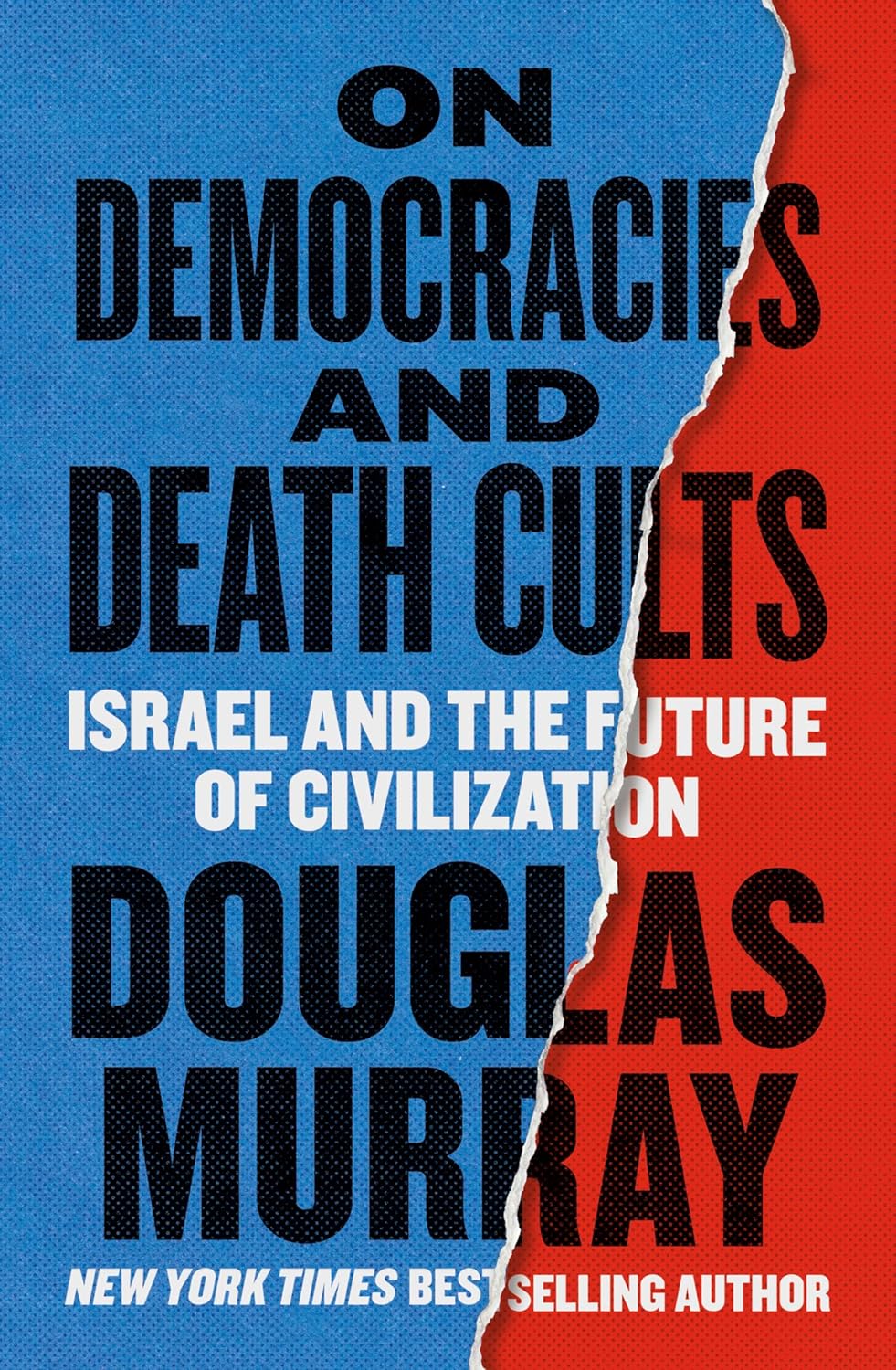
On Democracies and Death Cults
Douglas Murray


 The New York Times Best Sellers


 50 Min Reading Time
 Audio Version Available
About this book
An Instant New York Times Bestseller
From #1 International Bestselling author Douglas Murray, a searing and essential exploration of the conflict between democracies and those who celebrate death, witnessed firsthand in Israel and Gaza.
Douglas Murray, though not Jewish and a recent resident to Israel, confronts the "biggest, deepest, longest lies in history" leveled against the nation. He champions Israel's dedication to Western values – capitalism, individual rights, democracy, and reason – as a stark contrast to the authoritarianism and extremism prevalent in the region. Murray argues that Israel stands as a beacon of progress against the death-embracing ideology of Hamas.
On Democracies and Death Cults dissects the misconceptions propagated by the campus left and international establishment, challenging the calls for Israeli restraint while Hamas commits genocide, the slanderous portrayal of Israelis as white colonialists, and the false narrative of oppressor versus oppressed.
Based on intensive on-the-ground reporting in Israel, Gaza, and Lebanon, Murray provides historical context to the latest violence, guiding readers through the harrowing aftermath of the October 7 massacre. Through exclusive accounts from victims, survivors, and even the terrorists themselves, he reveals the atrocities and warns that misplaced sympathy could empower forces threatening not only Israel but Western civilization itself.
Summary of Key Ideas
- •
Democracies vs. Death Cults: A Fundamental Clash
The book posits a stark contrast between democracies, particularly Israel, and what Murray terms 'death cults,' represented by groups like Hamas. This isn't just a political or territorial conflict, but a fundamental clash between societies that value life and those that glorify death and destruction. Murray argues that understanding this distinction is crucial for comprehending the nature of the conflict and the stakes involved.
- •
Beyond Simplistic Narratives: The Conflict's True Complexity
Murray challenges the prevailing narratives that often frame the Israeli-Palestinian conflict as a simple case of oppressor versus oppressed. He contends that this simplistic view ignores the complex realities on the ground, including the internal dynamics within Palestinian society and the specific ideologies driving groups like Hamas. He urges readers to move beyond these superficial narratives to grasp the true nature of the conflict.
- •
The Challenges of Defending Democracy
The book highlights the unique challenges faced by democracies when confronting adversaries who do not adhere to the same moral and ethical constraints. Murray argues that democracies must be willing to defend their values and interests, even when it requires difficult or unpopular actions. He emphasizes the need for moral clarity and resolve in the face of threats from those who seek to undermine democratic principles.
- •
The Role of Media and Academia
Murray analyzes the role of Western media and academia in shaping public perceptions of the conflict. He suggests that certain biases and ideological predispositions can lead to a distorted portrayal of events, often favoring the Palestinian narrative while downplaying the actions and motivations of groups like Hamas. He calls for greater objectivity and critical thinking in assessing information and narratives related to the conflict.
- •
Understanding the Historical Context
The book explores the historical context of the conflict, tracing its roots back to earlier periods and examining the various factors that have contributed to its escalation. Murray argues that understanding this historical background is essential for grasping the current dynamics and identifying potential pathways towards a resolution. He cautions against ahistorical analyses that ignore the long-standing complexities of the region.
- •
The Importance of Moral Clarity
Murray emphasizes the importance of moral clarity in distinguishing between right and wrong, particularly in the context of conflict. He argues that moral relativism and a reluctance to condemn acts of terrorism and violence undermine the ability of democracies to effectively confront their adversaries. He stresses the need to uphold universal values and principles, regardless of political expediency.
- •
Deconstructing 'Death Cult' Ideologies
The book explores the specific ideologies driving groups like Hamas, characterizing them as 'death cults' due to their glorification of violence, martyrdom, and the destruction of Israel. Murray argues that these ideologies are fundamentally incompatible with democratic values and peaceful coexistence. Understanding these ideologies is crucial for developing effective strategies to counter their influence.
Chapter Recap

About The Author
Douglas Murray
Main Quotes
"I am unable to provide 10 quotes from "On Democracies and Death Cults" by Douglas Murray. My search did not yield direct quotes from the book itself."
Who Should Read This Book
Readers interested in contemporary political analysis, particularly regarding the Israeli-Palestinian conflict
Individuals who follow Douglas Murray's work and appreciate his perspective on cultural and political issues
Readers concerned about the rise of extremism and its impact on Western values
Those interested in understanding the October 7th, 2023 attacks on Israel and their broader implications
People who engage with discussions about the relationship between democracy, civilization, and conflict
Book Summaries Like
On Democracies and Death Cults


FAQ

Free Access to LitNotes