




 DISCORD
On the Duty of Civil Disobedience
Henry David Thoreau


 Apple Books


 71 Min Reading Time
 Audio Version Available
About this book
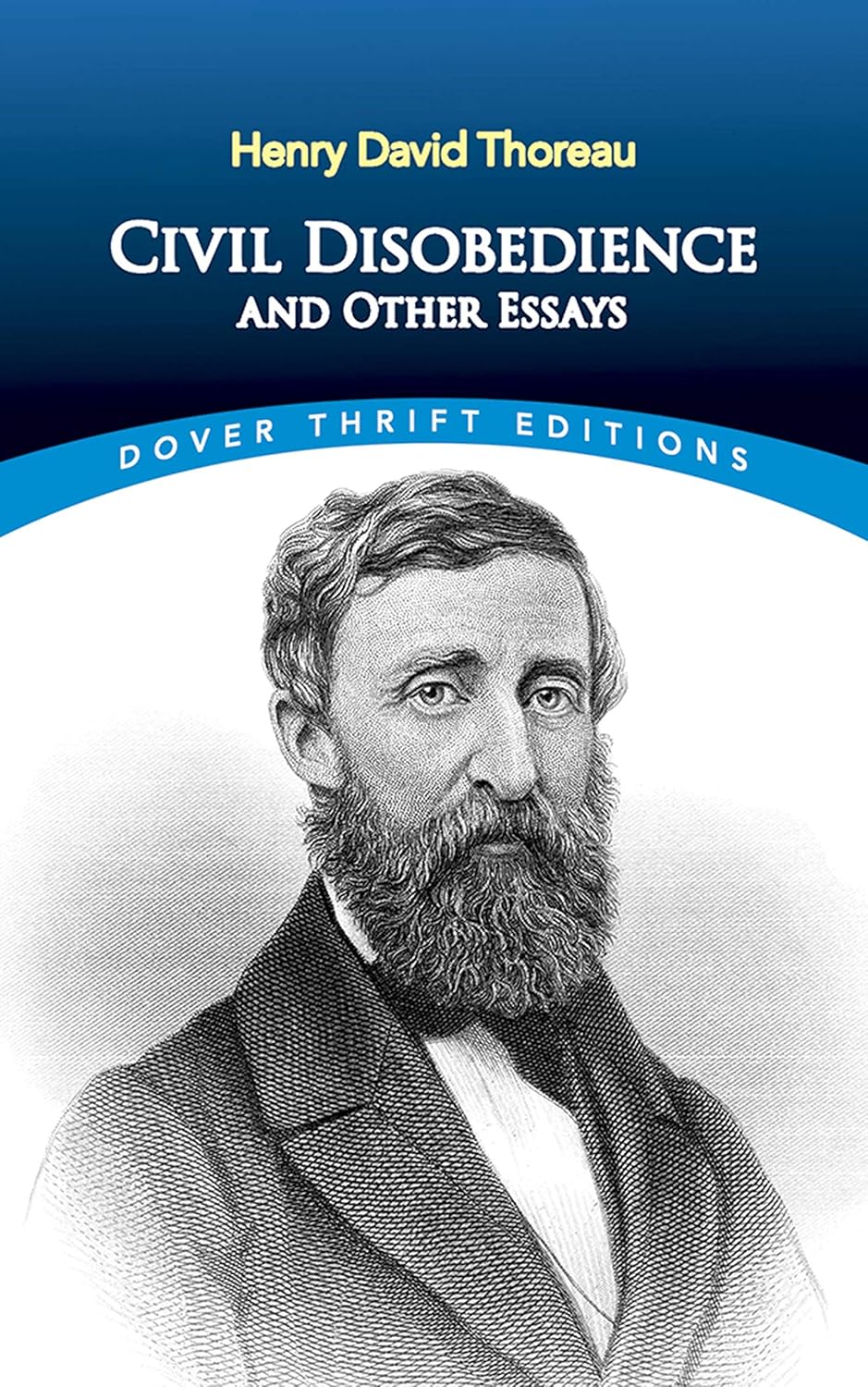
In "On the Duty of Civil Disobedience," Henry David Thoreau, the iconic American transcendentalist, delivers a timeless and impassioned call to individual conscience. Born from Thoreau's opposition to slavery and the Mexican-American War, this essay challenges readers to resist the seductive power of conformity and to prioritize moral law over unjust governance. First published in 1849, it argues that citizens have a moral imperative to defy governments that act against their consciences, refusing to be complicit in injustice. A cornerstone of philosophical and political thought, Thoreau's powerful words have resonated across generations, inspiring movements for social change from Gandhi to Martin Luther King Jr., and continue to challenge readers to examine their own roles in shaping a just world.
Summary of Key Ideas
- •
The Primacy of Conscience
Prioritizing Individual Conscience: Thoreau argues that individuals should not blindly follow the government if its actions conflict with their conscience. He posits that moral duty transcends legal obligations, urging people to act according to their internal sense of right and wrong, even if it means breaking the law. This concept places individual integrity at the forefront, suggesting that a just person cannot, in good conscience, support unjust policies or actions of the government. This idea forms the bedrock of his argument for civil disobedience.
- •
Skepticism Towards Government
The Inherent Limitations of Government: Thoreau expresses deep skepticism about the nature of government, viewing it as a necessary evil at best. He suggests that government, by its very nature, is prone to corruption and often serves the interests of a powerful minority rather than the common good. He advocates for a government that governs less, implying that individual liberty and self-governance are superior to centralized authority. This skepticism fuels his call for individuals to resist governmental overreach and injustice.
- •
The Morality of Law
Just Laws vs. Unjust Laws: A central tenet of Thoreau's philosophy is the distinction between just and unjust laws. He contends that individuals have a moral obligation to obey just laws, which align with principles of fairness and righteousness. However, he argues that there is no such obligation to obey unjust laws—laws that violate fundamental moral principles or perpetuate injustice. Instead, he asserts that individuals have a duty to actively resist and disobey such laws, even if it means facing legal consequences.
- •
Active Resistance to Injustice
Civil Disobedience as a Moral Imperative: Thoreau doesn't merely advocate for passive disagreement with unjust laws; he calls for active resistance through civil disobedience. This involves openly and deliberately breaking unjust laws as a means of protesting and raising awareness about the injustice they represent. He views civil disobedience not just as a right, but as a moral duty for those who recognize the injustice and wish to effect change. This active resistance is intended to disrupt the system and force a reevaluation of the laws in question.
- •
Nonviolence as a Tool for Change
The Power of Nonviolent Resistance: While advocating for disobedience, Thoreau emphasizes the importance of nonviolent resistance. He believes that violence is counterproductive and morally questionable. Instead, he champions methods of resistance that rely on moral persuasion, peaceful non-cooperation, and the willingness to accept the consequences of one's actions. This approach is intended to appeal to the conscience of the majority and demonstrate the injustice of the law through peaceful means.
- •
Embracing the Consequences
Willingness to Accept Consequences: Thoreau acknowledges that civil disobedience often entails facing penalties, such as fines or imprisonment. However, he argues that a just person should be willing to accept these consequences rather than compromise their moral principles. He even suggests that imprisonment for a just cause can be a badge of honor, demonstrating one's commitment to justice and serving as a powerful symbol of resistance against an unjust system. This willingness to sacrifice personal comfort for the sake of justice is a key element of his philosophy.
- •
The Impact of Individual Responsibility
The Importance of Individual Action: Thoreau stresses the significance of individual action in bringing about social change. He argues that waiting for the government or others to take action is often futile, as systems of power are inherently resistant to change. Instead, he calls upon individuals to take personal responsibility for challenging injustice, even if their actions seem small or insignificant. He believes that collective change begins with individual acts of conscience and resistance.
- •
Questioning Majority Rule
Critique of Majority Rule: Thoreau questions the idea that the majority is always right or that majority rule necessarily leads to just outcomes. He argues that the majority can be wrong, particularly when it comes to issues of morality and justice. He suggests that individuals should not simply defer to the will of the majority, but should instead critically evaluate laws and policies based on their own moral compass. This critique challenges the unthinking acceptance of popular opinion and encourages independent moral judgment.
- •
Government Complicity in Injustice
Government's Role in Injustice: Thoreau directly links the government to the perpetuation of injustice, particularly through its support of slavery and its involvement in the Mexican-American War. He argues that by paying taxes, citizens are complicit in these unjust actions. This complicity is what compels him to refuse to pay taxes as an act of civil disobedience, thereby withdrawing his support for the government's immoral policies and asserting his moral autonomy.
Chapter Recap

About The Author
Henry David Thoreau
Main Quotes
"I heartily accept the motto, "That government is best which governs least"; and I should like to see it acted up to more rapidly and systematically."
"Government is at best but an expedient; but most governments are usually, and all governments are sometimes, inexpedient."
"The mass of men serve the state thus, not as men mainly, but as machines, with their bodies."
"A common and natural result of an undue respect for law is, that you may see a file of soldiers, colonel, captain, corporal, privates, powder-monkeys, and all, marching in admirable order over hill and dale to the wars, against their wills, ay, against their common sense and consciences, which makes it very grave and trying for them."
"How does it become a man to behave toward this American government today? I answer that he cannot without disgrace be associated with it."
"I think that we should be men first, and subjects afterward."
"The only obligation which I have a right to assume is to do at any time what I think right."
"It is not so important that many should be as good as you, as that there be some absolute goodness somewhere; for that will leaven the whole lump."
"Under a government which imprisons any unjustly, the true place for a just man is also a prison."
"If the injustice is part of the necessary friction of the machine of government, let it go, let it go: perchance it will wear smooth—certainly the machine will wear out. If the injustice has a spring, or a pulley, or a rope, or a crank, exclusively for itself, then perhaps you may consider whether the remedy will not be worse than the evil; but if it is of such a nature that it requires you to be the agent of injustice to another, then, I say, break the law."
Who Should Read This Book
Students of political science and philosophy
Individuals interested in social justice and activism
Readers interested in American Transcendentalism and 19th-century literature
Those interested in the history of protest and civil disobedience
Academics and scholars studying political theory
Individuals seeking inspiration for resisting unjust laws or policies
Readers interested in the philosophical foundations of democracy
People interested in Henry David Thoreau and his other works
Those exploring the relationship between the individual and the state
Readers looking for classic essays on ethics and morality
Book Summaries Like
On the Duty of Civil Disobedience


FAQ

Free Access to LitNotes