




 DISCORD
ON THE GENEALOGY OF MORALITY - NIETZSCHE
Friedrich Nietzsche


 Rita Award by Romance Writer of America
 Apple Books


 32 Min Reading Time
 Audio Version Available
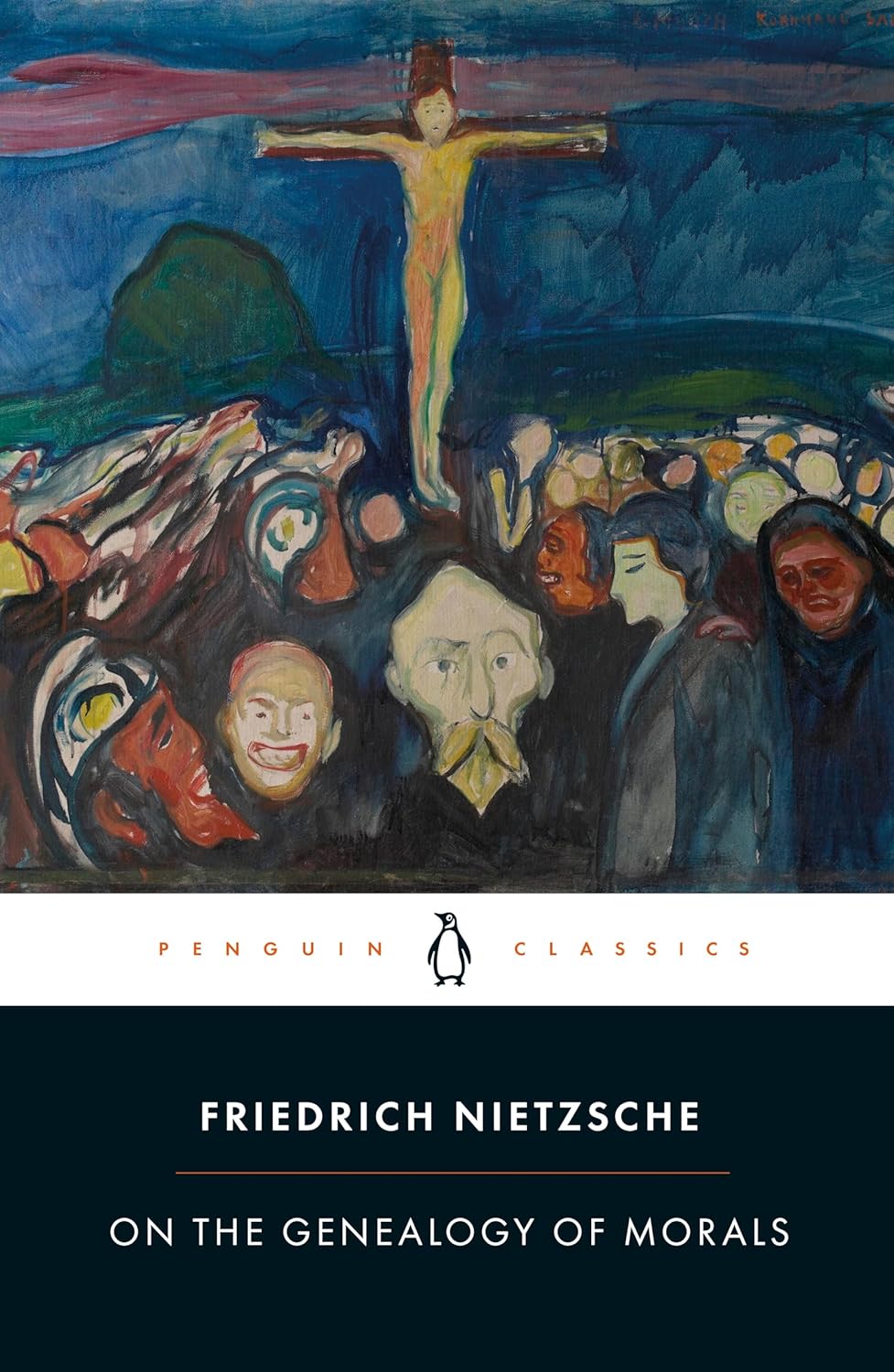
About this book
Delve into the brilliant and unsettling world of Friedrich Nietzsche's On the Genealogy of Morality, a landmark philosophical work that dares to dissect the very foundations of our moral beliefs. With unflinching scrutiny, Nietzsche challenges conventional notions of good and evil, master and slave, and the ascetic ideal, tracing their historical development to expose the hidden power dynamics and psychological forces that have shaped Western values.
Through three provocative essays, Nietzsche excavates the origins of guilt, bad conscience, and the will to power, revealing how these concepts have been manipulated and reinterpreted throughout history. He questions the value of morality itself, urging readers to confront the uncomfortable truths about the origins of their most deeply held convictions.
A powerful and enduring critique of Western thought, On the Genealogy of Morality remains essential reading for anyone seeking to understand the complexities of human nature and the forces that drive our moral judgments. Prepare to be challenged, provoked, and ultimately transformed by Nietzsche's searing insights into the human condition.
Summary of Key Ideas
- •
Critique of Modern Morality
The critique of modern morality is central to Nietzsche's project in *On the Genealogy of Morality*. He challenges the intrinsic value of prevailing moral systems, particularly those rooted in Christian and Platonic traditions. Nietzsche argues that these moralities are not based on objective truth but are historical constructs that reflect specific power dynamics and psychological needs. He questions whether these values promote human flourishing or, conversely, inhibit it by suppressing natural instincts and desires. This critique sets the stage for his re-evaluation of values, seeking to identify a morality that affirms life and enhances human potential rather than negating it.
- •
Master vs. Slave Morality
Nietzsche introduces the concept of 'slave morality' as a reactive force against 'master morality.' Master morality, originating among noble and powerful classes, values strength, pride, and nobility, defining 'good' as what is beneficial to themselves and 'bad' as what is harmful. Slave morality, conversely, arises among the oppressed, who resent the dominance of the masters. It inverts the values of master morality, defining 'good' as kindness, humility, and pity, and 'evil' as the qualities associated with the masters. Nietzsche argues that slave morality is a form of ressentiment, a psychological reaction to perceived injustice, which has shaped much of Western moral thought.
- •
The Power of Ressentiment
Ressentiment, a key concept in Nietzsche's analysis, refers to a deep-seated resentment, envy, and hatred that the weak feel toward the strong. It is a psychological state characterized by the repression of vengeful feelings, leading to the creation of alternative values that denigrate the qualities of the oppressor. Nietzsche argues that ressentiment is a driving force behind slave morality, as the oppressed transform their feelings of powerlessness into a moral system that condemns the virtues of the ruling class. This concept highlights the psychological origins of moral values and their potential for manipulation and distortion.
- •
Genealogy of Good and Evil
Nietzsche explores the historical development of the concepts of 'good' and 'evil,' tracing their evolution from their original associations with social status and power to their later moral connotations. He contends that the original meaning of 'good' was simply 'noble' or 'aristocratic,' while 'bad' referred to the lower classes. Over time, these terms were transformed by slave morality, with 'good' becoming associated with selflessness and compassion, and 'evil' with selfishness and cruelty. Nietzsche's genealogy aims to reveal the arbitrary and contingent nature of these moral concepts, challenging their perceived universality and objectivity.
- •
The Ascetic Ideal
Nietzsche examines the ascetic ideal, a life-denying philosophy that values self-discipline, renunciation, and the suppression of desires. He argues that the ascetic ideal, particularly as manifested in Christianity, provides a means of finding meaning in suffering. By embracing asceticism, individuals can interpret their pain and hardship as a form of purification or spiritual growth. However, Nietzsche critiques the ascetic ideal for its nihilistic tendencies, arguing that it ultimately negates life by devaluing earthly existence and promoting a yearning for a transcendent realm. He sees it as a symptom of a deeper cultural crisis, a loss of faith in life itself.
- •
The Will to Power
The concept of the will to power is foundational to Nietzsche's philosophy, although it is only implied in *On the Genealogy of Morality*. It posits that all living beings have a fundamental drive to expand their power and influence. This drive is not necessarily about domination over others, but rather about self-affirmation, growth, and the overcoming of challenges. Nietzsche suggests that even morality is an expression of the will to power, as different moral systems reflect different strategies for asserting dominance or resisting oppression. Understanding the will to power is crucial for interpreting Nietzsche's critique of morality and his vision for a new set of values.
- •
The Origins of Guilt and Bad Conscience
Nietzsche delves into the origins of guilt, bad conscience, and related concepts, arguing they are not natural human conditions but rather historical constructs tied to the development of social structures and the imposition of laws. He traces the evolution of guilt from a sense of indebtedness to ancestors or creditors to an internalized feeling of moral culpability. This internalization, he argues, is a product of the 'priestly class' who re-interpret suffering as punishment for sin, thus consolidating their power over the population. By understanding the genealogy of these concepts, Nietzsche aims to expose their manipulative origins and challenge their hold on human psychology.
Chapter Recap

About The Author
Friedrich Nietzsche
Main Quotes
"The sick are the greatest danger for the healthy; it is not from the strongest that harm comes to the strong, but from the weakest."
"There is no such substratum; there is no "being" behind doing, effecting, becoming; "the doer" is merely a fiction added to the deed--the deed is everything."
"My formula for greatness in a human being is amor fati: that one wants nothing to be different, not forward, not backward, not in all eternity."
"Bad conscience is an illness, there is no doubt about it, but an illness in the same way that pregnancy is an illness."
"Every step towards the withering of the race, all the arbitrary miseries, all signs of degeneration, of approaching dissolution always rather educate me to consider with the utmost suspicion."
"Mercy remains the privilege of the most powerful man."
"That every will must consider every other will its equal – would be a principle hostile to life."
"People are “nutcrackers of the soul, ever questioning and questionable.”"
"A person is “good” if they are free to embrace their human instincts and pursue strength, power, and joy."
"Hard times create strong men, strong men create good times, good times create weak men, and weak men create hard times."
Who Should Read This Book
Philosophy students and scholars
Individuals interested in moral philosophy and ethics
Readers interested in genealogy and the history of ideas
Those interested in critical theory and social commentary
People exploring existentialism and nihilism
Readers familiar with Nietzsche's other works
Intellectuals interested in European history and culture
Individuals seeking alternative perspectives on morality
Readers interested in the origin of values and concepts like good and evil
Those interested in understanding the development of Western thought
Book Summaries Like
ON THE GENEALOGY OF MORALITY - NIETZSCHE

FAQ

Free Access to LitNotes