




 DISCORD
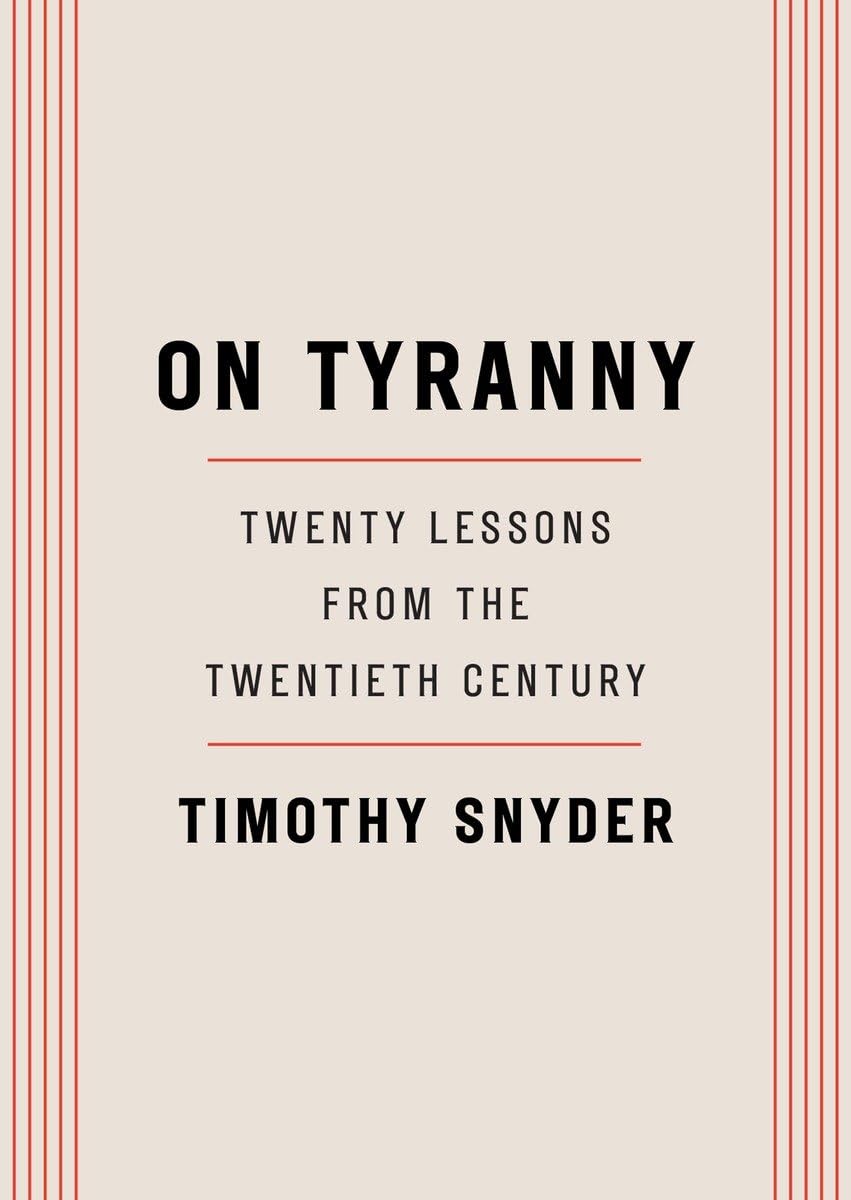
On Tyranny
Timothy Snyder


 Amazon Best Sellers
 The New York Times Best Sellers


 16 Min Reading Time
 Audio Version Available
About this book
#1 NEW YORK TIMES BESTSELLER • A “bracing” ( Vox ) guide for surviving and resisting America’s turn towards authoritarianism, from “a rising public intellectual unafraid to make bold connections between past and present” ( The New York Times ) “Timothy Snyder reasons with unparalleled clarity, throwing the past and future into sharp relief. He has written the rare kind of book that can be read in one sitting but will keep you coming back to help regain your bearings.”—Masha Gessen The Founding Fathers tried to protect us from the threat they knew, the tyranny that overcame ancient democracy. Today, our political order faces new threats, not unlike the totalitarianism of the twentieth century. We are no wiser than the Europeans who saw democracy yield to fascism, Nazism, or communism. Our one advantage is that we might learn from their experience. On Tyranny is a call to arms and a guide to resistance, with invaluable ideas for how we can preserve our freedoms in the uncertain years to come.
Summary of Key Ideas
- •
Defend Historical Memory
Preserving historical memory is crucial. Snyder emphasizes that tyrants often try to erase or distort historical narratives to consolidate their power. Citizens must actively remember and learn from the past, especially the failures and triumphs of previous generations in resisting tyranny. This includes understanding the mechanisms by which authoritarian regimes have operated and the consequences of indifference or inaction. By grounding ourselves in history, we can recognize recurring patterns and avoid repeating past mistakes, thereby safeguarding democratic values and institutions.
- •
Defend Institutions
Institutions matter, and their defense is vital. Snyder argues that strong institutions, such as an independent judiciary, a free press, and a robust electoral system, are bulwarks against tyranny. These institutions provide checks and balances on power and protect individual rights. Citizens must actively support and defend these institutions against any attempts to undermine or weaken them, whether through political pressure, legislative action, or public disinformation. This includes holding elected officials accountable, participating in civic life, and advocating for policies that strengthen institutional integrity.
- •
Uphold Professional Ethics
Professional ethics are a critical line of defense. Snyder stresses the importance of upholding professional standards and ethics, particularly among lawyers, journalists, and civil servants. These professionals have a duty to act as gatekeepers against abuse of power and to uphold the rule of law. When professionals compromise their ethical obligations for personal gain or political expediency, they enable tyranny to flourish. Therefore, it is essential to support and encourage ethical conduct in all professions, ensuring that individuals prioritize their duty to the public good over personal or partisan interests.
- •
Resist with Courage
Resisting with courage and conviction is essential. Snyder underscores the importance of individual courage in the face of tyranny. Resisting authoritarianism often requires personal sacrifice and a willingness to challenge injustice, even when it is unpopular or dangerous. Acts of resistance, whether large or small, can inspire others and create a culture of opposition. Citizens must be prepared to speak out against injustice, defend the vulnerable, and stand up for their beliefs, even when it comes at a personal cost. Collective courage and conviction can ultimately overcome tyranny.
- •
Beware of Paramilitaries
Beware of paramilitarism. Snyder warns against the rise of paramilitary groups and their potential to destabilize democratic societies. Such groups often operate outside the bounds of law and can be used by authoritarian leaders to intimidate opponents, suppress dissent, and seize power. Citizens must be vigilant in monitoring and opposing paramilitary activities, including advocating for strong gun control measures, supporting law enforcement efforts to disarm and disband illegal militias, and promoting peaceful means of conflict resolution. Countering paramilitarism is essential for preserving the rule of law and protecting democratic institutions.
- •
Establish Justice
Establish justice. Snyder advocates establishing justice within society as a crucial step to prevent tyranny. This involves ensuring that laws are applied fairly and equitably to all citizens, without discrimination or bias. A just society protects the rights of minorities, provides equal opportunities for all, and holds those in power accountable for their actions. Establishing justice requires ongoing efforts to address systemic inequalities, reform unjust laws, and promote a culture of fairness and respect for human rights. By building a more just society, we can create a strong foundation for resisting tyranny and safeguarding democracy.
Chapter Recap

About The Author
Timothy Snyder
Main Quotes
"Do not obey in advance."
"Defend institutions."
"Beware the one-party state."
"Take responsibility for the face of the world."
"Remember professional ethics."
"Be wary of paramilitaries."
"Be reflective if you must be armed."
"Stand out."
"Believe in truth."
"Be as courageous as you can."
Who Should Read This Book
Readers interested in political science and history, particularly the rise of authoritarianism.
Individuals concerned about contemporary political issues and threats to democracy.
Students and academics studying 20th-century history, political theory, and human rights.
General readers seeking accessible guides to civic engagement and resistance.
Those interested in understanding the lessons of history to prevent future tyranny.
Readers of non-fiction books focused on current events and political analysis.
People looking for practical advice on how to defend democracy and individual freedoms.
Book Summaries Like
On Tyranny



FAQ

Free Access to LitNotes