




 DISCORD
Outliers
Malcolm Gladwell


 Amazon Best Sellers
 The New York Times Best Sellers


 42 Min Reading Time
 Audio Version Available
About this book
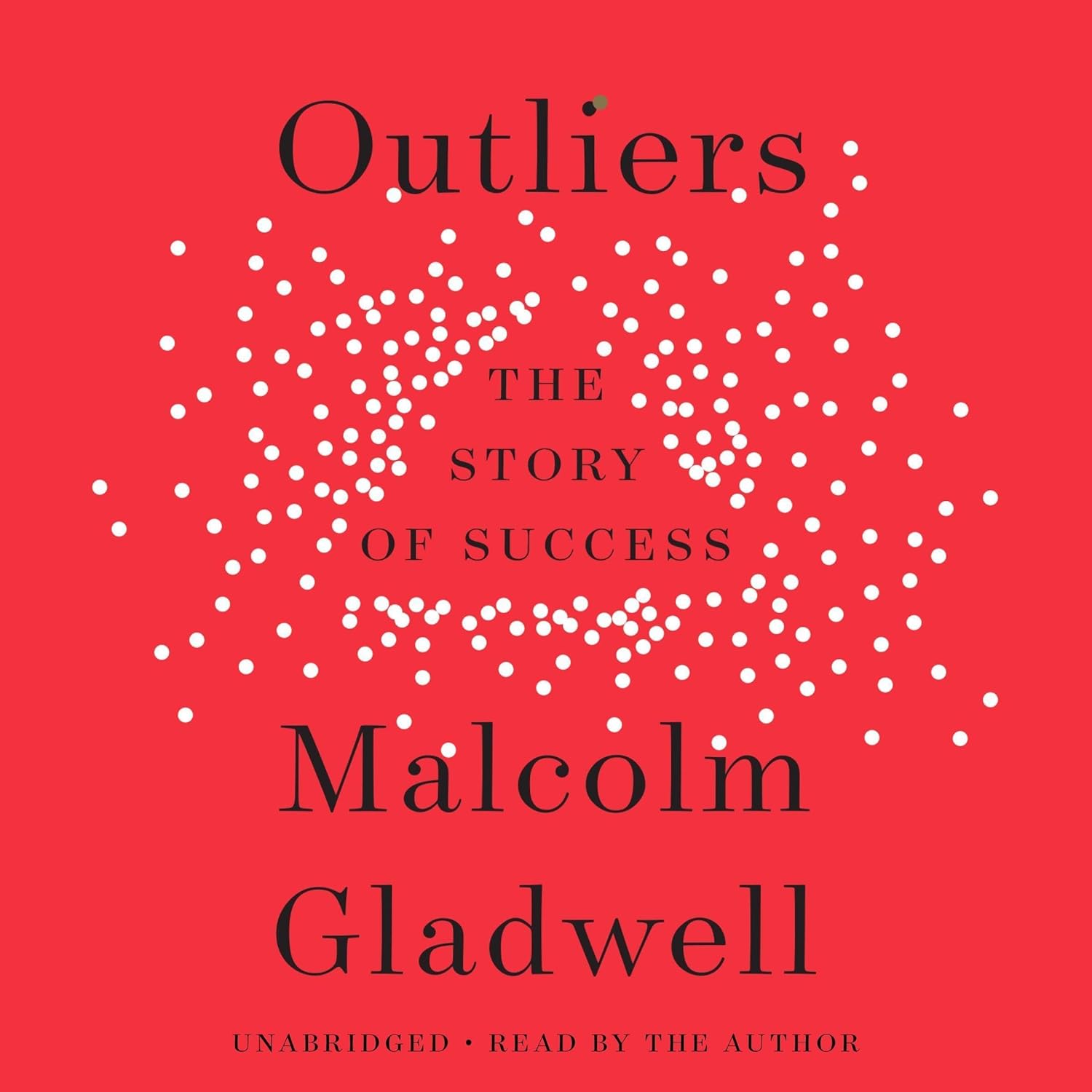
What truly sets extraordinary people apart? Is it innate talent, or something more? In Outliers, Malcolm Gladwell, the bestselling author of The Tipping Point and Blink, takes us on a fascinating journey to uncover the real story of success.
Forget the myth of the self-made individual. Gladwell reveals that high achievement isn't just about individual drive and intellect. He delves into the hidden advantages, cultural legacies, and unique opportunities that propel outliers like Bill Gates and the Beatles to the top. From software billionaires to soccer stars, Gladwell challenges our conventional understanding of success, proving that where we come from matters just as much as who we are.
Prepare to be surprised, enlightened, and inspired as Gladwell connects the dots between seemingly disparate phenomena, offering a fresh and thought-provoking blueprint for unlocking human potential. Outliers is a captivating exploration of the forces that shape our world, and a must-read for anyone who wants to understand the true nature of success.
Summary of Key Ideas
- •
The Power of 10,000 Hours
The '10,000-Hour Rule' posits that mastery in any field largely depends on dedicated practice. Gladwell argues that innate talent is less significant than the sheer amount of time invested in honing a skill. This principle is illustrated through examples like Bill Gates' early access to computers and The Beatles' extensive performance experience in Hamburg. By accumulating around 10,000 hours of deliberate practice, individuals can achieve expertise and significantly increase their chances of success. This concept emphasizes the importance of consistent effort and dedication in developing exceptional abilities. However, it's important to note that the 10,000 hours must be *deliberate* practice, focused on improving specific skills.
- •
The Advantage of Opportunity
Opportunity plays a crucial role in achieving extraordinary success. Gladwell emphasizes that success isn't solely the result of individual merit but is often influenced by fortunate circumstances and unique opportunities. He highlights examples such as the birthdates of Canadian hockey players, where being born earlier in the year provides a significant advantage due to age-based selection processes. Similarly, the rise of computer programmers like Bill Gates was heavily influenced by their rare access to computer technology at a young age. These examples underscore the importance of being in the right place at the right time and how these opportunities can shape a person's trajectory towards exceptional achievement. The book suggests that society needs to create more of these opportunities.
- •
The Influence of Cultural Legacy
Cultural legacies and inherited advantages significantly impact success. Gladwell examines how cultural backgrounds and traditions can provide individuals with specific skills and advantages that contribute to their achievements. For instance, he explores the cultural roots of mathematical proficiency among Asian rice farmers, whose farming practices instilled a strong work ethic and analytical thinking. He discusses how cultural values, such as a strong work ethic or problem-solving skills, can be passed down through generations, creating a foundation for success in various fields. These cultural legacies shape cognitive abilities and approaches to work, ultimately influencing an individual's potential for achievement. Gladwell also analyzes the cultural differences in plane crashes.
- •
The Importance of Practical Intelligence
Practical intelligence, or 'street smarts,' is crucial for navigating complex situations and achieving success. This concept involves the ability to effectively communicate, negotiate, and understand social dynamics. Gladwell contrasts this with analytical intelligence, which is typically measured by IQ tests. He argues that practical intelligence is often developed through upbringing and social interactions. Individuals with strong practical intelligence are better equipped to seize opportunities, resolve conflicts, and build relationships, all of which are essential for success in various domains. This type of intelligence is about knowing how to get things done, often in unconventional ways.
- •
The Cumulative Advantage of the Matthew Effect
The Matthew Effect, often summarized as 'the rich get richer and the poor get poorer,' illustrates how initial advantages can lead to cumulative benefits over time. In the context of Outliers, this principle suggests that those who start with a slight edge—whether it be early access to resources, better training, or more opportunities—tend to accumulate more advantages as they progress. This creates a widening gap between those who began with an initial advantage and those who did not. Gladwell uses this concept to explain how early success can lead to further opportunities, creating a snowball effect that propels individuals to even greater achievements.
- •
The Role of Community and Support
Success is rarely a solitary endeavor but is often influenced by family, community, and social support systems. Gladwell emphasizes the importance of supportive environments in nurturing talent and providing opportunities for growth. He examines how families who instill values such as hard work, perseverance, and a belief in education can significantly contribute to their children's success. Communities that offer resources, mentorship, and encouragement can also play a vital role in shaping individuals' trajectories. By highlighting these social support systems, Gladwell challenges the notion of the self-made individual and underscores the interconnectedness of success.
- •
The Power of Meaningful Work
Meaningful work, characterized by autonomy, complexity, and a connection between effort and reward, is a key component of fulfillment and success. Gladwell argues that individuals are more likely to excel when they find work that is intrinsically rewarding and provides a sense of purpose. Autonomy allows individuals to have control over their work, while complexity challenges them to develop their skills and abilities. The connection between effort and reward reinforces the value of hard work and provides a sense of accomplishment. By pursuing meaningful work, individuals are more likely to be motivated, engaged, and ultimately successful.
- •
The Significance of Timing
Timing and historical context can significantly influence opportunities and shape the path to success. Gladwell illustrates how being born at a particular time can provide unique advantages, such as being in the right age group to capitalize on emerging industries or technologies. For example, he discusses how many of the most successful computer programmers were born in the mid-1950s, allowing them to be at the forefront of the personal computer revolution. These historical factors create windows of opportunity that can propel individuals to extraordinary levels of achievement. Understanding the role of timing helps to contextualize success and recognize the influence of external forces.
Chapter Recap

About The Author
Malcolm Gladwell
Malcolm Timothy Gladwell is an English-born Canadian journalist, bestselling author, and speaker. He has been a staff writer for The New Yorker since 1996.
Main Quotes
"It's not how naturally talented you are; it's about the opportunities presented to you and how hard you work."
"Practice isn't the thing you do once you're good. It's the thing you do that makes you good."
"Those three things – autonomy, complexity, and a connection between effort and reward – are qualities that work has to have if you want it to be satisfying."
"Outliers are those who have been given opportunities – and who have had the strength and presence of mind to seize them."
"Success is not a random act. It arises out of a predictable and powerful set of circumstances and opportunities."
"The closer psychologists look at the careers of the gifted, the smaller the role innate talent seems to play and the bigger the role preparation plays."
"Hard work is a prison sentence only if it does not have meaning."
"People don't rise from nothing."
"We do owe something to parentage and patronage."
"The people who stand before kings may look like they did it all by themselves. But in fact they are invariably the beneficiaries of hidden advantages and extraordinary opportunities and cultural legacies that allow them to learn and work hard and make sense of the world in ways others cannot."
Who Should Read This Book
Readers interested in success, achievement, and the factors that contribute to them
Individuals curious about the hidden influences on high achievers
People interested in social science, psychology, and cultural analysis
Students and educators looking for insights into learning and development
Business professionals seeking to understand success in various fields
General readers interested in thought-provoking non-fiction
Individuals motivated to understand their own potential and how to maximize it
Readers who enjoy Malcolm Gladwell's writing style and previous works
Book Summaries Like
Outliers



FAQ

Free Access to LitNotes