




 DISCORD
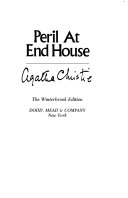
Peril at End House
Agatha Christie


 66 Min Reading Time
 Audio Version Available
About this book
Hercule Poirot's peaceful holiday on the Cornish coast is shattered when he encounters Nick Buckley, the vivacious young mistress of End House. Nick has a knack for surviving near-fatal "accidents"—a car crash, a falling boulder, a near-crushing by a painting. But when Poirot discovers a bullet hole in her sun hat, he knows these are no mere coincidences. Someone is systematically trying to kill Nick, and with the help of Captain Hastings, Poirot must unravel the motive behind the deadly attacks before the next "accident" proves fatal. Delving into the secrets of End House and its inhabitants, Poirot races against time to unmask a killer who has yet to commit the perfect murder.
Summary of Key Ideas
- •
Deception and Disguise: Unmasking the Truth
In "Peril at End House," deception is a central theme. Characters deliberately mislead others, creating a web of false identities and concealed motives. The killer hides their true intentions behind a facade of normalcy, making it difficult for Poirot to discern the truth. This theme highlights the importance of looking beyond surface appearances and carefully analyzing the actions and words of everyone involved. The ability to construct and maintain a convincing disguise is crucial to the plot, as the murderer attempts to manipulate events to their advantage.
- •
The Lure of Money and Inheritance
Financial gain serves as a significant motive in the novel. The potential inheritance of End House and Nick Buckley's wealth drives the actions of several characters, creating a competitive and dangerous atmosphere. The prospect of acquiring wealth clouds judgment and leads characters to make desperate decisions, ultimately contributing to the peril that surrounds Nick. This key idea underscores the corrupting influence of greed and the lengths to which people will go to secure their financial future.
- •
Poirot's Methodical Deduction: Order from Chaos
Hercule Poirot's meticulous approach to solving the mystery is a cornerstone of the narrative. He employs his "little grey cells" to analyze clues, interview suspects, and reconstruct the sequence of events. Poirot's methodical deduction allows him to sift through the red herrings and identify the inconsistencies that expose the killer. This key idea demonstrates the power of logical reasoning and careful observation in uncovering the truth, even in the face of complex and misleading information.
- •
The Vulnerability of the Intended Victim
Nick Buckley, the owner of End House, is portrayed as a vulnerable figure, seemingly oblivious to the danger surrounding her. Her naivety and trusting nature make her an easy target for the killer, who exploits her weaknesses to further their own agenda. This vulnerability highlights the importance of awareness and caution, particularly when one's life is at risk. Nick's character serves as a reminder that appearances can be deceiving, and that even those who seem harmless may be in grave danger.
- •
The Significance of Place: End House as a Character
End House itself plays a crucial role in the novel, serving as more than just a setting. The house's history, atmosphere, and physical layout contribute to the overall sense of mystery and danger. Its isolated location and somewhat dilapidated state create an environment where secrets can thrive and dark deeds can go unnoticed. The house becomes a character in its own right, reflecting the hidden truths and underlying tensions that permeate the story. Its very presence enhances the suspense and contributes to the feeling of impending doom.
- •
Red Herrings and Misdirection: The Art of Deception
Agatha Christie masterfully employs red herrings and misdirection to keep the reader guessing until the very end. False clues and misleading information are strategically placed throughout the narrative, leading readers down the wrong path and obscuring the true identity of the killer. This key idea highlights Christie's skill in manipulating the reader's expectations and creating a sense of uncertainty. The abundance of red herrings forces the reader to question everything and everyone, making the eventual revelation of the truth all the more satisfying.
Chapter Recap

About The Author
Agatha Christie
Agatha Mary Clarissa Miller was born in Torquay, Devon, in the United Kingdom, the daughter of a wealthy American stockbroker. Her father died when she was eleven years old. Her mother taught her at home, encouraging her to write at a very young age. At the age of 16, she went to Mrs. Dryden's finishing school in Paris to study singing and piano. In 1914, at age 24, she married Colonel Archibald Christie, an aviator in the Royal Flying Corps. While he went away to war, she worked as a nurse and wrote her first novel, The Mysterious Affair at Styles (1920), which wasn't published until four years later. When her husband came back from the war, they had a daughter. In 1928 she divorced her husband, who had been having an affair. In 1930, she married Sir Max Mallowan, an archaeologist and a Catholic. She was happy in the early years of her second marriage, and did not divorce her husband despite his many affairs. She travelled with her husband's job, and set several of her novels set in the Middle East. Most of her other novels were set in a fictionalized Devon, where she was born. Agatha Christie is credited with developing the "cozy style" of mystery, which became popular in, and ultimately defined, the Golden Age of fiction in England in the 1920s and '30s, an age of which she is considered to have been Queen. In all, she wrote over 66 novels, numerous short stories and screenplays, and a series of romantic novels using the pen name Mary Westmacott. She was the single most popular mystery writer of all time. In 1971 she was made a Dame Commander of the Order of the British Empire.
Main Quotes
""Poirot, I said. I have been thinking." "An admirable exercise, my friend, continue it.""
""Evil never goes unpunished, Monsieur. But the punishment is sometimes secret.""
""To all of us, Mademoiselle, there comes a time when death is preferable to life. But it passes—sorrow passes and grief.”"
""I cannot eat these eggs. They are of totally different sizes.""
""I don't think you've got any imagination at all, Poirot.""
""That is true, Hastings.""
""But the danger is very real, is it not?""
""The real danger, my friend, is not that people will not be brave enough, but that they will not be chivalrous enough.""
""One has to be very careful. One has to be very sure. One has to be very clever.""
""The truth, it is a simple thing. But it is often hidden.""
Who Should Read This Book
Fans of classic detective fiction
Readers who enjoy puzzles and intricate plots
Hercule Poirot enthusiasts
Fans of Agatha Christie's writing style
Readers looking for a quick and engaging mystery
Book Summaries Like
Peril at End House

FAQ

Free Access to LitNotes