




 DISCORD
Plain Bad Heroines
Emily M. Danforth, Sara Lautman

 Stonewall Book Award


 133 Min Reading Time
 Audio Version Available
About this book
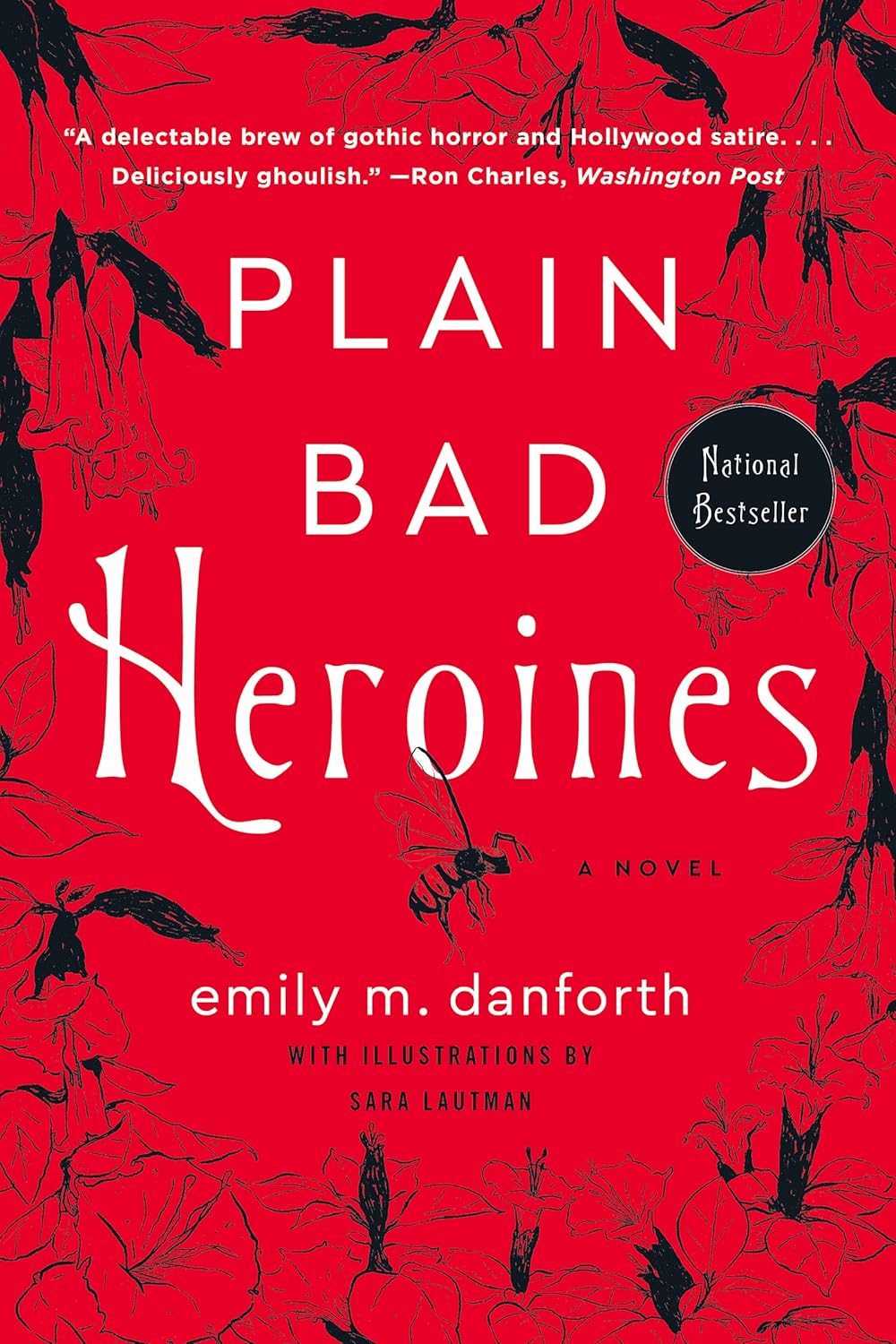
In 1902, two students at the Brookhants School for Girls, Flo and Clara, found solace and obsession in each other and the scandalous memoir of Mary MacLane. Together, they formed the Plain Bad Heroine Society, their secret meetings in an apple orchard culminating in a gruesome demise—victims of a furious swarm of yellow jackets, Mary's book splayed beside their bodies. The school, shrouded in tragedy, soon closed its doors after three more inexplicable deaths.
A century later, the crumbling Brookhants is resurrected in headlines with Merritt Emmons' bestselling book, a celebration of the institution's queer, feminist history and whispered curse. This ignites a controversial horror film adaptation, casting the acclaimed Harper Harper as Flo and rising star Audrey Wells as Clara. But as the cameras roll on the haunted grounds, the veil between past and present thins, blurring the lines between a chilling curse and the glamorous artifice of Hollywood.
“Plain Bad Heroines” is a devilishly clever, genre-bending novel that weaves gothic horror, sharp satire, sapphic romance, and metafictional wonder. With a deliciously ghoulish voice and a nod to Mary Shelley, the book is a spellbinding exploration of storytelling, obsession, and the enduring power of rebellious female spirits.
Summary of Key Ideas
- •
The Allure and Danger of Forbidden Love
At its core, "Plain Bad Heroines" explores the intense and often dangerous nature of forbidden love, particularly within the context of early 20th-century societal constraints. The relationship between Flo and Clara, two students at Brookhants School for Girls, ignites a chain of tragic events that reverberates through the decades. Their love is portrayed as both a source of empowerment and a catalyst for destruction, highlighting the risks associated with defying societal norms and embracing one's true desires. The novel suggests that such intense passion, when suppressed or condemned, can manifest in unforeseen and devastating ways.
- •
The Enduring Power of Legends and Storytelling
The narrative structure of "Plain Bad Heroines" emphasizes the enduring power of legends and storytelling. The tragic events at Brookhants School become the subject of local lore, embellished and distorted over time. This legend then inspires a book and, later, a film adaptation, demonstrating how stories can take on a life of their own, influencing perceptions and shaping reality. The novel suggests that the way we remember and retell stories can have a profound impact on how we understand the past and its continuing influence on the present.
- •
Gothic Horror as a Reflection of Societal Anxieties
"Plain Bad Heroines" utilizes elements of gothic horror to explore societal anxieties surrounding female sexuality, power, and transgression. The eerie atmosphere of Brookhants, with its mysterious deaths and unsettling secrets, serves as a backdrop for examining the consequences of repressing female desire and ambition. The novel suggests that the supernatural occurrences and unexplained phenomena are manifestations of these underlying tensions, reflecting the ways in which society punishes those who deviate from expected roles and behaviors. The bees, in particular, act as a symbol of collective female power turned malevolent.
- •
The Meta-Narrative of Adaptation and Interpretation
The novel employs a meta-narrative structure, weaving together multiple timelines and perspectives to explore the process of adaptation and interpretation. The story unfolds through the lens of a contemporary author researching the Brookhants legend, as well as the experiences of the actors involved in the film adaptation. This layered approach raises questions about the ethics of representation and the challenges of accurately portraying historical events. The novel suggests that every retelling is an interpretation, influenced by the biases and perspectives of the storyteller, and that the truth is often elusive and multifaceted.
- •
Queer Identity and Historical Erasure
"Plain Bad Heroines" delves into the complexities of queer identity and the historical erasure of LGBTQ+ experiences. The novel highlights the challenges faced by queer individuals in the early 20th century, who were forced to conceal their true selves due to societal prejudice and legal restrictions. The tragic fate of Flo and Clara serves as a reminder of the dangers of living in a world that does not accept or understand same-sex relationships. By bringing these stories to light, the novel seeks to reclaim a lost history and celebrate the resilience of queer communities.
- •
The Price of Ambition and Artistic Creation
The characters in "Plain Bad Heroines" often grapple with the price of ambition and artistic creation. The pursuit of fame and recognition can lead to ethical compromises and personal sacrifices. The novel suggests that the desire to create something lasting can be a powerful motivator, but it can also be destructive, particularly when it comes at the expense of others. The characters' struggles highlight the complexities of balancing artistic integrity with the demands of the marketplace and the allure of success.
Chapter Recap

About The Author
Emily M. Danforth
US novelist, professor from wiki stub https://en.wikipedia.org/wiki/Emily_M._Danforth (2024 0815 th 18:44 cest) Danforth was born and raised in Miles City, Montana.[1] She attended Hofstra University, where she came out.[2] She received a Master of Fine Arts degree from the University of Montana and earned her Ph.D. at the University of Nebraska–Lincoln. She lives in Providence, Rhode Island with her wife.[3]
Main Quotes
"The stories you love, you do love them, but never as the truth, only ever as the container. You want it all put down in words and trapped in the maze of a sentence."
"I do not walk with undulating movements—indeed, I have never seen any one walk so, except, perhaps, a cow that has been overfed."
"This was the dangerous thing about coming home and being with family: the collision with her own expectations and the blunt, unyielding fact of their reality."
"The women had come to Brookhants for different reasons, but they were all looking for something, and it was unlikely any of them would find it."
"It’s true that the book offers a number of twists and turns, but it does so in a way that feels more earned than contrived."
"There are not enough hours in the day for me to contemplate my own existence and the existence of all the other young girls in the world."
"She liked the idea of a story that was so complicated it might not mean anything at all."
"What if the thing that was supposed to make you strong—the thing that was supposed to kill you and that you were supposed to die from—was instead the thing that saved you?"
"There's a certain kind of magic that feels like it only happens in the dark."
"When you look at a picture, you are seeing the world that the person taking the picture wanted you to see."
Who Should Read This Book
Readers interested in gothic horror.
Readers who enjoy historical fiction with a queer sensibility.
Fans of meta-fiction and Hollywood satire.
Those interested in stories about female desire and repression.
Readers who appreciate dual or parallel timelines in a narrative.
Young adult readers who are transitioning to adult fiction.
Individuals interested in literary horror that explores atmosphere and character over jump scares.
Book Summaries Like
Plain Bad Heroines
FAQ

Free Access to LitNotes