




 DISCORD
Poverty, by America
Matthew Desmond


 Goodreads Choice Awards
 Apple Books


 43 Min Reading Time
 Audio Version Available
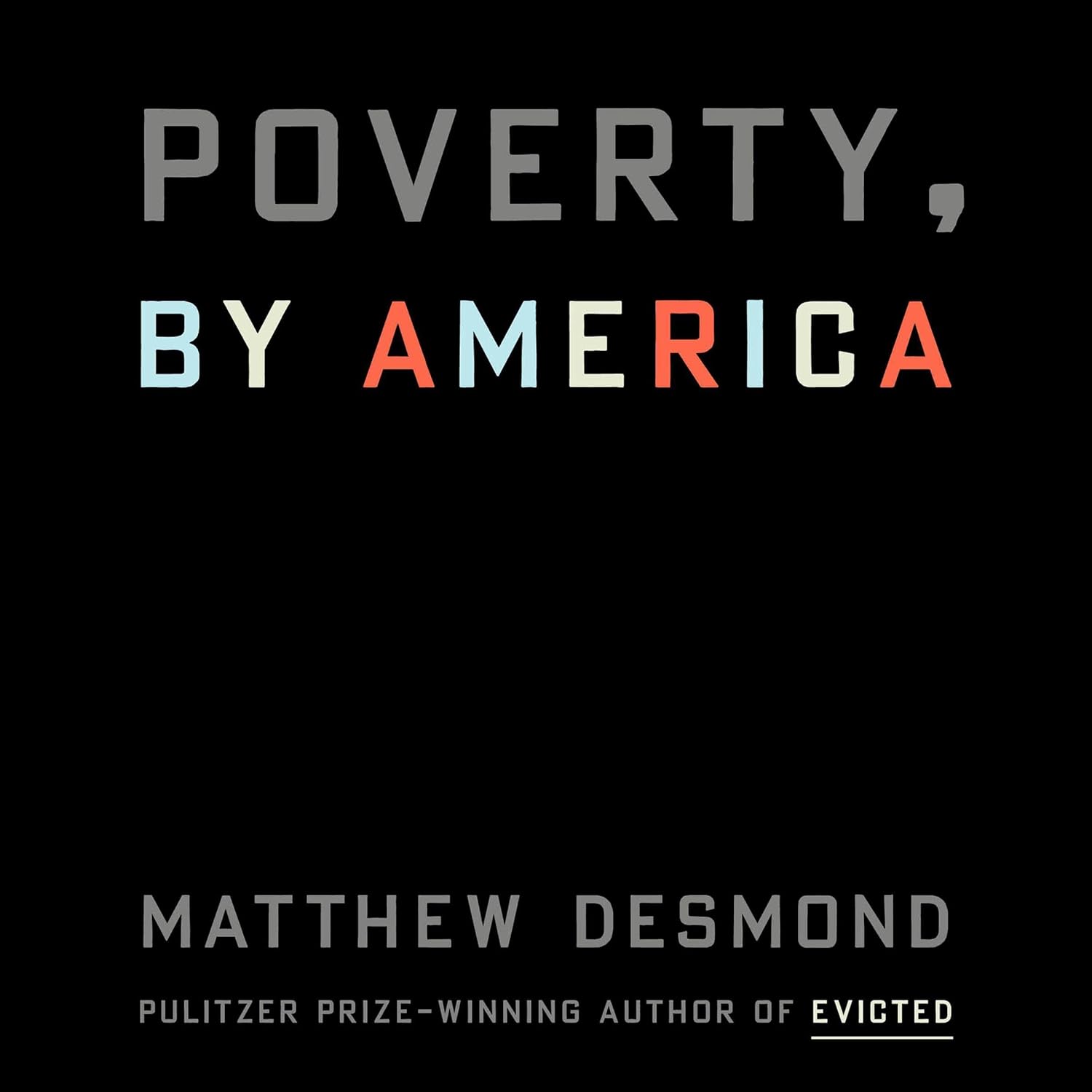
About this book
From the Pulitzer Prize-winning author of Evicted comes a searing and transformative exploration of poverty in America. Why, in the wealthiest nation on earth, does such deep poverty persist? Matthew Desmond argues that it's not a paradox, but a consequence: poverty persists because some benefit from it.
In this landmark work, Desmond exposes how affluent Americans, knowingly or unknowingly, perpetuate poverty by exploiting the vulnerable, driving down wages, and extracting wealth. He unveils how systems prioritize the prosperity of the rich over the basic needs of the poor, creating stark inequalities in housing, finance, and opportunity.
Poverty, by America is a powerful call to action, challenging us to confront our roles in perpetuating this injustice and to become "poverty abolitionists." With rigorous research and compassionate storytelling, Desmond offers a new vision for a shared prosperity and a future where true freedom is accessible to all.
Summary of Key Ideas
- •
Profiting from Poverty
Poverty is a Choice: Desmond argues that poverty in America persists not because of a lack of resources, but because affluent Americans benefit from and perpetuate the systems that keep people poor. This challenges the common perception that poverty is an unfortunate inevitability or solely the result of individual failings. He posits that the wealthy actively contribute to and profit from the economic exploitation of the poor, whether consciously or unconsciously, through various mechanisms.
- •
Housing Exploitation
The Housing Crisis as a Poverty Trap: The book highlights how exploitative housing practices, such as exorbitant rents and substandard living conditions, contribute significantly to trapping low-income families in cycles of poverty. Landlords often extract a disproportionate amount of income from tenants, leaving them with little to save or invest in their future. This unstable housing situation further hinders access to better employment, education, and healthcare, perpetuating the cycle.
- •
Financial Predators
Predatory Lending and Financial Exploitation: Desmond exposes how payday lenders, check-cashing services, and other predatory financial institutions target low-income communities, charging exorbitant interest rates and fees that drain wealth from those who can least afford it. These practices exacerbate financial instability and make it nearly impossible for families to build savings or escape debt, thereby reinforcing poverty.
- •
Tax System Inequality
Tax Benefits for the Rich, Burden on the Poor: The book scrutinizes how tax policies often favor the wealthy while disproportionately burdening the poor. Desmond critiques tax loopholes and deductions that benefit the affluent, arguing that these policies divert resources away from programs that could alleviate poverty. He also points out how regressive taxes, such as sales taxes, place a heavier burden on low-income individuals, who spend a larger percentage of their income on basic necessities.
- •
Wage Suppression
Wage Stagnation and Labor Exploitation: "Poverty, by America" examines how stagnant wages and the decline of unions have contributed to the growth of poverty. The book argues that the decline in worker power has allowed corporations to suppress wages, leaving many full-time workers struggling to make ends meet. The lack of adequate worker protections and benefits further exacerbates the problem, making it difficult for low-wage workers to improve their economic situation.
- •
Policy's Impact on Poverty
The Role of Government Policy: Desmond emphasizes the crucial role of government policies in both creating and alleviating poverty. He critiques policies that perpetuate inequality, such as inadequate funding for social safety nets and tax breaks for the wealthy. Conversely, he advocates for policies that promote economic opportunity, such as affordable housing programs, increased minimum wages, and stronger worker protections. He stresses that government intervention is essential to creating a more just and equitable society.
- •
Abolishing Poverty
Poverty Abolitionism: Desmond calls for a new social movement of "poverty abolitionists" who are committed to dismantling the systems that perpetuate poverty. He argues that ordinary Americans have a moral obligation to challenge the status quo and advocate for policies that promote economic justice. This involves not only supporting anti-poverty initiatives but also critically examining one's own complicity in perpetuating poverty through consumption habits, investment choices, and political engagement.
- •
Challenging Meritocracy
The Myth of Meritocracy: Desmond challenges the widely held belief that success is solely based on individual merit and hard work. He argues that systemic inequalities, such as unequal access to education, healthcare, and housing, create barriers that prevent many low-income individuals from achieving upward mobility, regardless of their effort or talent. This critique underscores the need for structural reforms that address these systemic disadvantages.
- •
Empathy and Understanding
The Importance of Empathy and Understanding: Throughout the book, Desmond emphasizes the importance of developing empathy for those living in poverty and understanding the challenges they face. He encourages readers to move beyond stereotypes and recognize the human dignity of all individuals, regardless of their economic circumstances. This empathy is crucial for building support for policies that promote economic justice and alleviate poverty.
Chapter Recap

About The Author
Matthew Desmond
Main Quotes
"The simple truth that poverty is an injury, a taking."
"Poverty is about money, of course, but it is also a relentless piling on of problems."
"If poverty persists in America, it is not for lack of resources. We lack something else."
"Being poor reduces a person's cognitive capacity more than going a full night without sleep."
"The reason why we have so much poverty in America is that some people are benefiting from it."
"Low-wage work is not a solution to poverty; it is a cause of it."
"A community that sees so clearly the worth of равенство, justice, and opportunity for all."
"The existence of poverty in this country should not be a scandal. It should be a crisis."
"We are the richest country on earth, with more poverty than any other advanced democracy."
"Poverty does not just deprive people of security and comfort; it siphons off their brainpower, too."
Who Should Read This Book
Readers interested in social justice and economic inequality
Individuals involved in public policy and advocacy
Students and academics in sociology, economics, and related fields
General readers seeking to understand the causes and consequences of poverty in America
Those who are interested in the role of affluence in perpetuating poverty
Readers of Matthew Desmond's previous work, such as "Evicted"
Individuals looking for potential solutions to poverty
Book Summaries Like
Poverty, by America


FAQ

Free Access to LitNotes