




 DISCORD
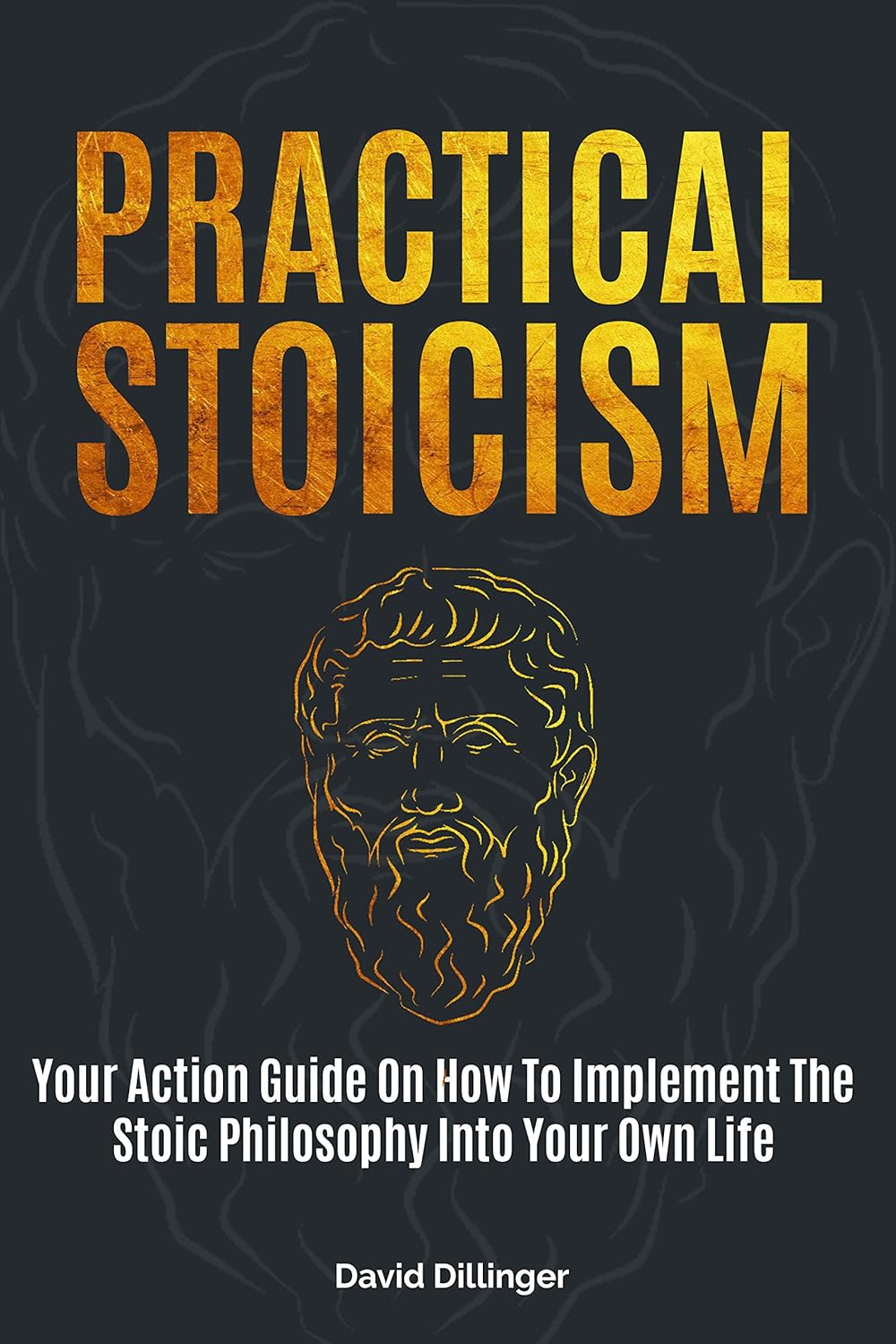
Practical Stoicism
David Dillinger


 Apple Books


 17 Min Reading Time
 Audio Version Available
About this book
Would you like to learn how to slow down and savor the deeper meaning of life? Do you want to focus on developing personal virtues that will help you become a better person? Are you looking for a practical guide on how to apply Stoicism to your day-to-day life? If your answer is yes, then keep reading because you’re about to find what you’re looking for. Time is the one thing we all could use more of, isn’t it? But our issue with time is not in the amount but the intention with which we use it. Just think about it, we all have the standard 24 hours in a day, the only difference is how we choose how to spend or invest it. Your relationship with time will define your perspective on life. If you want to live a meaningful life and become a better person you have to be mindful of using your time wisely. Stoicism principles can help you accomplish that. In 2019, a study published in The Behavior Therapist , vol. 42, no. 2, conducted by D. Robertson and T. Codd explored Stoicism’s similarities to modern psychotherapy practices. The findings show Stoicism offers people a permanent and efficient alternative to their existing worldview. This alternative is aligned with modern psychotherapy techniques and might provide a framework for long-term change. In other words, this book is the daily road map you need to not only learn a new set of practices but give you a whole new perspective on what a virtuous life looks like. In this guide, you will discover: Why gratitude is an essential practice to a happier life even if you’re currently struggling to be thankful for your life Practical ways on how to develop the ability to appreciate the things you have instead of focusing on what you’re missing How to slow down and savor the meaningful little things amid a demanding career and family life A step-by-step prescription for handling yourself and your actions in the world that can easily be applied to your personal experiences Why tranquility is a virtue you need to free yourself from anxiety, and how to get it in no time Daily meditations filled with thought-provoking and soul-searching exercises to help you develop the ability to start each day with a joyful heart How to redefine yourself based on your actions instead of your possessions and why this habit alone can turn your life upside down The tools you need for a much-needed shift in your perspective to stop feeling stuck in a rut and trapped in a monotonous routine … and so much more! If you want to learn how to navigate this life well and stop distractions in their track, this set of practical stoic principles will help you find the path to a meaningful happy life. So if you want to learn how to slow down and live your life to the fullest, click the “Add to Cart” button now!
Summary of Key Ideas
- •
The Dichotomy of Control
Focus on What You Can Control: Stoicism emphasizes differentiating between what is within our control (our thoughts, actions, and reactions) and what is not (external events, other people's opinions). By focusing solely on the former, individuals can minimize anxiety and increase their sense of agency. This involves accepting what we cannot change and directing our energy towards improving our internal state and behavior. Practicing this regularly leads to a more resilient and peaceful existence, regardless of external circumstances.
- •
The Primacy of Virtue
Virtue as the Only Good: Stoics believe that virtue – wisdom, justice, courage, and temperance – is the sole good and the foundation for a fulfilling life. External factors like wealth, health, or reputation are considered indifferent; they hold no intrinsic value in determining happiness. By prioritizing virtuous actions and character development, individuals cultivate inner strength and moral integrity, leading to a life of purpose and meaning, independent of external validation or material possessions.
- •
Amor Fati: Love of Fate
Acceptance of Fate: Stoicism advocates for accepting what happens to us, understanding that everything is part of a larger, natural order. This doesn't mean passive resignation but rather a realistic assessment of events without resistance or complaint. By accepting fate, individuals free themselves from unnecessary suffering caused by wishing things were different. This acceptance allows for a more rational and effective response to challenges, fostering resilience and mental fortitude.
- •
Practicing Negative Visualization
Negative Visualization: This technique involves imagining the loss of what you value to appreciate it more fully and prepare yourself for potential adversity. By contemplating the impermanence of things, individuals avoid becoming overly attached and develop a deeper sense of gratitude for what they have. This practice also strengthens mental resilience, making it easier to cope with actual losses or setbacks when they occur.
- •
Following Nature's Path
Living in Accordance with Nature: Stoics believe that humans should live in harmony with both their own nature (reason and virtue) and the natural world. This involves understanding the principles of nature, behaving rationally, and acting in accordance with virtue. By aligning our lives with nature, we find purpose and fulfillment, contributing to the greater good and living a life of meaning and integrity.
- •
Cultivating Self-Awareness
The Importance of Self-Reflection: Stoicism emphasizes the importance of regularly examining one's thoughts, actions, and intentions. Through self-reflection, individuals can identify areas for improvement, correct faulty reasoning, and reinforce virtuous behavior. This ongoing process of self-awareness is crucial for personal growth and living a more deliberate and meaningful life. Journaling, meditation, and contemplation are valuable tools for cultivating self-reflection.
- •
Navigating Difficult Interactions
Dealing with Difficult People: Stoicism provides practical strategies for interacting with difficult or unreasonable people. By understanding that others' behavior is often a reflection of their own internal state, individuals can avoid taking offense and respond with compassion and rationality. This involves practicing empathy, setting boundaries, and focusing on one's own reactions rather than trying to control others' behavior. Ultimately, maintaining inner peace and acting with virtue are the primary goals.
Chapter Recap

About The Author
David Dillinger
Main Quotes
"Denying yourself of things you have come to expect from life will make you stronger. This is also known as “voluntary discomfort”."
"The goal is to be a better human being; someone who is more virtuous, wise, just, and brave."
"Stoicism is not about indifference to the world; it is about understanding what you can control and what you cannot."
"Focus on what you can influence, and accept what you cannot."
"A Stoic understands that external events are indifferent; they have no moral value in themselves."
"The key to happiness is not to seek pleasure, but to avoid pain."
"Discomfort is inevitable, but misery is optional."
"Virtue is the only good."
"External things are not good or bad, but our judgment about them makes them so."
"It is not events that disturb people, but rather their judgments about them."
Who Should Read This Book
Individuals interested in self-improvement and personal development
People seeking practical strategies for managing emotions and adversity
Readers interested in philosophy, particularly Stoicism
Individuals looking for guidance on living a more virtuous and meaningful life
Those seeking stress reduction and increased resilience
People interested in applying ancient wisdom to modern life
Readers who enjoy self-help books with actionable advice
Individuals exploring mindfulness and emotional regulation techniques
Book Summaries Like
Practical Stoicism


FAQ

Free Access to LitNotes