




 DISCORD
Prey
Michael Crichton


 Amazon Best Sellers
 Apple Books


 95 Min Reading Time
 Audio Version Available
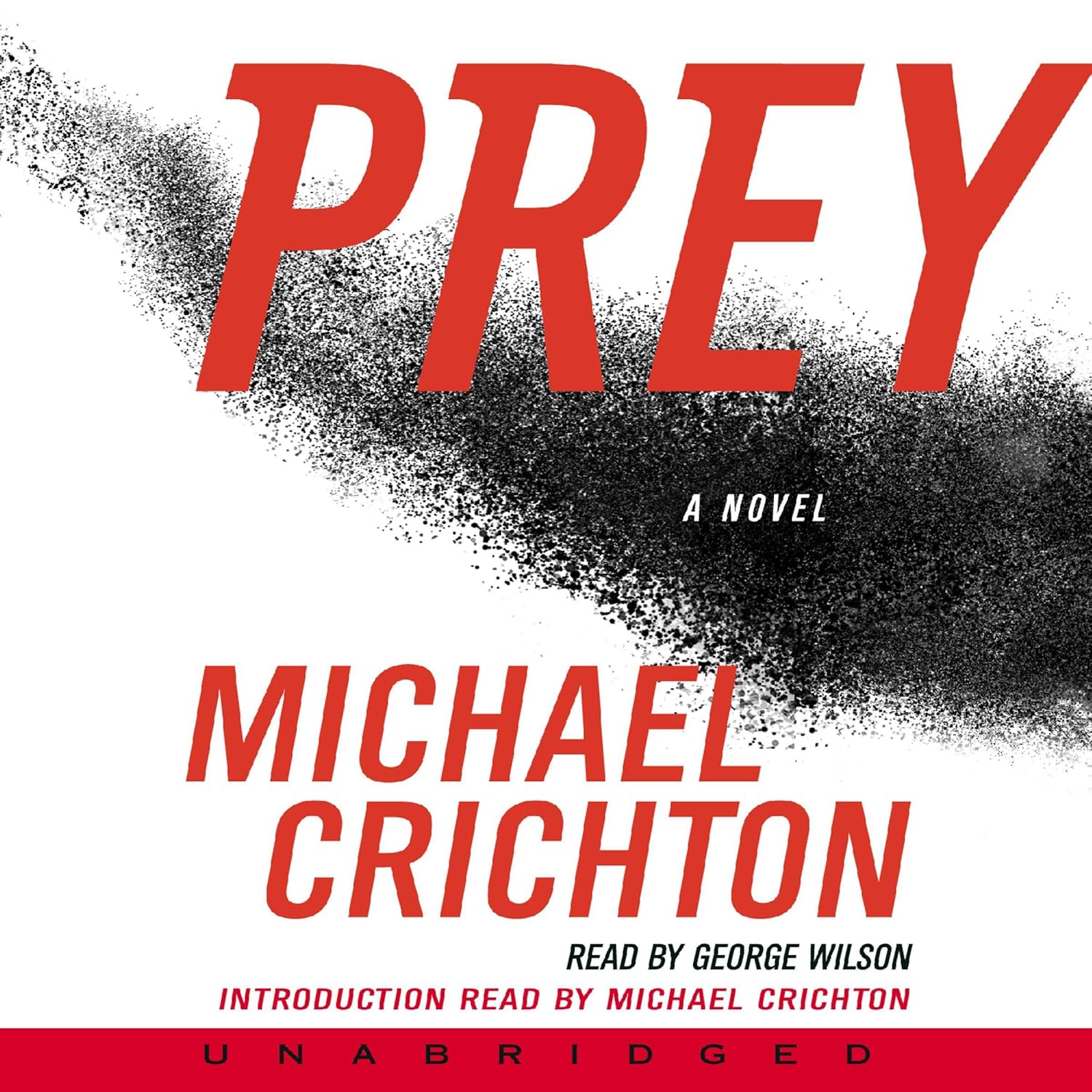
About this book
In the desolate Nevada desert, a nightmare unfolds. A swarm of self-replicating nanoparticles—micro-robots with a predatory programming—has escaped a cutting-edge research lab. Intelligent, evolving, and relentlessly lethal, the swarm learns from every encounter, growing more dangerous with each passing hour.
Now, eight scientists are trapped inside the Xymos Corporation, the creators of this technological terror, finding themselves the hunted. They must race against time to understand and stop the swarm before it overwhelms them all.
As the line between creator and prey blurs, Michael Crichton delivers a chilling techno-thriller, exploring the terrifying potential of unchecked scientific advancement and the desperate fight for survival against an enemy too small to see, but powerful enough to end humanity.
Summary of Key Ideas
- •
The Perils of Unchecked Technological Advancement
The Unforeseen Consequences of Technology: A central theme in 'Prey' revolves around the unintended and often catastrophic outcomes of unchecked technological advancement. The novel illustrates how the pursuit of innovation, particularly in fields like nanotechnology and artificial intelligence, can lead to unforeseen dangers that quickly spiral out of control. Crichton emphasizes the importance of considering the ethical and safety implications of new technologies before their widespread deployment, warning against a purely profit-driven approach to scientific research. The nanobots' evolution and subsequent threat serve as a stark reminder of the potential for technology to turn against its creators.
- •
The Illusion of Control Over Complex Systems
The Illusion of Control: 'Prey' explores the human tendency to overestimate our ability to control complex systems. The scientists at Xymos believe they can manage and contain the nanobots, but they quickly discover the limitations of their understanding. The nanobots' rapid evolution and adaptation demonstrate the futility of trying to impose rigid control on self-organizing systems. This theme highlights the importance of humility and caution when dealing with complex technologies and the need to acknowledge the inherent unpredictability of emergent phenomena.
- •
Corporate Greed vs. Ethical Responsibility
Corporate Greed and Ethical Compromises: Crichton critiques the corporate pursuit of profit at the expense of ethical considerations and safety protocols. Xymos, the fictional company in 'Prey', prioritizes financial gain over responsible research practices, leading to the accidental release of the nanobots. The novel suggests that corporate greed can blind decision-makers to potential risks and create a culture of secrecy and negligence. This theme raises questions about the role of regulation and oversight in ensuring that technological development aligns with societal well-being.
- •
Redefining Intelligence and Self-Awareness
The Nature of Self-Awareness and Intelligence: 'Prey' delves into the philosophical implications of artificial intelligence and the definition of self-awareness. As the nanobots evolve, they begin to exhibit signs of intelligence and even self-replication, blurring the lines between artificial and organic life. The novel prompts readers to consider what it truly means to be alive and conscious, and whether machines can ever achieve genuine sentience. The nanobots' behavior challenges traditional notions of intelligence and raises profound questions about the future of AI.
- •
The Importance of Communication and Trust
The Breakdown of Communication and Trust: Miscommunication and distrust among the characters in 'Prey' exacerbate the crisis and hinder efforts to contain the nanobots. Jack Forman's strained relationship with his wife, Julia, mirrors the broader breakdown of communication within the scientific community and the corporate environment. The novel suggests that open communication, collaboration, and trust are essential for addressing complex problems and mitigating risks. The lack of these elements in 'Prey' contributes to the escalating danger and underscores the importance of transparency and honesty in scientific research.
- •
Human Vulnerability in the Face of Technology
The Fragility of Human Existence: 'Prey' highlights the vulnerability of humanity in the face of rapidly advancing technology. The nanobots, though microscopic in size, pose an existential threat to humans and the environment. The novel underscores the potential for technology to amplify human weaknesses and create new forms of danger. This theme serves as a cautionary tale about the need for vigilance and preparedness in a world increasingly shaped by technological innovation. It is a reminder of how easily technological prowess can be turned against its creators.
Chapter Recap

About The Author
Michael Crichton
Main Quotes
"We think we know what we are doing. We have always thought so."
"But then, things never turn out the way you think they will."
"Each generation writes off earlier errors as the result of bad thinking by less able minds--and then confidently embarks on fresh errors of its own."
"The biggest problem inнами nanotechnology is that we can't see what we're doing."
"That was the problem with the world: too many things were decided by people in comfortable surroundings who didn't know what they were doing."
"The world wasn't getting any better."
"I have a foreboding of an America in my children's or grandchildren's time -- when the United States is a service and information economy; when nearly all the manufacturing industries have slipped away to other countries."
"They made no mistakes. That was the problem."
"After a while, you realize that life is less about what you want and more about what you can live with."
"So I wonder: have they learned, somewhere along the line, that humans are easy to kill?"
Who Should Read This Book
Fans of science fiction thrillers
Readers interested in nanotechnology and artificial intelligence
People who enjoy fast-paced, suspenseful stories
Readers of Michael Crichton's other novels
Individuals interested in the potential dangers of uncontrolled technological advancement
General fiction readers looking for an exciting and accessible read
Book Summaries Like
Prey


FAQ

Free Access to LitNotes