




 DISCORD
Pride and Prejudice
Jane Austen


 Apple Books


 97 Min Reading Time
 Audio Version Available
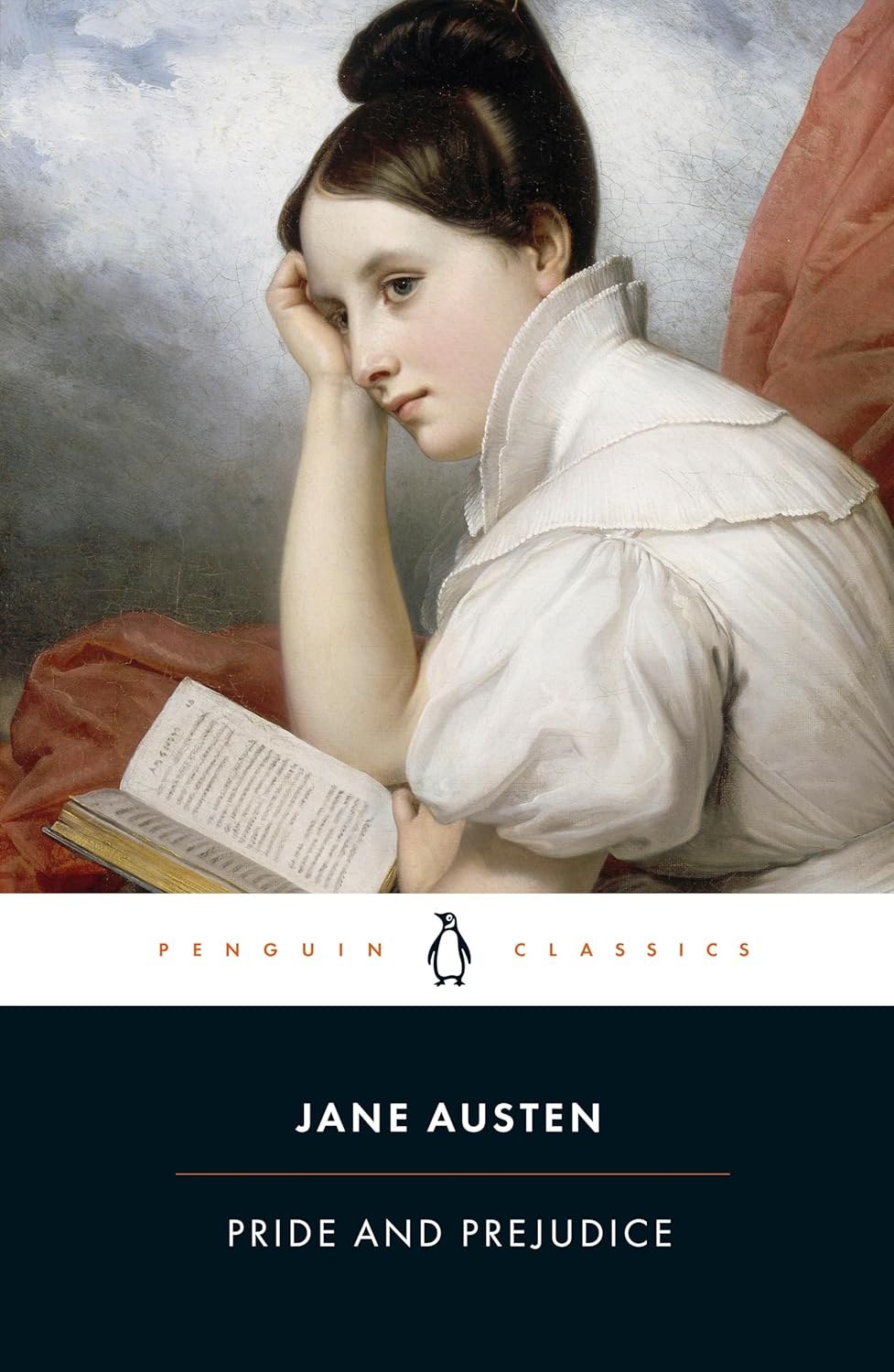
About this book
In the quaint English countryside, where societal expectations reign supreme, the spirited Elizabeth Bennet clashes with the proud and aloof Mr. Darcy. Fueled by first impressions and societal prejudices, their initial disdain masks a deeper connection. As they navigate the complexities of love, class, and family, Elizabeth and Darcy must overcome their own pride and preconceived notions to discover the truth about each other—and themselves. With sparkling wit and unforgettable characters, Jane Austen's beloved masterpiece explores the timeless themes of love, society, and the enduring power of self-discovery.
Summary of Key Ideas
- •
Overcoming Pride and Prejudice
The central theme of "Pride and Prejudice" is the intricate interplay between individual pride and societal prejudice. Elizabeth Bennet's initial prejudice against Mr. Darcy stems from his perceived arrogance and social superiority, while Darcy's pride is wounded by what he sees as the Bennet family's lower social standing and lack of decorum. As the narrative unfolds, both characters are compelled to confront and overcome their respective flaws. Elizabeth realizes that her snap judgments were unfounded, and Darcy learns to temper his pride with humility and compassion. This mutual growth allows them to see each other in a new light, ultimately paving the way for a genuine and fulfilling relationship that transcends social barriers.
- •
Marriage as a Social and Economic Institution
Marriage is portrayed as a complex social and economic institution within the novel. Austen explores various motivations for marriage, ranging from genuine love and companionship to financial security and social advancement. Characters like Charlotte Lucas exemplify the pragmatic approach to marriage, prioritizing stability over romantic affection. In contrast, Elizabeth seeks a partnership based on mutual respect and love, challenging the prevailing societal norms. The novel critiques the societal pressure on women to marry for financial security, highlighting the limitations and vulnerabilities they faced in the absence of independent means.
- •
The Constraints of Social Class
Social class and status exert a significant influence on the characters' lives and relationships. The rigid social hierarchy of Regency England dictates expectations and limits opportunities, particularly for women. The Bennet family's relatively modest social standing places them at a disadvantage in the marriage market, while the wealth and social connections of characters like Darcy and Bingley afford them considerable power. Austen subtly critiques the superficiality and injustices of the class system, exposing the ways in which it can foster prejudice and impede genuine human connection. The novel suggests that true worth lies not in social rank but in individual character and integrity.
- •
The Power of Reputation
The importance of reputation and social standing is a recurring theme. Characters are acutely aware of how their actions and the actions of their family members might affect their social standing and marriage prospects. Lydia's scandalous elopement with Wickham threatens the entire Bennet family's reputation, highlighting the vulnerability of women in a society where their value is largely determined by their perceived moral purity. Austen demonstrates how societal expectations and judgments can profoundly impact individuals' lives and choices, underscoring the need for both personal integrity and a degree of social awareness.
- •
The Significance of Family Bonds
Family dynamics and the bonds between sisters are central to the narrative. The close-knit Bennet sisters provide each other with support, companionship, and occasional rivalry. Elizabeth's strong bond with Jane serves as a source of strength and guidance, while the contrasting personalities and experiences of the younger sisters, Lydia, Kitty and Mary, offer a nuanced portrayal of female adolescence. The novel explores the complexities of family relationships, highlighting both the joys and the challenges of navigating shared histories and differing aspirations within a confined social sphere.
- •
The Path to Self-Discovery
The novel underscores the importance of self-awareness and personal growth. Both Elizabeth and Darcy undergo significant transformations as they confront their flaws and learn to see beyond their initial prejudices. Elizabeth's journey involves recognizing her own tendency to make hasty judgments and to be swayed by superficial impressions. Darcy's growth entails overcoming his pride and learning to appreciate the value of humility and compassion. Austen suggests that true happiness and fulfillment can only be achieved through self-reflection and a willingness to challenge one's own biases.
Chapter Recap

About The Author
Jane Austen
Main Quotes
"It is a truth universally acknowledged, that a single man in possession of a good fortune, must be in want of a wife."
"There is, I believe, in every disposition a tendency to some particular evil – a natural defect, which not even the best education can overcome."
"I could easily forgive his pride, if he had not mortified mine."
"Do not consider me now as an elegant female intending to plague you, but as a rational creature speaking the truth from her heart."
"There is, perhaps, a great deal too much presumption in saying that human beings ever do choose their partners for life."
"Vanity and pride are different things, though the words are often used synonymously. A person may be proud without being vain. Pride relates more to our opinion of ourselves, vanity to what we would have others think of us."
"I declare after all there is no enjoyment like reading! How much sooner one tires of any thing than of a book!"
"My courage always rises at every attempt to intimidate me."
"I am only resolved to act in that manner, which will, in my own opinion, constitute my happiness, without reference to you, or to any person so wholly unconnected with me."
"You have bewitched me body and soul, and I love, I love, I love you. And wish from this day forth never to be parted from you."
Who Should Read This Book
Readers interested in classic literature
Readers interested in romance novels
Readers interested in social commentary and satire
Female readers
Students studying English literature
Readers interested in historical fiction, particularly the Regency era
Readers who enjoy stories about family dynamics and relationships
Readers interested in strong female characters
Readers looking for witty and intelligent writing
Readers who enjoy character-driven stories
Book Summaries Like
Pride and Prejudice


FAQ

Free Access to LitNotes