




 DISCORD
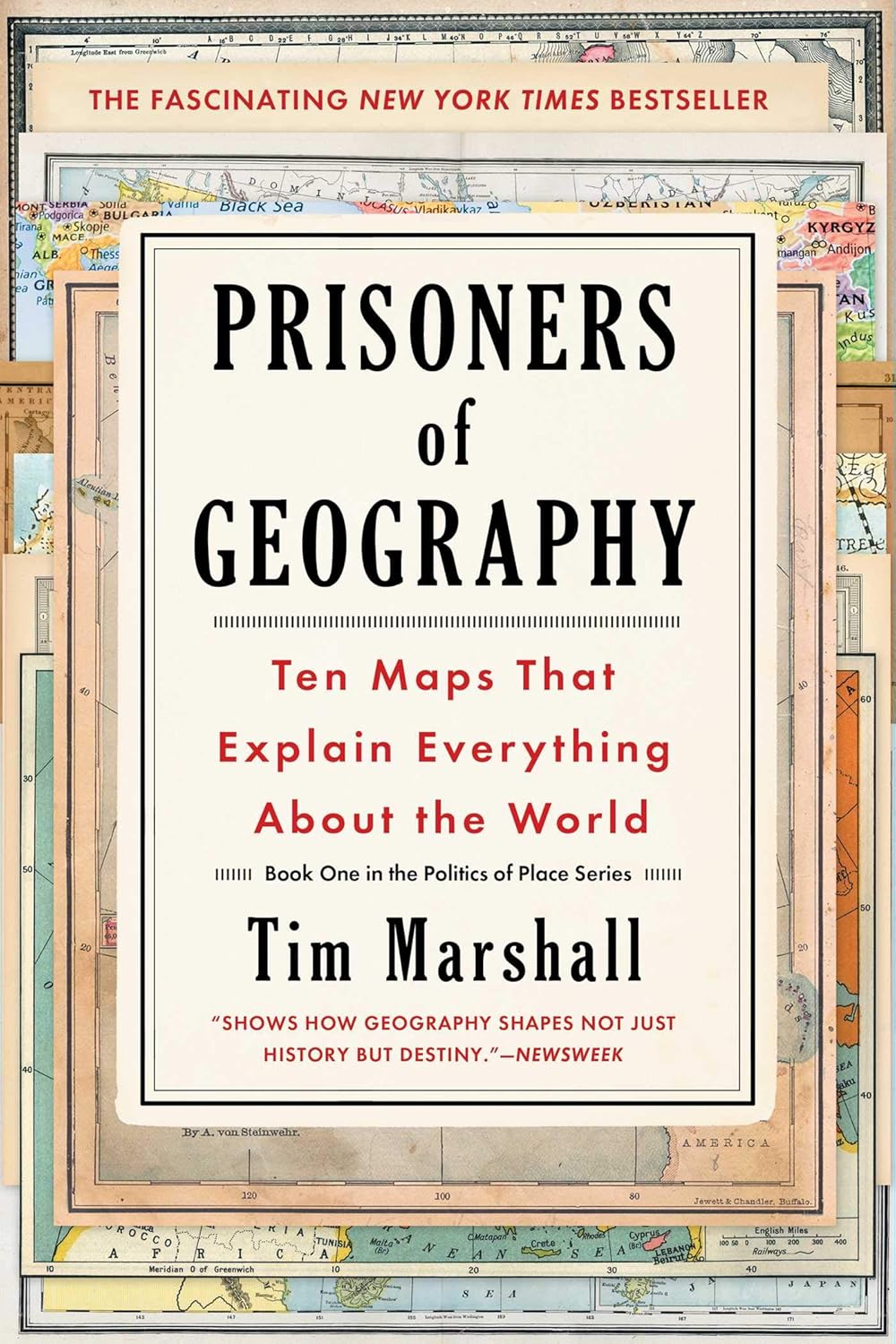
Prisoners of Geography
Tim Marshall


 Apple Books


 47 Min Reading Time
 Audio Version Available
About this book
Geography dictates the destiny of nations. In Prisoners of Geography, journalist Tim Marshall unveils how physical landscapes shape the geopolitical strategies of world leaders. From Russia's icy grip on warm-water ports to China's expanding influence, and the conflicts in the Middle East, understand the geographical realities that underpin global power dynamics. Through ten incisive chapters, featuring maps and insightful analysis, Marshall decodes the past, present, and future, offering essential understanding of world events. Discover the hidden hand of geography and gain the full picture.
Summary of Key Ideas
- •
The Primacy of Geography
Geography as Destiny: This core idea emphasizes that a nation's geography—its mountains, rivers, coastlines, and climate—profoundly shapes its political, economic, and social development. Marshall argues that these physical features create inherent advantages or disadvantages that influence a country's strategic options and limit its choices on the global stage. Understanding a nation's geography is, therefore, crucial to understanding its past, present, and future actions.
- •
Russia's Quest for a Buffer Zone
Russia's Flat Plain Dilemma: Russia's lack of natural barriers on its western and southern borders has historically driven its expansionist policies. The need for a buffer zone to protect its heartland from invasion has been a constant geopolitical imperative, influencing its relations with neighboring countries and its desire for warm-water ports. This geographical vulnerability explains much of Russia's foreign policy throughout history.
- •
America's Fortunate Geography
The American Fortress: The United States benefits from a uniquely advantageous geography. Protected by vast oceans to the east and west, and with navigable rivers facilitating internal trade, the US has enjoyed relative security and fostered economic growth. This geographic isolation has allowed the US to develop without constant threat of invasion, contributing to its rise as a global superpower.
- •
China's Geographic Challenges and Ambitions
China's Mountainous Interior: China's geography, characterized by vast mountain ranges and deserts in the west, has historically limited its internal cohesion and external expansion. The densely populated and fertile eastern plains are the heartland, but the challenges of integrating and controlling the diverse regions within its borders continue to shape China's internal politics and its 'Belt and Road' initiative, aimed at overcoming these geographical constraints.
- •
Europe's Geographic Diversity and Integration
Europe's Fragmented Landscape: Europe's diverse geography, with its many peninsulas, mountains, and rivers, has fostered the development of distinct cultures and nation-states. This fragmentation has led to centuries of conflict, but also to a dynamic interplay of ideas and innovation. The European Union represents an attempt to overcome these geographical divisions through political and economic integration, though challenges remain.
- •
Africa's Rivers of Discord
Africa's Rivers as Divides: Africa's major rivers, rather than serving as unifying forces, often act as barriers to trade and communication due to rapids, waterfalls, and disease-ridden environments. Combined with other geographical challenges such as deserts and dense rainforests, these factors have contributed to the continent's economic and political fragmentation, hindering development and exacerbating conflicts.
- •
The Arctic's Geopolitical Awakening
The Arctic's Emerging Significance: As climate change melts the Arctic ice, new sea routes and resource opportunities are opening up, transforming the region into a potential arena for geopolitical competition. Control over these routes and resources will be crucial in the future, with nations like Russia, the US, and Canada vying for influence in this strategically important region. This highlights how changing geography can reshape international relations.
- •
The Perils of Resource Wealth
Resource Curse: Certain geographical locations are abundant in natural resources. While this could be advantageous, it can also lead to conflict and corruption, known as the resource curse. Nations heavily reliant on exporting raw materials are often vulnerable to price fluctuations and external economic pressures, which can destabilize their economies and political systems. This reliance can hinder diversification and sustainable development.
Chapter Recap

About The Author
Tim Marshall
Main Quotes
"All leaders are constrained by geography."
"Technology may seem to overcome the distances between us in both mental and physical space, but it is easy to forget that the land where we live, work, and obtain our food and water shapes us."
"Geography is the ultimate trump card."
"Geography dictates that Germany must be at the heart of Europe."
"Sometimes you will hear leaders say, “I'm the only person who can hold this nation together.” If that's true then that leader has truly failed to build their nation."
"The land on which we live has always shaped us."
"Geography is a basic invisible framework that shapes how a country develops."
"If you want to understand Russia, you have to understand the vast, flat, exposed plain that stretches from eastern Poland to the Ural Mountains."
"China’s geography makes it the dominant power in Asia."
"For the Russian foreign policy elite … Ukrainian membership in NATO is a red line."
Who Should Read This Book
Readers interested in geopolitics and international relations
Individuals seeking a better understanding of how geography impacts political events
Students of geography, political science, or history
General readers looking for an accessible introduction to geopolitical concepts
Readers who enjoy non-fiction books that explain complex topics in a clear and engaging way
People interested in maps and how they relate to world events
Educators looking for supplementary material for teaching geography or social studies
Parents or educators seeking to introduce children (ages 7-15, based on the children's version) to geopolitics in an accessible way.
Book Summaries Like
Prisoners of Geography



FAQ

Free Access to LitNotes