




 DISCORD
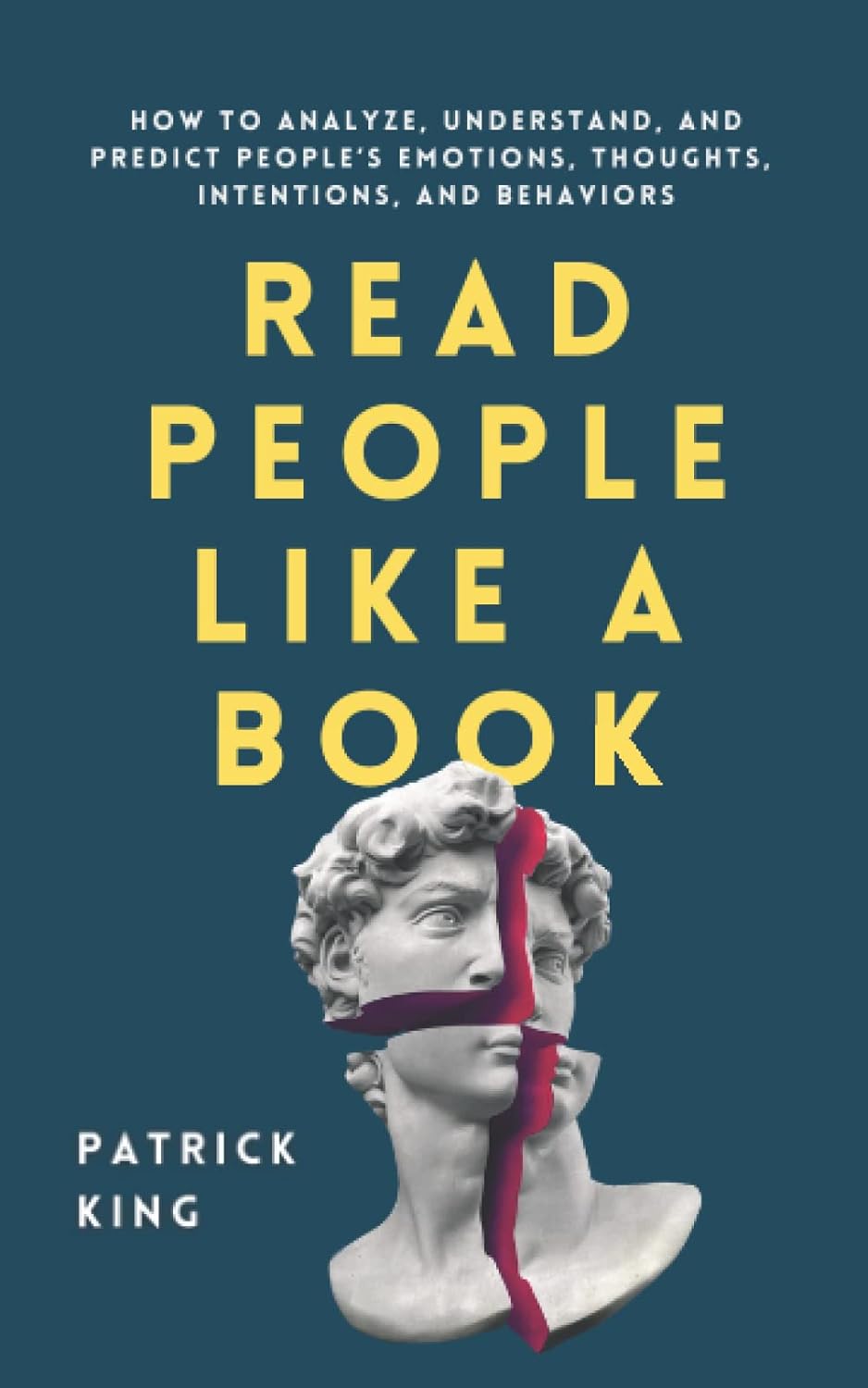
Read People Like a Book: How to Analyze, Understand, and Predict People’s Emotions, Thoughts, Intentions, and Behaviors
Patrick King


 Apple Books


 22 Min Reading Time
 Audio Version Available
About this book
Unlock the secrets of human behavior and become a master of connection. Is it possible to analyze people without them uttering a single word? Absolutely. "Read People Like a Book" provides you with the tools to become a "mind reader" in your everyday life, forging deeper, more meaningful relationships.
This isn't just another book on body language or facial expressions. It's a deep dive into understanding human psychology and nature, offering fresh techniques to detect lies and decode hidden intentions. Discover how our experiences shape who we are, guiding our habits and behaviors in ways we often don't realize.
Learn to:
- Speed read body language and subtle cues.
- Identify deception by understanding context.
- Diagnose personality to understand motivations.
- Connect quickly and deeply with anyone.
- Utilize eye contact to build trust and influence.
Treated as the cheat codes to understanding others, decode people's thoughts and intentions, influence and persuade, and take control of your interactions. Written by international bestselling author and social skills coach, Patrick King, this book combines scientific research, academic insights, and real-world experience to help you understand yourself and others like never before.
Summary of Key Ideas
- •
Mastering Microexpressions
Decoding Microexpressions: The book emphasizes the importance of recognizing microexpressions – fleeting, involuntary facial expressions that reveal a person's true emotions. These subtle cues, often lasting only a fraction of a second, can betray hidden feelings that individuals may be trying to conceal. Learning to identify and interpret these expressions allows for a deeper understanding of a person's emotional state, even when their words suggest otherwise. The book provides practical guidance on how to train oneself to spot these crucial indicators, enhancing one's ability to accurately assess emotional authenticity and uncover underlying sentiments.
- •
The Language of the Body
Understanding Body Language: Beyond facial expressions, the book delves into the significance of body language as a key component of nonverbal communication. It explores how gestures, posture, and body movements can reveal a person's attitudes, intentions, and emotional state. By paying attention to these nonverbal signals, readers can gain valuable insights into what someone is truly thinking and feeling. The book offers a comprehensive guide to interpreting various body language cues, enabling individuals to decipher unspoken messages and improve their ability to connect with others on a deeper level.
- •
The Art of Active Listening
The Power of Active Listening: The book highlights the importance of active listening as a fundamental skill for understanding people. Active listening goes beyond simply hearing words; it involves fully engaging with the speaker, paying attention to both verbal and nonverbal cues, and demonstrating genuine interest and empathy. By practicing active listening, individuals can create a safe and supportive environment for open communication, fostering trust and encouraging others to share their thoughts and feelings more freely. The book provides practical techniques for honing active listening skills, such as paraphrasing, summarizing, and asking clarifying questions.
- •
Detecting Lies and Deceit
Recognizing Deception: A key focus of the book is on identifying the signs of deception. It explores various verbal and nonverbal cues that may indicate someone is lying or withholding information. These indicators can include inconsistencies in their story, changes in body language, and deviations from their normal behavior patterns. While the book cautions against jumping to conclusions based on a single cue, it provides a framework for evaluating multiple indicators to assess the likelihood of deception. By understanding these telltale signs, readers can become more discerning and protect themselves from manipulation.
- •
Personality and Prediction
Predicting Behavior Through Personality: The book discusses how understanding different personality types can aid in predicting behavior. It explores various personality frameworks and explains how certain traits and tendencies are associated with specific behavioral patterns. By identifying an individual's personality type, one can anticipate how they are likely to react in different situations, make decisions, and interact with others. This knowledge can be invaluable in both personal and professional relationships, allowing for more effective communication, collaboration, and conflict resolution. The book provides insights into assessing personality types through observation and interaction.
- •
Creating Connections: Rapport and Trust
Building Rapport and Trust: The book emphasizes the significance of building rapport and trust as essential components of effective interpersonal communication. It explores various techniques for establishing a connection with others, such as finding common ground, demonstrating empathy, and using positive language. By building rapport, individuals can create a sense of mutual understanding and trust, making it easier to influence others, resolve conflicts, and foster strong relationships. The book provides practical strategies for building rapport in various social and professional contexts.
- •
The Power of Emotional Intelligence
Emotional Intelligence and Empathy: The book underscores the importance of emotional intelligence and empathy in understanding and connecting with others. Emotional intelligence involves being aware of one's own emotions and the emotions of others, while empathy is the ability to understand and share the feelings of another person. By developing emotional intelligence and empathy, individuals can better understand the motivations and perspectives of others, leading to more effective communication, stronger relationships, and greater success in both personal and professional endeavors. The book offers guidance on how to cultivate emotional intelligence and practice empathy in everyday interactions.
Chapter Recap

About The Author
Patrick King
Main Quotes
"Firstly, look for clusters of nonverbal signals."
"The eyes are the windows to the soul."
"Our conscious mind is only the tip of the iceberg."
"People tend to assume that others think like they do."
"The more specific your questions the better."
"Being assertive is understanding that you can't control what others may do, but you can control your own behavior."
"The halo effect occurs when we assume that because someone is good at one thing, they'll be good at something else."
"The opposite of the halo effect is the horns effect, where one negative trait colors our perception of everything else about them."
"You don't have to be Sherlock Holmes to read people, but you do have to pay attention."
"Most of our communication is nonverbal."
Who Should Read This Book
Individuals interested in self-improvement and personal development
Professionals in fields requiring strong interpersonal skills (e.g., managers, salespersons, HR professionals)
People seeking to improve their relationships and social interactions
Individuals interested in psychology, body language, and nonverbal communication
Those who want to enhance their understanding of human behavior for personal or professional gain
Readers looking for practical techniques to better understand and predict others' actions
Individuals seeking an advantage in negotiations or social situations
People who want to improve their emotional intelligence and empathy
Students of psychology or related fields
Anyone curious about the science of reading people
Book Summaries Like
Read People Like a Book: How to Analyze, Understand, and Predict People’s Emotions, Thoughts, Intentions, and Behaviors

FAQ

Free Access to LitNotes