




 DISCORD
Refugee
Alan Gratz


 The New York Times Best Sellers


 35 Min Reading Time
 Audio Version Available
About this book
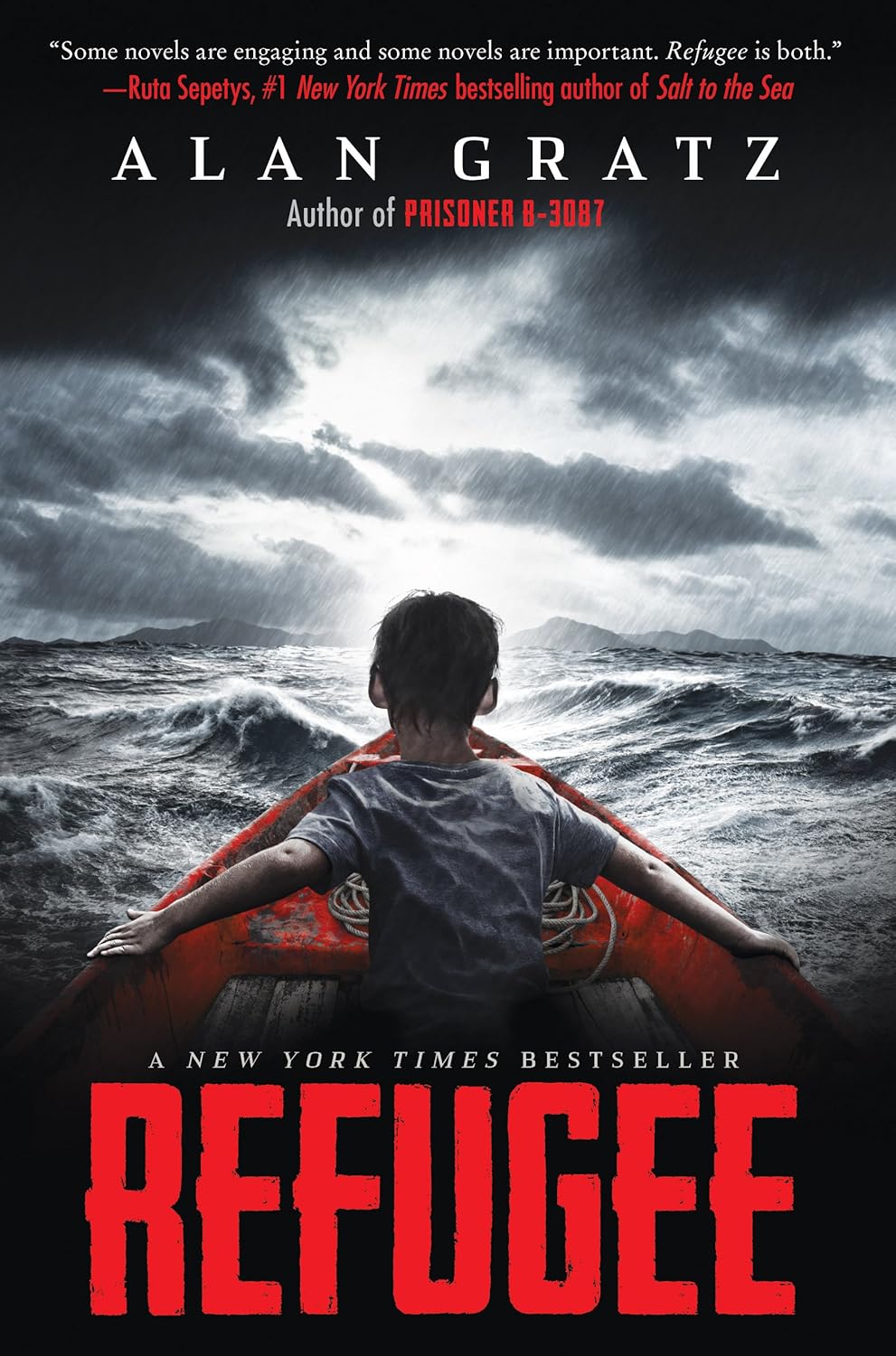
Across continents and decades, three young lives collide in a desperate search for sanctuary.
Josef, a Jewish boy, flees Nazi Germany in the 1930s, the shadow of concentration camps haunting his family's every step as they seek passage to a new world. Isabel, in 1994, braves the perilous waters of the Caribbean, escaping the unrest of Cuba on a makeshift raft, dreaming of American shores. Mahmoud, in 2015, journeys through war-torn Syria toward Europe, his family's survival hinging on each step of their treacherous trek.
Separated by time and place, Josef, Isabel, and Mahmoud face unimaginable dangers—drowning, bombings, betrayal—yet they are united by the universal quest for refuge and the enduring hope for a better tomorrow. In this gripping, action-packed story, discover the shocking connections that bind their fates together, revealing the courage it takes to survive and the meaning of home.
Summary of Key Ideas
- •
The Universal Refugee Experience
The harrowing journeys of Josef, Isabel, and Mahmoud highlight the desperation and resilience of refugees across different eras and geographical locations. Josef, a Jewish boy escaping Nazi Germany in the 1930s, faces the perils of persecution and displacement. Isabel, fleeing Cuba in 1994 due to political and economic instability, confronts the dangers of the sea and the uncertainty of finding asylum. Mahmoud, a Syrian boy in 2015, endures the horrors of war and the arduous trek to safety in Europe. Their interwoven stories underscore the universal refugee experience, emphasizing the courage, determination, and resourcefulness required to survive unimaginable circumstances. These parallel narratives serve to connect readers emotionally to the characters' struggles, fostering empathy and understanding.
- •
The Profound Impact of Loss
Each protagonist confronts profound loss, not just of their homes and possessions, but also of their sense of security and normalcy. Josef loses his innocence as he witnesses the escalating brutality of the Nazi regime. Isabel sacrifices cherished belongings to ensure her family's survival, grappling with the guilt of leaving her home. Mahmoud learns to become invisible to avoid attracting unwanted attention, suppressing his emotions to cope with the trauma around him. The shared experience of loss underscores the devastating impact of displacement on individuals and families, emphasizing the psychological toll of being uprooted and forced to rebuild their lives in unfamiliar and often hostile environments. This theme illustrates how refugees carry the burden of their past while striving for a better future.
- •
Resilience and the Will to Survive
Despite facing unimaginable challenges, Josef, Isabel, and Mahmoud demonstrate remarkable resilience and resourcefulness. Josef's growing maturity allows him to protect his family. Isabel's musical talent becomes a form of currency and a source of hope. Mahmoud's newfound assertiveness enables him to navigate dangerous situations and advocate for his family. Their individual strengths, combined with the support of their families and communities, highlight the human capacity to endure hardship and adapt to new circumstances. By showcasing their resilience, the book challenges stereotypes of refugees as helpless victims, instead portraying them as resourceful survivors who actively shape their own destinies.
- •
The Enduring Power of Family
Family bonds are tested and strengthened as the characters navigate perilous journeys. Josef's father's mental deterioration places a heavy burden on the family. Isabel's family faces internal conflicts as they struggle to survive. Mahmoud's family is torn apart by the war in Syria, forcing them to make difficult choices. Despite these challenges, the families remain committed to protecting and supporting one another. The importance of family is a recurring motif throughout the novel, emphasizing the crucial role of kinship and solidarity in overcoming adversity. These familial relationships provide a lifeline for the refugees, offering emotional support, practical assistance, and a sense of belonging in a world turned upside down.
- •
Navigating Moral Ambiguity
The protagonists' journeys are fraught with moral dilemmas, forcing them to make difficult choices with far-reaching consequences. Josef grapples with the moral implications of his father's actions. Isabel must decide whether to trust strangers who offer assistance. Mahmoud learns to balance his desire for safety with his responsibility to help others. These ethical quandaries highlight the complexities of the refugee experience, where survival often requires making agonizing decisions with no easy answers. By exploring these moral ambiguities, the book encourages readers to consider the challenges refugees face and to question their own assumptions about right and wrong in extreme circumstances.
- •
The Cycles of History and Displacement
The cyclical nature of history is underscored through the parallel narratives of Josef, Isabel, and Mahmoud, highlighting the recurring patterns of persecution, displacement, and the search for refuge. Josef's experience fleeing Nazi Germany echoes the struggles of Jewish refugees throughout history. Isabel's escape from Cuba mirrors the experiences of countless individuals seeking freedom from oppressive regimes. Mahmoud's journey from war-torn Syria reflects the ongoing refugee crisis in the 21st century. By juxtaposing these stories, the book emphasizes the enduring relevance of the refugee experience and the importance of learning from the past to prevent future atrocities. This historical perspective serves as a call to action, urging readers to confront the root causes of displacement and to advocate for policies that protect refugees.
- •
The Significance of Compassion and Empathy
Acts of kindness and compassion, both large and small, play a crucial role in the refugees' survival. From strangers who offer food and shelter to aid workers who provide medical assistance, these acts of humanity offer glimmers of hope amidst the darkness. The book highlights the importance of empathy and solidarity in responding to the refugee crisis, emphasizing the power of individual actions to make a difference in the lives of others. By showcasing these acts of compassion, the book inspires readers to consider how they can contribute to creating a more welcoming and inclusive society for refugees.
- •
Preserving Identity Amidst Displacement
The theme of identity is explored through the characters' struggle to maintain their sense of self in the face of displacement and cultural disruption. Josef grapples with his Jewish identity in a world increasingly hostile to Jews. Isabel clings to her Cuban heritage as she adapts to life in a new country. Mahmoud learns to embrace his Syrian identity while navigating the challenges of being a refugee in Europe. The book emphasizes the importance of preserving one's cultural heritage while also adapting to new environments. This theme underscores the complex process of integration and the need for societies to respect and value the cultural identities of refugees.
Chapter Recap

About The Author
Alan Gratz
Alan Gratz has wanted to be a writer ever since he was a kid. He went to the University of Tennessee to study creative writing, and ten years and more than sixty-five rejections later he was finally able to get his very first book published. Now Alan is the author of fifteen books for young readers, many of which have won state awards, appeared on the New York Times bestseller list, and been voted their favorite book of the year by students and librarians. ([source][1]) Photo by Wes Stitt [1]: https://www.alangratz.com/about/
Main Quotes
"You can live as a ghost, waiting for death to come, or you can dance."
"We stick together. We keep our family whole, no matter what."
"Now is not the time for fear."
"Hope was a dangerous thing."
"If you were invisible, the bad people couldn't hurt you, that was true. But the good people couldn't help you, either."
"Better to stay and face the devil you know than run and face the devil you don't."
"Sometimes, the best way to help someone is to give them a way to help themselves."
"Head down, hoodie up, eyes on the ground. Be unimportant. Blend in. Disappear."
"He had traded his violin for a ticket to freedom."
"All he wanted was a place to be safe."
Who Should Read This Book
Middle grade readers (ages 10-14)
Young adults interested in historical fiction
Educators looking for books to teach about empathy, history, and the refugee crisis
Readers interested in stories about refugees and displaced people
Readers who enjoy fast-paced, suspenseful narratives
Adults who want an accessible introduction to the topic of refugees
Parents and caregivers looking for books to discuss difficult topics with children
Book Summaries Like
Refugee



FAQ

Free Access to LitNotes