




 DISCORD
Restart
Gordon Korman


 The New York Times Best Sellers


 68 Min Reading Time
 Audio Version Available
About this book
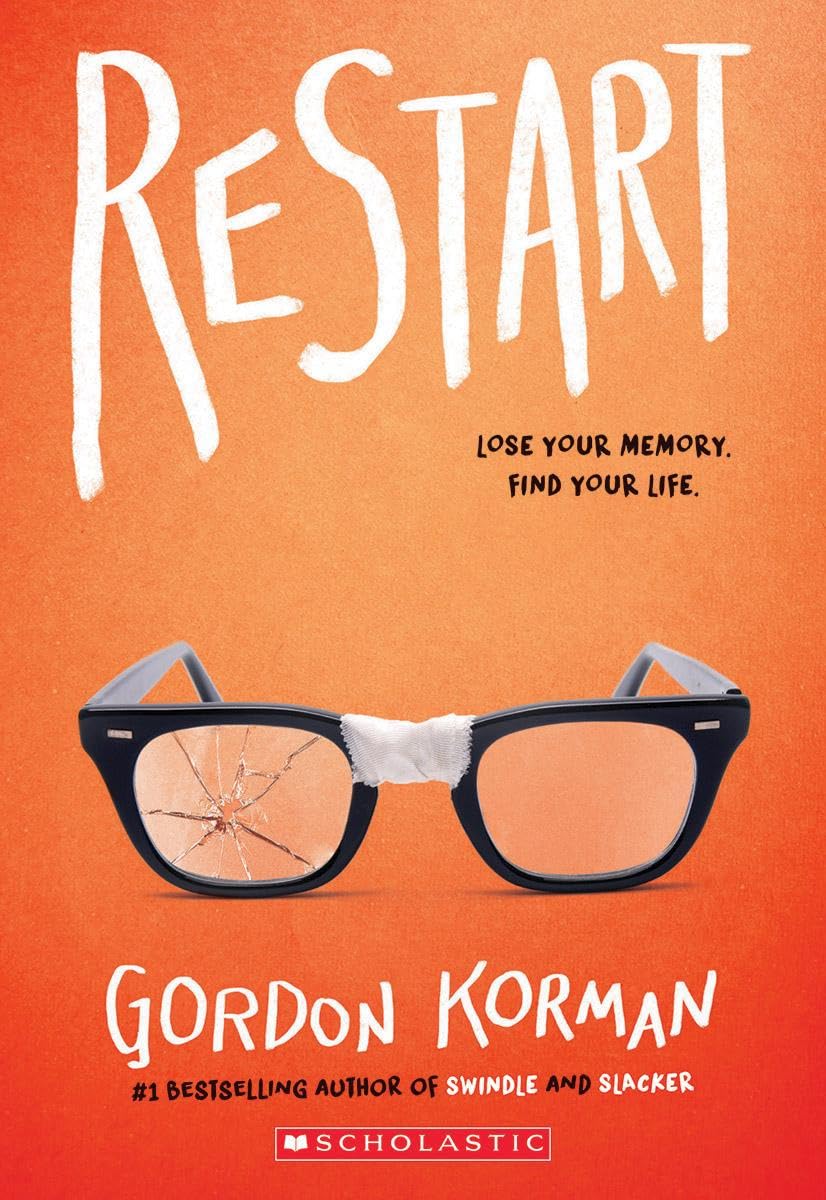
When Chase wakes up in the hospital, he doesn't remember anything—not the fall from the roof, not hitting his head, not even his own name. He's got a clean slate, but as he returns to school, he discovers the old Chase was far from innocent. Some kids revere him, others fear him, and one girl makes her feelings known with a frozen yogurt facial.
Now, Chase is caught in a battle between who he was and who he wants to be. Can he overcome his past, or will he forever be defined by the bully he no longer remembers? In this compelling story about second chances, Chase must decide: who is he going to be?
Summary of Key Ideas
- •
Rebuilding Identity After Amnesia
The book explores the theme of identity and how it is shaped by memory and experience. Chase's amnesia forces him to re-evaluate who he is without the baggage of his past actions. He has the opportunity to redefine himself, but he also struggles with the question of whether his true self is inherently good or if his past behavior was a genuine reflection of his character. This forces readers to consider how much of their own identities are tied to their memories and reputations.
- •
The Power of Redemption
A central theme is the possibility of redemption and second chances. Chase, initially a bully, is given a clean slate. The story examines whether people can truly change and overcome their past mistakes. It highlights the importance of taking responsibility for one's actions and actively working to become a better person. Chase's journey encourages readers to believe in the potential for personal growth and transformation, even after making serious errors.
- •
The Importance of Forgiveness
Forgiveness, both of oneself and others, plays a critical role. Chase must confront the hurt he inflicted on others before his amnesia and seek their forgiveness. He also needs to forgive himself for his past actions in order to move forward. The story emphasizes that forgiveness is not always easy but is essential for healing and building positive relationships. Through Chase's interactions with his former victims, the book explores the complexities of forgiveness and its transformative power.
- •
The Destructive Nature of Bullying
The story highlights the negative impacts of bullying and the importance of empathy. Before his amnesia, Chase was a bully, and the book shows the pain and suffering he caused others. As he recovers, he begins to understand the consequences of his actions and develops empathy for his victims. The book encourages readers to consider the perspectives of others and to stand up against bullying in all its forms. It underscores the idea that true strength lies in kindness and compassion, not in dominance and aggression.
- •
The Value of True Friendship
Friendship and loyalty are vital themes. As Chase navigates his new life, he forms unexpected friendships with people he previously bullied or ignored. These friendships help him to grow and change, providing support and guidance. The book explores the complexities of friendship, including loyalty, trust, and acceptance. It also shows how friendships can be a powerful force for good, helping individuals overcome challenges and become better versions of themselves. Chase learns the true meaning of friendship.
- •
Redefining Heroism
The novel suggests that heroism isn't always about grand gestures, but can be found in everyday acts of kindness and courage. Chase's journey involves him making choices to help others, even when it means going against the expectations of his former friends or facing social consequences. The book redefines heroism as doing what is right, even when it is difficult, and standing up for those who are vulnerable. This promotes the idea that anyone can be a hero by making positive choices in their daily lives.
- •
Change as a Constant
Change is a really important theme in the book. Amnesia is the catalyst to change Chase's life and perception of the world around him. Readers see Chase grapple with who he was and who he wants to be, showcasing that people are not stuck in their ways, and there is always room to change for the better. This theme encourages reflection and shows that positive changes are possible with effort and self-awareness.
Chapter Recap

About The Author
Gordon Korman
Main Quotes
""It's like reaching into a pocket for something that should be there but isn't. Only that something isn't keys or a phone; it's your whole life.""
""Not remembering anybody. It's like I'm surrounded by all these people, but I'm still alone.""
"“Falling off a roof doesn’t make me a hero.”"
"“They’re always the enemy when they’re shooting at you, kid. But a dead man doesn’t care what uniform he’s wearing.""
"“When I got amnesia, I lost thirteen years of myself. I have to replace those memories using what I can pick up from other people.""
""I remember falling. At least I think I do. Or maybe that's just because I know I fell.""
""I've always seen the good in you, Chase. But you've had your moments.""
"“Listen to yourself. Like you'd ever put another human being through a wood chipper!”"
""It's bewildering, disorienting, and scary.""
""I sprint harder, accelerating onto the sidewalk, outpacing even the most intense drills from practice. It's no problem escaping Aaron and Bear.”"
Who Should Read This Book
Middle grade readers (ages 8-12)
Readers interested in stories about bullying, empathy, and redemption
Kids dealing with issues of identity and self-discovery
Fans of Gordon Korman's writing style
Readers who enjoy books with themes of second chances and starting over
Educators looking for books to discuss social themes in the classroom
Parents seeking books with positive messages about character development
Book Summaries Like
Restart




FAQ

Free Access to LitNotes