




 DISCORD
Rich Dad Poor Dad
Robert T. Kiyosaki


 Amazon Best Sellers
 Barnes & Noble Bestsellers


 31 Min Reading Time
 Audio Version Available
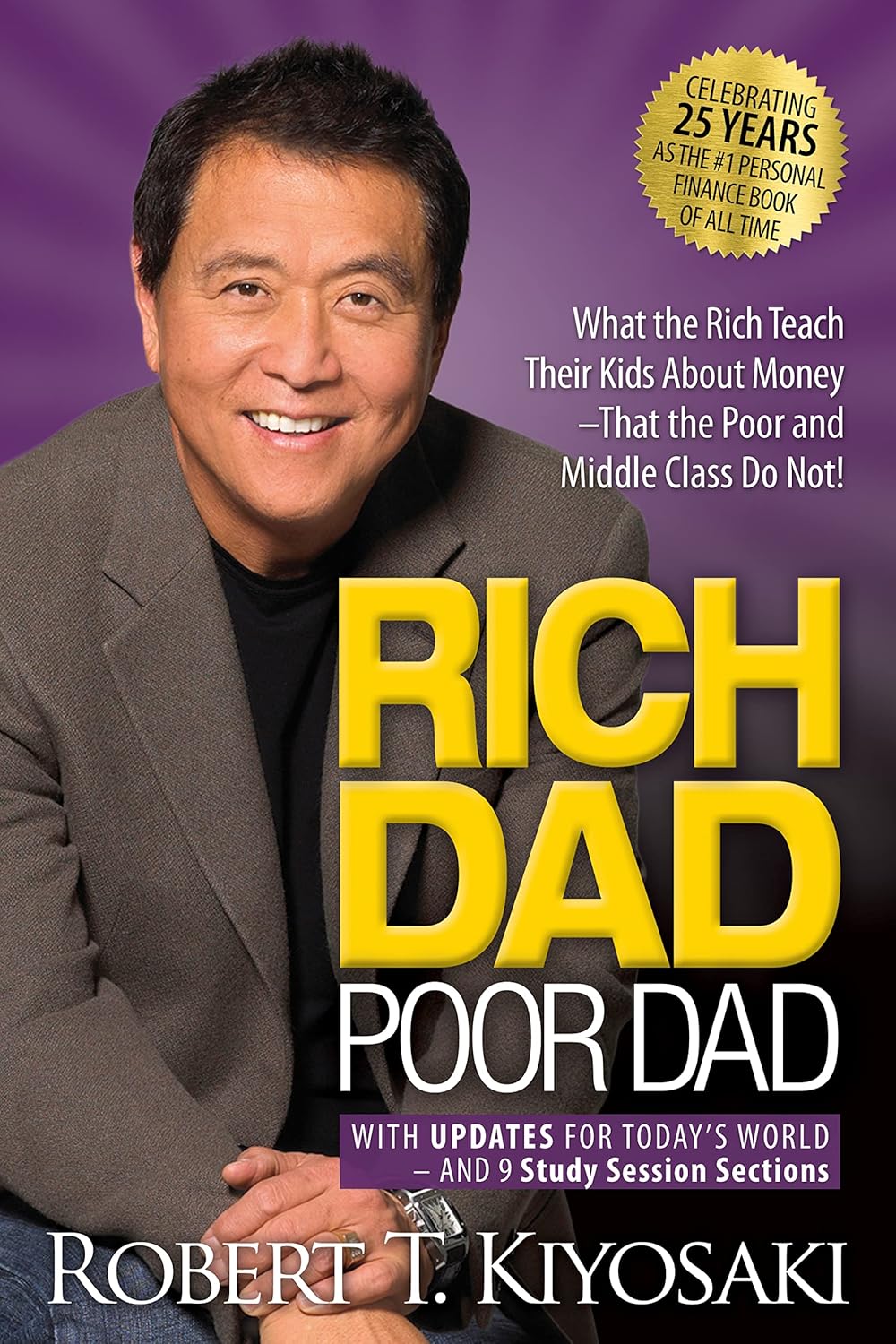
About this book
In "Rich Dad Poor Dad," Robert Kiyosaki challenges conventional wisdom about money, revealing the secrets the wealthy teach their children that the poor and middle class do not. Through the contrasting perspectives of his own educated but struggling father (poor dad) and his best friend's financially savvy father (rich dad), Kiyosaki shatters the myth that you need a high income to become rich.
This personal finance classic explores the importance of financial literacy, teaching you how to make your money work for you instead of working for money. Kiyosaki dismantles the traditional mindset of working hard, saving, and investing in the long term, offering a new paradigm that emphasizes assets, financial intelligence, and entrepreneurial thinking.
Discover how to break free from the rat race, understand the difference between assets and liabilities, and develop the skills to achieve financial freedom. "Rich Dad Poor Dad" is more than just a book; it's a roadmap to financial independence, empowering you to take control of your financial future and create lasting wealth.
Summary of Key Ideas
- •
Make Money Work for You
The rich don't work for money; instead, they have money work for them. This fundamental shift in mindset involves acquiring assets that generate passive income, such as real estate, stocks, and businesses, rather than relying solely on a paycheck from a job. Kiyosaki argues that focusing on acquiring assets that produce cash flow is the key to long-term wealth and financial freedom. By understanding how money truly works and making informed investment decisions, individuals can escape the cycle of living paycheck to paycheck and build a secure financial future.
- •
The Importance of Financial Literacy
Financial literacy is crucial for building wealth. Kiyosaki emphasizes understanding accounting, investing, and markets. He contrasts this with traditional schooling, which often overlooks these essential skills. Learning to read financial statements, understanding the difference between an asset and a liability, and knowing how to manage risk are vital components of financial intelligence. Developing financial literacy empowers individuals to make informed decisions about their money and investments, leading to greater financial success.
- •
Assets vs. Liabilities
Understanding the difference between assets and liabilities is paramount. Kiyosaki defines an asset as something that puts money in your pocket, while a liability takes money out. Many people mistake their home for an asset, but Kiyosaki argues that unless it generates income, it's a liability due to mortgage payments, property taxes, and maintenance costs. The key is to focus on acquiring assets that generate income and minimizing liabilities that drain wealth. This includes investing in businesses, stocks, bonds, and income-generating real estate.
- •
Invent Money
The rich invent money. Kiyosaki advocates for financial creativity and innovation. He encourages readers to look for opportunities to create wealth through entrepreneurship, investment, and problem-solving. Instead of passively accepting financial limitations, individuals should actively seek ways to generate income and build assets. This involves thinking outside the box, taking calculated risks, and being resourceful in finding and creating financial opportunities. Overcoming the fear of failure and embracing a creative mindset are essential for achieving financial success.
- •
Overcome Fear and Doubt
Overcoming fear and self-doubt is essential for achieving financial success. Kiyosaki argues that fear of losing money often prevents people from taking the necessary risks to build wealth. He encourages readers to confront their fears, learn from their mistakes, and develop the courage to pursue their financial goals. Taking calculated risks, rather than avoiding risk altogether, is a key component of building wealth. By developing a strong financial mindset and overcoming the fear of failure, individuals can unlock their potential and achieve financial freedom.
- •
Understand the Power of Taxes
Taxes significantly impact wealth accumulation, and understanding tax laws is crucial. Kiyosaki highlights how the rich use corporations and other legal structures to minimize their tax burden, while employees often pay a higher percentage of their income in taxes. Learning about tax-advantaged investments and business strategies can help individuals keep more of their money and accelerate their wealth-building efforts. By understanding how taxes work and taking proactive steps to minimize their impact, individuals can significantly improve their financial outcomes.
- •
Escaping the Rat Race
The Rat Race describes the cycle of working to pay bills without ever achieving financial freedom. Many people work hard to earn a salary, but their expenses increase in tandem, leaving them trapped in a cycle of debt and financial insecurity. Escaping the Rat Race involves building assets that generate passive income, reducing liabilities, and gaining financial literacy. This shift in mindset and financial strategy allows individuals to break free from the cycle of working for money and begin building wealth that provides true financial freedom.
- •
The Importance of Continuous Learning
Rich Dad Poor Dad emphasizes the importance of continuous learning and seeking knowledge beyond traditional education. Kiyosaki encourages readers to attend seminars, read books, and seek mentorship from financially successful individuals. By continuously expanding their financial knowledge and staying informed about market trends and investment opportunities, individuals can make better decisions and increase their chances of building wealth. Lifelong learning is essential for adapting to changing economic conditions and maintaining a competitive edge in the world of finance.
- •
Mind Your Own Business
Mind your own business. Kiyosaki stresses the importance of focusing on building your own assets rather than solely relying on your employer or career. This means investing time and resources into creating or acquiring assets that generate passive income, such as starting a side business, investing in real estate, or purchasing stocks. By prioritizing your own financial goals and taking control of your financial future, you can build long-term wealth and achieve financial independence.
Chapter Recap

About The Author
Robert T. Kiyosaki
Main Quotes
"The rich don't work for money."
"The poor and the middle class work for money. The rich have money work for them."
"It's not how much money you make, but how much money you keep."
"Winners are not afraid of losing. But losers are. Failure is part of the process of success."
"The single most powerful asset we all have is our mind."
"Intelligence solves problems and produces money. Money without financial intelligence is money soon gone."
"There is a difference between being poor and being broke. Broke is temporary. Poor is eternal."
"The love of money is the root of all evil."
"You're only poor if you give up."
"The fear of being different prevents most people from seeking new ways to solve their problems."
Who Should Read This Book
Young adults just starting their careers
Individuals seeking financial independence
People interested in learning about investing and wealth building
Those looking to change their mindset about money
Beginners in the world of finance and investing
Entrepreneurs and small business owners
Readers interested in personal finance advice presented through storytelling
Individuals dissatisfied with traditional financial advice
People seeking alternative perspectives on money and career
Those wanting to teach their children about financial literacy
Book Summaries Like
Rich Dad Poor Dad
FAQ

Free Access to LitNotes