




 DISCORD
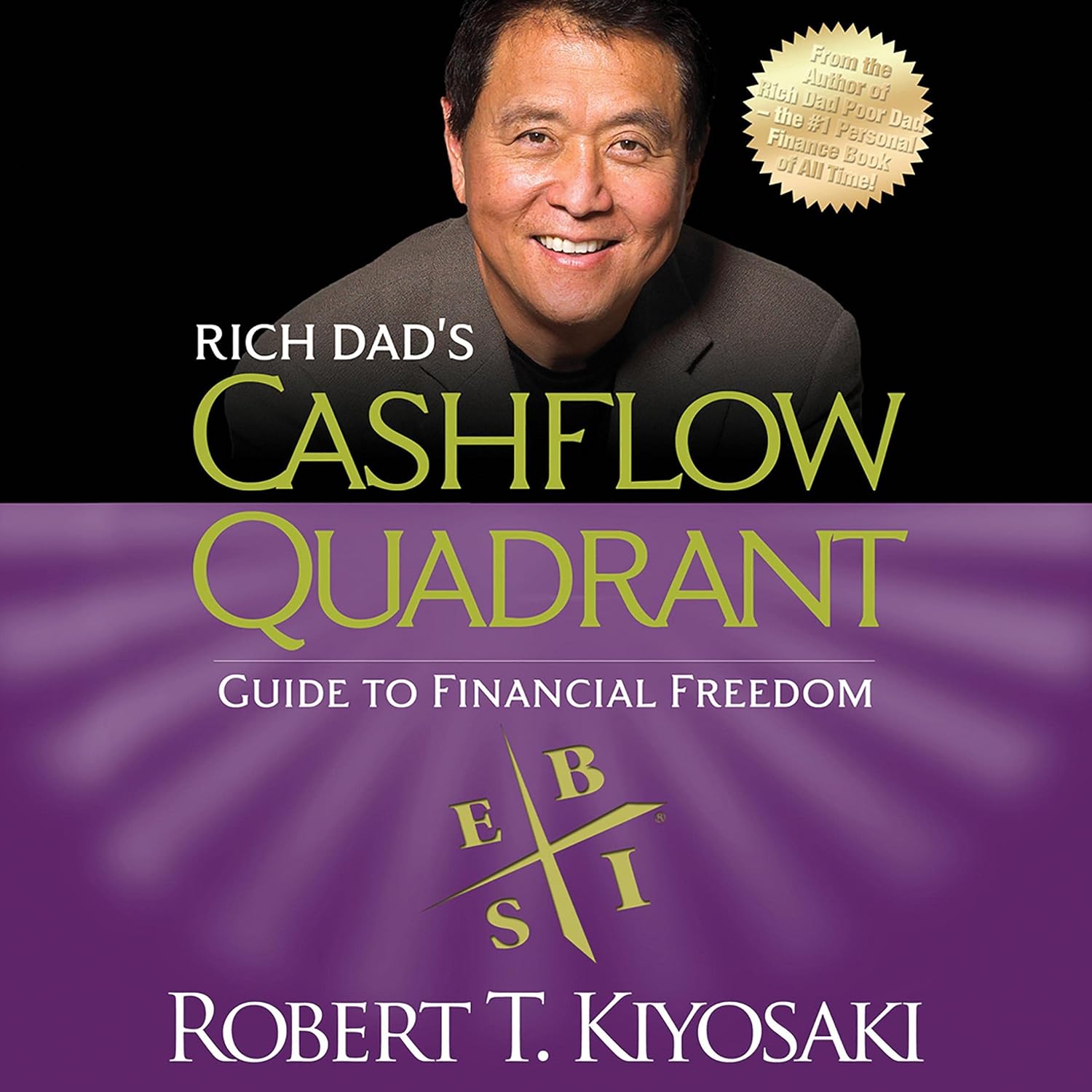
Rich Dad's Cashflow Quadrant
Robert T. Kiyosaki


 Amazon Best Sellers
 Apple Books


 64 Min Reading Time
 Audio Version Available
About this book
Why do some people work less, earn more, and pay less in taxes? Is it luck, or a matter of knowing the rules of the game? In Rich Dad's CASHFLOW Quadrant, Robert Kiyosaki reveals the secrets to financial freedom by exploring the four different types of people who make up the world of business: employees, the self-employed, business owners, and investors.
Learn why the mindset of an employee differs vastly from that of a business owner, and how these distinctions impact your earning potential. Discover how to navigate the CASHFLOW Quadrant to take control of your financial future, move beyond job security, and learn the key to building wealth.
Whether you're an employee seeking a path to entrepreneurship, a business owner ready to scale, or an investor looking for proven strategies, this book will empower you to break free from the rat race and master the game of money.
Summary of Key Ideas
- •
Understanding the Cashflow Quadrant
The Cashflow Quadrant is the foundation of Kiyosaki's teachings, representing four types of people in the business world: Employees (E), Self-Employed (S), Business Owners (B), and Investors (I). The E and S quadrants represent trading time for money, often leading to a financial plateau. Kiyosaki argues that true financial freedom lies in the B and I quadrants, where income is generated through business systems and investments that work for you. Understanding this quadrant is crucial because it highlights different mindsets, tax implications, and paths to wealth creation. The book encourages readers to identify where they currently are and strategically plan their transition to the right side (B and I) for long-term financial success.
- •
Shifting from Employee to Entrepreneurial Mindset
A key message in the book is the importance of shifting your mindset from an employee to an entrepreneur or investor. This shift involves embracing risk, learning financial intelligence, and creating assets that generate passive income. Kiyosaki emphasizes that relying solely on a paycheck limits your financial potential. By understanding the different mindsets of those in each quadrant, readers can begin to adopt the beliefs and habits necessary for building wealth. This includes taking calculated risks, continuously learning about finance and investing, and developing the mindset of a business owner who creates systems and leverages other people's time and money.
- •
The Importance of Financial Literacy
Financial literacy is presented as a crucial skill for anyone seeking financial freedom. Kiyosaki advocates for understanding financial statements, including income statements, balance sheets, and cash flow statements. Knowing how money moves through these statements allows individuals to make informed decisions about investments and business ventures. By mastering financial literacy, readers can identify opportunities, mitigate risks, and control their financial destiny. This knowledge enables them to differentiate between assets and liabilities, understand how to build wealth, and avoid common financial pitfalls.
- •
Assets vs. Liabilities
Kiyosaki distinguishes between assets and liabilities, defining an asset as something that puts money in your pocket, while a liability takes money out. He emphasizes that many people mistake liabilities for assets, such as a house or a car, which often incur expenses rather than generate income. Accumulating true assets, such as businesses, real estate, stocks, and bonds, is crucial for building wealth and achieving financial independence. The book encourages readers to focus on acquiring assets that generate passive income and reduce liabilities that drain their resources.
- •
Building Businesses and Investing for Passive Income
Building businesses and investing are presented as key strategies for achieving financial freedom. Kiyosaki advocates for creating businesses that generate passive income, meaning income that continues to flow in even when you're not actively working. He also emphasizes the importance of investing in assets that produce cash flow, such as real estate or dividend-paying stocks. By building businesses and investing wisely, individuals can create multiple streams of income and reduce their reliance on a single job or paycheck. This approach provides greater financial security and allows for more freedom and flexibility in life.
- •
Understanding and Leveraging Tax Laws
Taxes play a significant role in wealth creation, and Kiyosaki highlights the differences in how taxes affect individuals in different quadrants. Employees and the self-employed often pay the highest percentage of their income in taxes, while business owners and investors have more opportunities to reduce their tax burden through deductions and tax-advantaged investments. Understanding tax laws and strategies is essential for maximizing wealth and minimizing tax liabilities. Kiyosaki encourages readers to learn about tax strategies available to business owners and investors and to structure their finances in a way that minimizes their tax burden.
Chapter Recap

About The Author
Robert T. Kiyosaki
Main Quotes
"The main reason people struggle financially is because they have spent years in school but learned nothing about money."
"The single most powerful asset we all have is our mind."
"Financial intelligence is simply having more options."
"The rich focus on their asset columns while everyone else focuses on their income statements."
"It's not how much money you make, but how much money you keep, how hard it works for you, and how many generations you can keep it for."
"The love of money is the root of all kinds of evil. The lack of money is the root of all evil."
"There is always risk, so learn to manage risk instead of avoiding it."
"If you want to be rich, simply spend your life buying assets."
"Success is a lousy teacher. It seduces smart people into thinking they can't lose."
"The world is filled with brilliant, talented people who are struggling financially."
Who Should Read This Book
Individuals seeking financial independence
People looking to change careers or start a business
Those interested in learning about investing and wealth building
Employees and self-employed individuals wanting to move to the business owner or investor quadrants
Individuals dissatisfied with traditional employment and seeking alternative income streams
Readers of "Rich Dad Poor Dad" interested in expanding their knowledge
People seeking practical advice on how to improve their financial literacy
Individuals wanting to understand different income-generating strategies
Those looking for a guide to navigate the world of finance and investment
Book Summaries Like
Rich Dad's Cashflow Quadrant
FAQ

Free Access to LitNotes