




 DISCORD
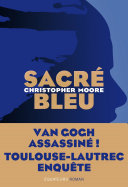
Sacré Bleu
Christopher Moore


 Goodreads Choice Awards


 124 Min Reading Time
 Audio Version Available
About this book
In the vibrant, intoxicating world of 1890s Paris, Vincent van Gogh's supposed suicide is a canvas splattered with doubt. Enter Lucien Lessard, a baker by trade and a painter by passion, haunted by the mystery of his friend's death and obsessed with Juliette, a muse of magnetic allure who has gifted him a tube of an impossibly rare blue. By his side is the irrepressible bon vivant Henri Toulouse-Lautrec, ready to trade his easel for a detective's magnifying glass.
Together, this unlikely duo embarks on a surreal odyssey, a riotous journey through the heart of the Impressionist art scene, from bohemian Montmartre to the scandalous allure of the Parisian underworld. They'll rub shoulders with Renoir, Pissarro, Monet, and Manet, all while unraveling a plot that’s as intoxicating as absinthe and as dangerous as a forbidden pigment. Is Vincent's death a tragedy, or is it a masterstroke of inspiration in disguise? Christopher Moore, the New York Times bestselling author known for his fearless take on history, religion, and everything in between, delivers a hilarious, thrilling, and utterly unforgettable tale. Sacré Bleu is a love story, a mystery, and a vibrant portrait of artistic genius, all painted with Christopher Moore’s signature irreverent wit and a deep, abiding love for the color blue.
Summary of Key Ideas
- •
The Mystery of Van Gogh's Death
The novel begins with the mysterious death of Vincent van Gogh, which is ruled a suicide, but raises numerous questions. Lucien Lessard, a young baker and painter, witnesses Van Gogh's final moments, sparking his investigation into the circumstances surrounding his demise. This event acts as a catalyst, launching Lucien into a world of art, intrigue, and secrets. The ambiguity surrounding Van Gogh's death serves as the central mystery driving the plot, compelling Lucien and his companions to uncover the truth behind the events leading to the artist's tragic end, and revealing a larger conspiracy connected to the world of art and color.
- •
The Power and Allure of the Color Blue
The color blue, specifically ultramarine, plays a central role in the novel, symbolizing both artistic inspiration and a dangerous obsession. The mysterious Colorman, a recurring figure throughout art history, is the source of this exquisite pigment. The color's allure drives artists to create masterpieces but also leads them down paths of madness and despair. Moore explores the idea that certain colors possess a unique power, capable of influencing emotions, inspiring creativity, and even driving individuals to extremes. The quest for the perfect blue becomes a metaphor for the pursuit of artistic perfection and the sacrifices artists make for their craft.
- •
Satirical Exploration of the Impressionist Era
Moore uses satire to paint a humorous and exaggerated portrait of the Impressionist art scene in late 19th-century Paris. Famous artists like Toulouse-Lautrec, Monet, Renoir, and Degas are depicted with their eccentricities and rivalries amplified for comedic effect. The novel pokes fun at the artistic movements, the critics, and the overall culture of the time. Through witty dialogue and absurd situations, Moore satirizes the pretentiousness and the sometimes-irrational passions that fueled the art world. This satirical lens allows readers to engage with historical figures and events in an entertaining and thought-provoking way.
- •
The Artist's Muse and the Price of Creativity
The character of Bleu, the Colorman's assistant, embodies the concept of the artist's muse. She serves as a source of inspiration and fascination for the Impressionist painters, driving their creativity and influencing their work. However, her presence also brings an element of danger and unpredictability, suggesting that artistic inspiration can come at a cost. The novel explores the idea that true creativity often requires sacrifice, obsession, and a willingness to push boundaries, even if it means flirting with madness. Bleu represents the complex and often tumultuous relationship between artists and their muses.
- •
The Immortality of Art
Sacré Bleu touches upon the theme of art's enduring legacy and its ability to transcend time. The Colorman, an immortal figure who has influenced art throughout history, represents the idea that artistic expression can achieve a form of immortality. The masterpieces created by the Impressionists, fueled by the Colorman's blue, continue to captivate audiences long after the artists' deaths. Moore suggests that art has the power to preserve emotions, ideas, and experiences, allowing future generations to connect with the past and appreciate the enduring beauty of human creativity. The novel implies that artists, through their work, can leave a lasting mark on the world.
- •
Love and Redemption in the Face of Obsession
Amidst the art mystery and historical satire, Sacré Bleu also explores themes of love and redemption. Lucien's relationship with Juliette provides a grounding force in his life, offering him solace and support as he navigates the treacherous world of art and secrets. His journey is not only about solving the mystery of Van Gogh's death but also about finding love and purpose in his own life. The novel suggests that even in the face of obsession and madness, love can offer a path to redemption and a renewed appreciation for the beauty and joy of life. Lucien's transformation is a testament to the power of human connection and the importance of finding balance between passion and reason.
Chapter Recap

About The Author
Christopher Moore
Main Quotes
"Art is a lie, and painters are its liars."
"Blue is the only color which maintains its own character in all its tones... it will always stay blue."
"He wouldn't remember the moment, but the feeling would come back to him from time to time, when he encountered blue."
"Seurat had invented and perfected a technique, pointillism, based on solid color theory, but now he..."
"Oh la la, quelle surprise, and zut alors!"
"A delectable confection of intrigue, passion, and art history – with cancan girls, baguettes, and fine..."
"They are between. Not what they used to be, and not what they have become. In those times, they are nothing. And I am invisible, and I am..."
"Absolutely nothing is sacred to Christopher Moore."
"The phenomenally popular, New York Times bestselling satirist whom the Atlanta Journal-Constitution calls..."
"It was an excellent supernatural mystery set in Paris and involving great artists and their muses. But it is not very funny."
Who Should Read This Book
Fans of Christopher Moore's signature blend of humor, satire, and the absurd
Readers interested in historical fiction with a quirky, fictionalized twist
Those who enjoy mysteries with an artistic or cultural angle
Individuals who appreciate irreverent takes on historical figures and art movements
Fans of "Comedy d'Art" and unconventional storytelling
Book Summaries Like
Sacré Bleu
FAQ

Free Access to LitNotes