




 DISCORD
'Salem's Lot
Stephen King


 Apple Books


 110 Min Reading Time
 Audio Version Available
About this book
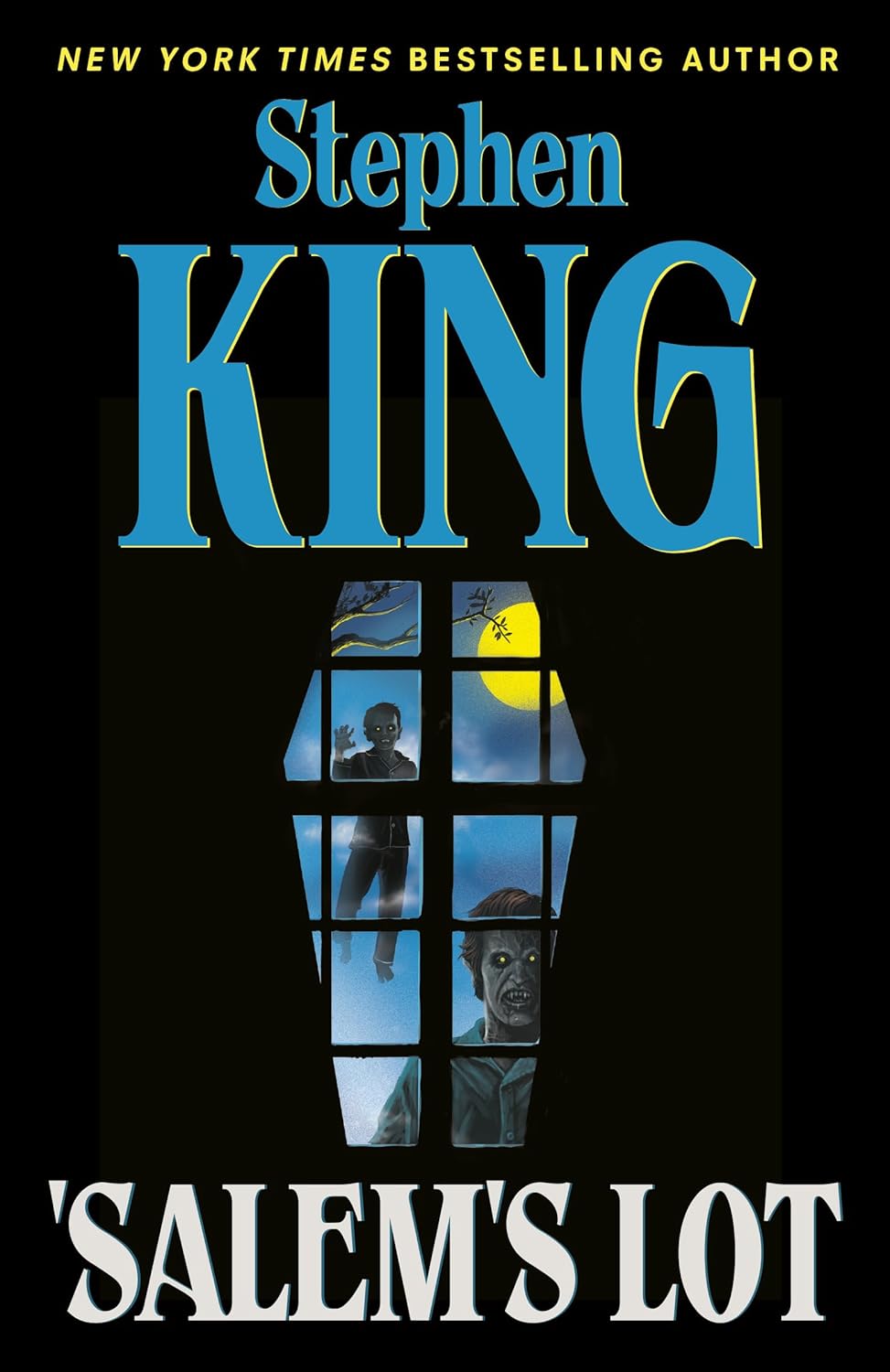
Something evil has come to 'Salem's Lot.
Ben Mears, a writer haunted by his childhood in Jerusalem's Lot, returns to the small Maine town seeking inspiration for his next book. But an unsettling darkness has taken root, spreading from the long-abandoned Marsten House on the hill. As chilling events unfold and residents begin to disappear, Ben realizes a terrifying truth: 'Salem's Lot is under siege by an ancient evil, a plague of vampires turning neighbor against neighbor.
With a small band of allies, including a wise doctor and a young boy touched by the supernatural, Ben must confront the unspeakable horror that has claimed his hometown. Their desperate battle for survival will plunge them into a nightmare of blood, betrayal, and the ultimate fight against the forces of darkness, where the souls of 'Salem's Lot hang in the balance.
Summary of Key Ideas
- •
The Corruption of Innocence
The Corruption of Innocence explores how evil infiltrates and taints the pure and vulnerable, particularly children. Kurt Barlow's vampiric influence gradually transforms the town's residents, symbolizing the loss of innocence and the perversion of childhood. This theme is evident in the transformation of children into vampires, their youthful innocence replaced by predatory instincts. King uses this to highlight the insidious nature of evil and its ability to corrupt even the most innocent members of society, leaving a lasting impact on the town and its future. The decaying moral fabric of 'Salem's Lot is mirrored in the physical transformations of its residents, underscoring the devastating consequences of unchecked evil.
- •
The Eternal Struggle of Good vs. Evil
The battle between good and evil is central to the narrative. Ben Mears, Father Callahan, and others represent the forces of good, struggling against the overwhelming evil embodied by Kurt Barlow and his growing legion of vampires. This struggle tests their faith, courage, and resilience as they confront the darkness consuming 'Salem's Lot. The theme explores the nature of heroism and sacrifice, as characters grapple with their own limitations and fears while trying to protect themselves and others. The ultimate confrontation highlights the importance of standing against evil, even when the odds seem insurmountable, and underscores the enduring power of hope and determination in the face of despair.
- •
The Decay of Community
Community Decay examines the disintegration of social bonds and the loss of communal spirit in 'Salem's Lot. As Barlow's influence spreads, the town descends into paranoia, mistrust, and violence, with neighbors turning against each other. This theme highlights the fragility of community and how easily it can be shattered by fear and external threats. King uses the town's decay as a microcosm of societal breakdown, exploring the consequences of isolation, apathy, and the erosion of shared values. The gradual unraveling of 'Salem's Lot serves as a cautionary tale about the importance of unity, cooperation, and maintaining social cohesion in the face of adversity.
- •
The Crisis of Faith and the Power of Doubt
Faith and Doubt explores the internal struggles of characters, particularly Father Callahan, as they confront supernatural evil. Callahan's crisis of faith becomes a central point, testing his beliefs and questioning his ability to combat the darkness. This theme delves into the complexities of faith in the face of overwhelming horror and the psychological toll it takes on those who must confront it. The novel examines how faith can be both a source of strength and a burden, as characters grapple with doubt, fear, and the limits of their own spiritual convictions. Callahan's journey reflects the broader human struggle to maintain faith in a world where evil seems to triumph.
- •
The Disruptive Force of the Outsider
The Outsider as a Disruptor explores the impact of outsiders on a close-knit community, represented by both Ben Mears' return and Kurt Barlow's arrival. Ben, a former resident, seeks to reconnect with his past, while Barlow, a mysterious newcomer, brings unimaginable evil. Both disrupt the established order, revealing hidden tensions and vulnerabilities within the town. King uses the outsider motif to examine themes of belonging, alienation, and the fear of the unknown. The contrasting roles of Ben and Barlow highlight the duality of the outsider figure, capable of bringing both healing and destruction to a community grappling with its own identity and demons.
- •
The Banality and Pervasiveness of Evil
The Pervasiveness of Evil delves into the idea that evil can take root in seemingly ordinary places, festering beneath the surface of everyday life. 'Salem's Lot, initially appearing as a typical small town, harbors dark secrets and hidden resentments that make it vulnerable to Barlow's influence. This theme underscores the notion that evil is not always external but can originate from within individuals and communities, manifesting in various forms of corruption, greed, and malice. King uses the setting to illustrate how unchecked negativity and moral decay can create fertile ground for supernatural evil to flourish, ultimately consuming the entire town.
Chapter Recap

About The Author
Stephen King
Main Quotes
"Some places are like people: some shine and some simply rot."
"There's no life here but the slow death of days."
"Evil doesn't die, it waits."
"The essential and defining characteristic of childhood is not the effortless merging of dream and reality, but only alienation."
"Monsters are real, and ghosts are real too. They live inside us, and sometimes, they win."
"She was the slow and unwilling sacrifice to the town’s most ancient feud."
"But when fall comes, kicking summer out on its treacherous ass as it always does one day sometime after the midpoint of September, it stays awhile like an old friend that you have missed."
"It was the touch of a ghost."
"He had found the dark place, and the dark place had found him."
"The world was full of such people. Some were secretive, hiding their hate. Others were frank, open about it."
Who Should Read This Book
Fans of Stephen King's other horror novels
Readers interested in classic vampire stories
Horror fiction enthusiasts
Readers who enjoy stories set in small towns with dark secrets
Fans of supernatural thrillers
Readers who appreciate character-driven narratives
People interested in stories exploring themes of good vs. evil, isolation, and the loss of innocence
Readers who enjoy suspenseful and atmospheric writing
Adults aged 22 and up
Book Summaries Like
'Salem's Lot
FAQ

Free Access to LitNotes