




 DISCORD
Scattered Minds
Gabor Maté MD


 Apple Books


 68 Min Reading Time
 Audio Version Available
About this book
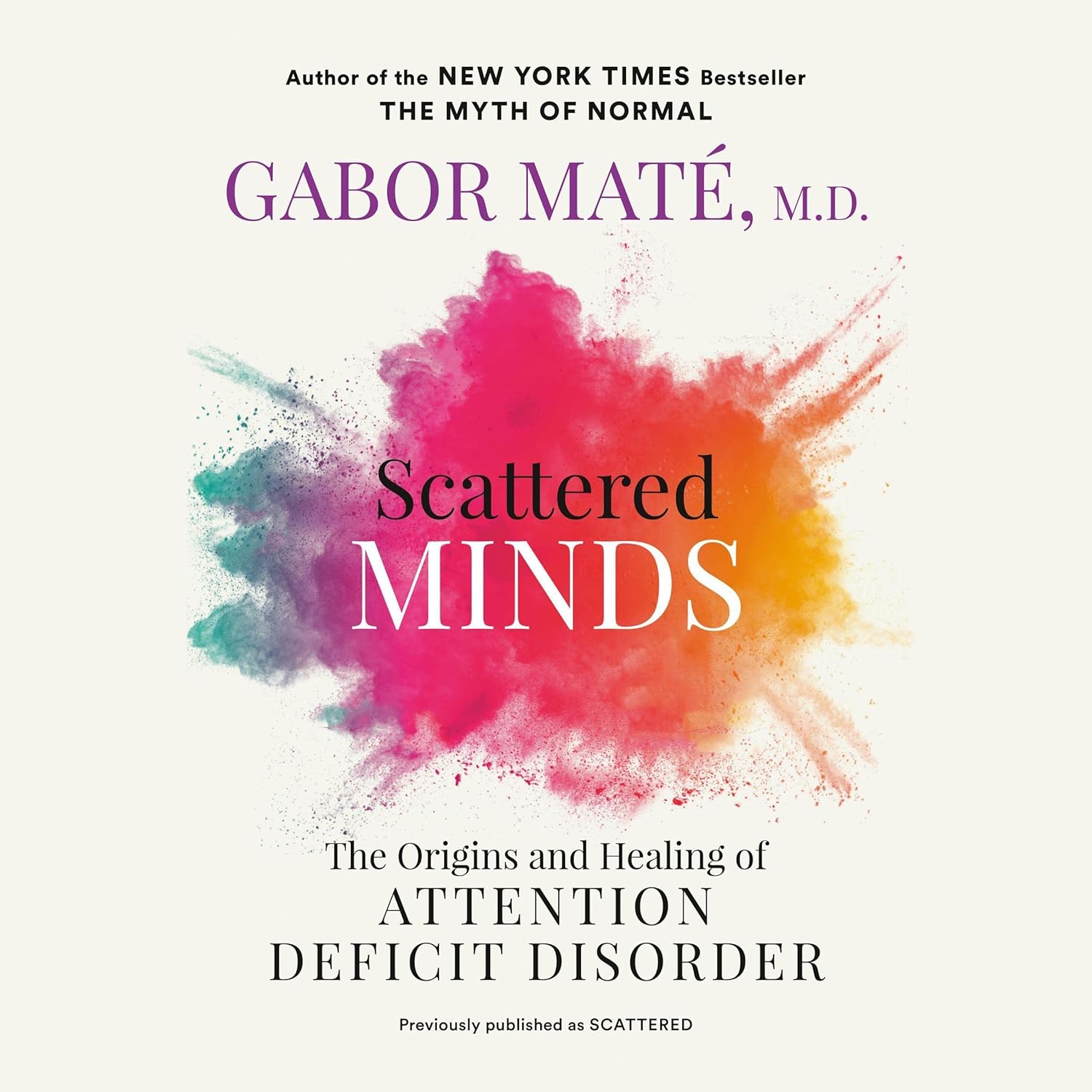
Scattered Minds explodes the myth of Attention Deficit Disorder as a genetically inherited condition, offering a completely new perspective and approach to understanding and helping children and adults living with ADD. Dr. Gabor Maté, renowned for his expertise in trauma, addiction, and childhood development, argues that ADD is not a genetic malady but rather a developmental impairment rooted in early childhood stress and relational difficulties.
Through compelling case studies and insightful analysis, Maté demonstrates how ADD develops as a coping mechanism, a survival strategy in response to a less-than-optimal environment. He explores the impact of hidden emotional realities on brain development and challenges conventional approaches to treatment, advocating for compassionate, holistic methods that focus on fostering connection, self-awareness, and emotional healing.
Scattered Minds offers a roadmap to understanding the origins of ADD, its painful realities, and its effects on both children and adults. It provides practical guidance and real hope for those seeking to navigate the challenges of ADD and unlock their innate potential for growth and well-being, inviting readers to move beyond pathologizing labels toward a deeper understanding of the sensitive, intelligent, and often creative individuals who are diagnosed with it.
Summary of Key Ideas
- •
Beyond Genetics: ADHD as a Reaction to Childhood
ADHD as a Developmental Impairment: Maté reframes ADHD not as a genetically predetermined disorder, but as a developmental impairment rooted in early childhood experiences. He posits that attentional deficits arise from disruptions in the child's environment, particularly within the parent-child relationship. When a child's emotional needs are not consistently met, or when they experience chronic stress or trauma, their developing brain adapts in ways that can manifest as ADHD symptoms later in life. This perspective shifts the focus from purely biological explanations to include the profound impact of early nurturing and attachment.
- •
Attachment Wounds: The Roots of Attentional Challenges
The Primacy of Attachment: Secure attachment is presented as crucial for healthy brain development and emotional regulation. Maté argues that a child's ability to focus, manage impulses, and maintain attention is directly linked to the quality of their early attachments. When caregivers are consistently available, responsive, and attuned to the child's needs, the child develops a sense of safety and security, allowing their brain to develop optimally. Conversely, insecure attachment patterns, characterized by inconsistent or neglectful caregiving, can lead to chronic stress and impact the development of attentional systems.
- •
Escaping Pain: ADHD as a Coping Mechanism
Emotional Pain and the Scattered Mind: Maté emphasizes that ADHD symptoms often serve as coping mechanisms to avoid or distract from underlying emotional pain. The hyperactivity, impulsivity, and inattentiveness seen in ADHD can be understood as ways to escape from uncomfortable feelings, unresolved trauma, or unmet needs. By scattering their attention, individuals with ADHD may be unconsciously attempting to protect themselves from experiencing painful emotions or memories. Addressing these underlying emotional issues becomes a critical component of healing and managing ADHD symptoms.
- •
The Impact of Chronic Stress on Attention
The Role of Stress: Chronic stress in childhood is identified as a significant contributor to the development of ADHD. When children experience prolonged periods of stress, their brains become wired to be hypervigilant and reactive. This can lead to difficulties with focus, concentration, and impulse control. Furthermore, chronic stress can disrupt the delicate balance of neurochemicals in the brain, further exacerbating ADHD symptoms. Maté underscores the importance of creating safe, nurturing environments for children to mitigate the negative impact of stress on brain development.
- •
Embracing Self-Compassion: A Key to Healing
Self-Compassion as a Pathway to Healing: Maté advocates for self-compassion as a vital tool for individuals with ADHD. Because many people with ADHD have experienced criticism, judgment, and feelings of inadequacy, cultivating self-compassion becomes essential for healing. This involves treating oneself with kindness, understanding, and acceptance, rather than self-blame or shame. By practicing self-compassion, individuals with ADHD can begin to challenge negative self-beliefs, build self-esteem, and develop healthier coping mechanisms.
- •
Integrating Mind and Body: A Holistic Approach
The Importance of Mind-Body Connection:
Chapter Recap

About The Author
Gabor Maté MD
Main Quotes
"We think that children act, whereas what they mostly do is react."
"What can be immobilizingly difficult is to arouse the brain's motivational apparatus in the absence of personal interest."
"Self-regulation is not the absence of anxiety, at least not in the very beginning, but a person's ability to tolerate and negotiate the anxiety."
"So self-acceptance does not mean self-admiration or even self-liking."
"The ability to attend develops only where there is a confluence of factors: secure attachment, a non-stressful environment, an unburdened limbic brain, and an emotionally available, attuned, and stimulating adult."
"ADHD is not an inherited illness but a response to early damage."
"When we understand that the mind is not a thing, but a process, we begin to see that the fragmented attention of ADHD is not so much a deficit as a developmental lag."
"It is impossible to understand addiction without asking what relief the addict finds, or hopes to find, in the drug or the addictive behaviour."
"The source of much mental distress is our alienation from our true selves."
"What the young need — stability, presence, attention, advice, good psychic food, unpolluted stories — is exactly what the sibling society won't give them."
Who Should Read This Book
Adults diagnosed with ADHD or suspecting they have ADHD
Parents of children diagnosed with ADHD
Individuals interested in understanding the root causes of ADHD, particularly the role of childhood trauma
Mental health professionals and therapists
Educators seeking a deeper understanding of ADHD
Individuals interested in alternative perspectives on ADHD beyond the purely genetic model
People seeking self-help and personal growth resources related to attention and focus
Readers interested in the mind-body connection and its impact on mental health
Individuals who appreciate a holistic and compassionate approach to understanding psychological challenges
Readers familiar with and appreciative of Gabor Maté's other works and perspectives on trauma and healing
Book Summaries Like
Scattered Minds
FAQ

Free Access to LitNotes